
What your shoe wear pattern reveals about your sciatica
I was hunched over on my mudroom bench last Tuesday, trying to pry off my work boots, when I saw it. The outer edge of my right heel wasn’t just worn; it was practically shaved off at a 45-degree angle. Meanwhile, the left shoe looked like it had barely left the box. For months, I’d been dealing with that familiar, soul-crushing lightning bolt shooting from my hip to my calf, and I’d blamed everything from my office chair to my age. It was a visceral wake-up call. I realized my body was leaving a trail of breadcrumbs on the pavement, and I had been too busy popping ibuprofen to notice. If you’re tired of the mystery, I’m here to tell you that those scuffs aren’t random. They are a roadmap to your recovery. Today, we’re going to decode exactly what your tread is trying to say about your nerve pain so you can finally stop chasing symptoms and start fixing the source.
Check Your Soles Before You Check Your Spine
I’ll be honest with you: I made a massive mistake early on. I assumed that if my leg hurt, the problem must be in my back, so I spent weeks doing every stretch I found on the internet. I even fell for the trap of thinking why stretching your hamstrings won’t fix your tight legs, which only made my zingers worse. The real issue was my gait. When we walk with an uneven pattern—maybe leaning too hard on the outside of the foot or collapsing inward—it creates a kinetic chain reaction. That imbalance travels up the leg, tilts the pelvis, and eventually puts the squeeze on the sciatic nerve. I finally understood why your current sneakers are causing your lower back to ache after seeing how my own shoes were reinforcing my bad habits.
Is It Really Possible for a Shoe to Cause This Much Trouble?
It sounds a bit like junk science, doesn’t it? I was skeptical too. But think about it this way: your feet are the only part of your body in constant contact with the ground. According to the American Podiatric Medical Association, the average person takes nearly 10,000 steps a day, and if your alignment is off, that is 10,000 micro-impacts directly hitting your spine. When I ignored my wear patterns, I was essentially driving a car with a bent frame and wondering why the tires kept blowing out. By learning conquering sciatica proven approaches to end discomfort now, I realized that my footwear was either my greatest ally or my silent saboteur. Have you taken a good look at the bottom of your favorite pair lately, or are you still wondering why the pain won’t quit? I’m going to show you how to read those rubber marks like a pro so we can get you back on your feet without the fear of that next flare-up.
Flip Your Shoes Over Right Now
Take your most-worn pair of sneakers and turn them over. You are looking for asymmetrical wear—those spots where the rubber is smooth while the rest of the tread is still crisp. If the outer edge of your heel is shaved down, you are likely ‘supinating,’ or rolling outward. This isn’t just a foot quirk; it is a sign that your shock absorption is failing. I remember when I first realized why your current sneakers are causing your lower back to ache, and it felt like finding the missing piece of a puzzle. When your foot doesn’t hit the ground flat, your leg bones rotate awkwardly, pulling on the muscles attached to your pelvis. This constant torque is what eventually irritates the sciatic nerve. If you see heavy wear only on the inside, your arches are likely collapsing, which is another fast track to misalignment. 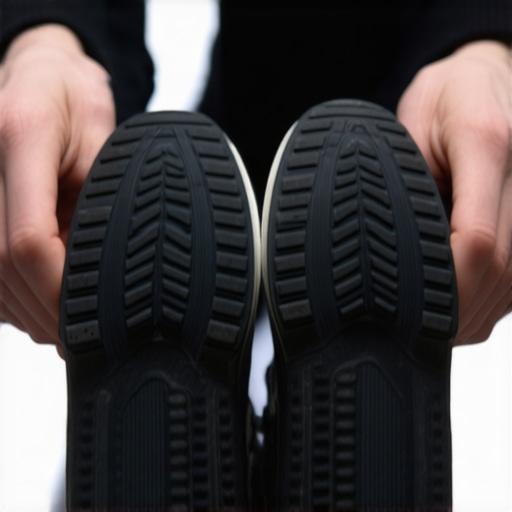
Why Your Big Toe is Secretly a Back Muscle
It sounds crazy, but your big toe is the anchor for your entire kinetic chain. If that toe is stiff and cannot bend upward as you push off, your body compensates by turning your foot out. This ‘duck walk’ forces your lower back to do the work your hips should be doing. I spent years ignoring my stiff feet until I learned how a stiff big toe forces your lower back to overwork. Think of it like a hinge on a door; if the bottom hinge is stuck, the top one is going to eventually snap from the pressure. To test this, try to lift your big toe while keeping your other four toes on the ground. If it feels like trying to lift a lead weight, your back pain isn’t just in your back.
The 30-Second Fix for Better Ground Contact
Last summer, my left hip felt like it was stuck in a block of concrete every time I finished a walk. I was convinced I needed a new mattress or a complex surgery. Instead, I started a simple routine. I began using the 30-second ankle drill that reduces your risk of back injury every morning before I even put on my socks. By restoring just a few degrees of motion to my ankle joint, my foot stopped ‘slapping’ the pavement. This reduced the jarring vibration that was traveling straight to my spine. You can’t build a stable house on a shifting foundation, and you can’t fix a sciatic nerve if your ankles are as stiff as a board.
Stop Letting Your Glutes Nap While You Work
The way we sit directly dictates how we walk. If you spend eight hours in a chair, your hip flexors tighten and your glutes effectively ‘turn off.’ I noticed that on the days I sat the longest, my gait became more erratic and my shoes wore down faster. This happens because why your glutes turn off when you sit for over an hour causes your hamstrings to take over, which shortens your stride and changes how your foot strikes the ground. You might also find that why your thin shoes are impacting your lower back shock absorption makes this worse, as there is no cushion to bridge the gap between your poor mechanics and the hard floor. The goal is to wake up those muscles so they can support your weight properly during every single step you take.I used to think that the solution to my back pain was to sit as straight as a board. I’d pull my shoulders back and tuck my chin, thinking I was doing my spine a favor. But here’s the contrarian truth: most people are over-correcting. When you force a rigid position, you’re essentially creating a low-grade ‘brace’ that never lets your muscles relax. I learned the hard way that why your perfect upright posture is actually tensing your spine. Research published in the Journal of Orthopaedic & Sports Physical Therapy suggests that there is no single ‘ideal’ posture that prevents pain; rather, the best posture is your next posture. In other words, movement is the goal, not a frozen, ‘perfect’ shape. If you’ve been stiffly holding yourself up, why your straight posture is actually straining your muscles might explain that deep, dull ache that sets in by mid-afternoon. 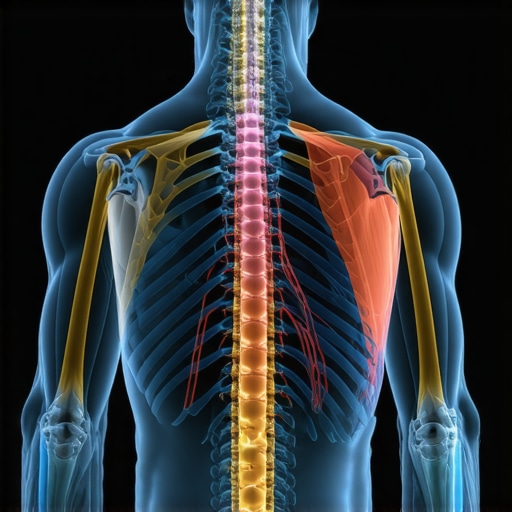
Is a Herniated Disc a Permanent Sentence for Pain?
This is the question I get most often from people who have seen their MRI results. We see a ‘bulge’ or a ‘hernia’ and assume our spine is broken. But the hidden nuance is that many people with no pain at all have these exact same findings. Understanding the difference between a bulging disc and a herniated disc is crucial, but even more important is realizing that your body has an incredible capacity to reabsorb disc material over time. It’s not just about the structural ‘damage’ you see on a screen; it’s about the environment around that nerve. If you can lower the inflammation and fix your gait by understanding the link between poor posture and chronic back pain, you’ll start to notice the one sign that your sciatica is finally starting to heal, which usually involves centralization—where the pain moves from your calf back up toward your hip.
Why Your Ice Pack Might Be Your Worst Enemy
One of the biggest traps people fall into is the ‘ice and rest’ cycle. I spent years reaching for the freezer every time my back flared up. But the ‘Oops’ factor here is that why icing your lower back might be slowing down your recovery is a real phenomenon—excessive cold can actually constrict blood flow and potentially slow the healing of soft tissues that need oxygen to repair. We also frequently confuse flexibility with mobility. Being able to touch your toes is great, but if your joints can’t move through their full range under control, you’re just a ‘loose’ car with a shaky suspension. Similarly, we often try to stretch our way out of trouble, but why some sciatica stretches actually pinch the nerve further is a common mistake that turns a minor annoyance into a full-blown flare-up. You need to stop assuming that more intensity equals more healing. Have you ever fallen into this trap of over-stretching or over-icing? Let me know in the comments.If you’re like me, you don’t want your house to look like a hospital ward. But a few strategic tools are non-negotiable. I stopped using my fancy ergonomic chair and went back to a basic kitchen chair with a lumbar roll. Once I figured out the specific way to use a lumbar roll for maximum relief, my mid-day ‘stiffening’ almost vanished. I also realized I was sabotaging myself in the laundry room. Learning how to carry a heavy laundry basket without a back spasm wasn’t just a tip; it was a survival strategy for my L5-S1 disc.
The Two Tools That Actually Earned Their Spot in My Living Room
Beyond the roll, I swear by a simple tennis ball and a monitor riser. I used to think my neck pain was a ‘stress’ thing until I applied the 15-degree rule for your computer monitor to save your neck. It is a tiny adjustment, but it stops your head from weighing 40 pounds by 5 PM.  Dr. Stuart McGill, a titan in spine biomechanics, explains in his book Low Back Disorders that ‘spine hygiene’ is the most overlooked part of recovery. It is about managing your ‘movement budget’ so you do not overspend on high-risk activities.
Stop Wrecking Your Progress While You Do the Dishes
You spend more time at the kitchen sink than you think. I used to lean forward, putting immense pressure on my sacrum. Now, I use the one foot up rule for pain-free dishwashing and chores. By opening a cabinet and resting one foot on the bottom shelf, you instantly tilt your pelvis into a neutral position. This is the kind of mobility mastery daily tips to keep your spine and joints healthy that actually stick because they do not require a gym membership.
Will Your Socks Soon Tell You Why Your Back Hurts?
Looking forward, the ‘bio-hacking’ world is moving fast. I predict that by 2026, we will have wearable sensors in our sneakers that sync with our phones to alert us when our gait is shifting—long before the pain starts. This real-time feedback will be a back pain breakthroughs navigating your path to restored mobility that makes my ‘checking the soles of my shoes’ trick look like the stone age.
How do I keep this relief from disappearing next week?
Consistency beats intensity every single time. You do not need a 60-minute mobility routine; you need 60 seconds of awareness ten times a day. If you feel that familiar ‘twinge,’ do not panic. Check your monitor height, check your sitting angle, and remember that enhance your back mobility ergonomic tips for everyday comfort are your best defense. My challenge to you: tonight, when you are doing the dishes or brushing your teeth, use that one-foot-up rule. See how your lower back feels after just three minutes. You might be surprised at how quiet those nerves become when you finally give them some room to breathe.
The Kinetic Truths I Learned the Hard Way
If I could go back to that mudroom bench, I’d tell myself that pain is a lagging indicator. My shoes were telling a story of misalignment for months before the first lightning bolt hit my calf. I also realized that standard ‘arch support’ is often a crutch that masks the real problem of a stiff big toe. The biggest shift in my recovery was accepting that my body isn’t a collection of separate parts; it’s a single, interconnected chain where a stiff ankle can literally dictate the health of my L5-S1 disc. I used to think I needed more stretches, but I actually needed more awareness of how my heels strike the pavement.
My Non-Negotiables for Nerve Health
You don’t need a medical-grade home gym to fix your gait and protect your spine. I’ve narrowed my daily toolkit down to three specific items. First, a simple tennis ball is my favorite tool for releasing deep glute tension after a long day of sitting. Second, a portable lumbar roll is essential, but only if you use the specific way for maximum relief. Finally, I trust the ‘Spine Hygiene’ principles found in Dr. Stuart McGill’s Low Back Disorders. These aren’t just gadgets; they are the foundation for lasting comfort and better mechanical health.
Reclaim Your Movement Freedom Today
Recovery isn’t a straight line, but it is entirely achievable when you stop fighting your body and start listening to the signals it leaves on your soles. The path to overcoming sciatica becomes much clearer when you address the source rather than just masking the symptoms with pills. By implementing these sciatica relief secrets, you can finally walk, sit, and play with your kids without the constant shadow of a flare-up. You are not your MRI results, and your body is capable of incredible repair if you give it the right environment to heal. What did you find when you flipped your shoes over—is the outer edge of one heel significantly more worn than the other? Let me know in the comments below.