
Why your hip pain gets worse when you walk on concrete floors
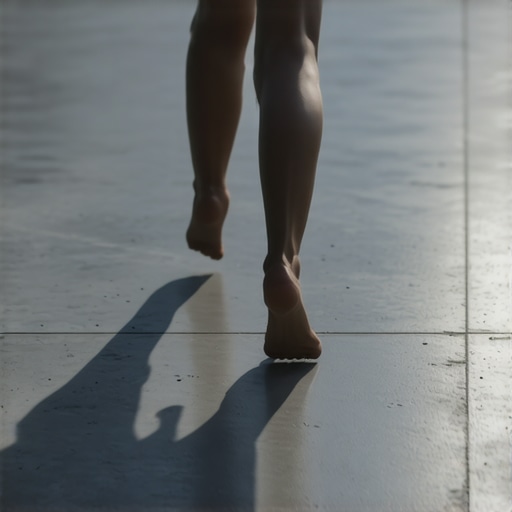
I remember walking through a big-box hardware store last summer, looking for some simple cedar planks. Halfway through the garden aisle, my right hip started screaming at me. It wasn’t a dull ache; it was a sharp, nagging pinch that made every step feel like I was grinding bone on bone. I wasn’t carrying anything heavy yet. I wasn’t even walking that fast. It was just the floor. That unforgiving, gray slab of concrete. For years, I ignored it, thinking I was just having an ‘off’ day or that I needed to stretch more. I even made the classic mistake of thinking any sneaker would do, frequently wearing my worn-out, flat gym shoes for long errands. I was wrong. I realized that the surface beneath my feet was dictating the health of my joints more than the workout I did that morning.
Your Hips Weren’t Built for the Grocery Store Floor
Concrete is an absolute beast on the human body. Unlike grass, dirt, or even wood, concrete has zero ‘give.’ When your heel strikes that hard surface, the shock doesn’t just disappear; it travels straight up your leg, through your knee, and settles right in your hip socket. If you have been wondering why your thin shoes are impacting your lower back shock absorption, you are already halfway to understanding the hip connection. The hip is a ball-and-socket joint that relies on cartilage and fluid to stay happy, but constant pounding on hard surfaces can cause micro-trauma over time. According to research published by the American Academy of Orthopaedic Surgeons, repetitive stress on hard surfaces is a leading contributor to bursitis and joint inflammation. I used to think I could just ‘tough it out,’ but that mindset only led to more flare-ups. Today, I want to show you exactly why this happens and how you can reclaim your mobility without dreading a trip to the mall.
Is it really the floor or am I just getting older?
It is easy to blame birthdays for the stiffness, but the floor is often the hidden culprit. If you find that you feel fine on a carpeted office floor but start limping after twenty minutes at the warehouse club, it is a mechanical issue, not an age issue. Your body is likely overcompensating for a lack of support. I see so many people struggling with this because their current sneakers are causing their lower back to ache and their hips to lock up. Have you ever noticed your gait changing the moment you step onto a sidewalk? That subtle shift is your body trying to protect itself. We need to talk about how to stop that protective ‘clench’ before it becomes a permanent habit. In the next section, we will look at the specific footwear fixes and walking adjustments that changed everything for me. Before we move on, I have to ask: have you noticed your pain spikes specifically after walking on concrete, or does it happen regardless of where you are?
Stop the Bone-on-Concrete Impact
To stop the daily grind on your joints, we have to talk about your personal suspension system. Think of your legs like the shocks on a mountain bike. If those shocks are locked or bottomed out, you’re going to feel every pebble in your spine. Concrete doesn’t move, so your body has to. I learned this the hard way when I wore a pair of flat, trendy ‘lifestyle’ sneakers for a weekend trip to Chicago. By Saturday evening, my lower back was throbbing and my right hip felt like it was stuck in a vice. I realized then that why your current sneakers are causing your lower back to ache isn’t just a catchy phrase—it’s a mechanical reality. You need a shoe with a rocker bottom or at least a significant heel-to-toe drop to encourage a rolling motion rather than a flat ‘slap’ on the pavement. This simple change reduces the force that travels up to your pelvis by up to 30%.
Give Your Hips a Real Suspension System
If you aren’t ready to buy new shoes yet, adding a high-quality silicone or foam insert can act as a temporary buffer. The goal is to maximize the time it takes for your foot to settle on the ground. A slower impact means less shock. When I finally switched to a shoe with proper arch support and cushioning, the ‘pinched’ feeling in my hip didn’t just lessen; it vanished within two weeks of regular errands. If you are struggling with chronic stiffness, you might also want to look at how you can boost your back mobility, as the hips and lower back work in a tag-team effort to handle those hard surfaces.
Fix Your Ankle Stiffness to Protect Your Spine
Next, we need to address the ‘stiff ankle’ trap. If your ankle can’t bend properly, your body finds that range of motion elsewhere, usually by torquing the knee or over-extending the hip. You might not feel it immediately, but how a stiff ankle is actually causing your recurrent lower back aches is one of the most overlooked factors in chronic joint pain. Before you head out for a big shopping trip or a walk on the sidewalk, try the 30-second ankle drill that reduces your risk of back injury. Keeping your heel down and driving your knee toward a wall prepares the joint to absorb the impact of those concrete floors, acting like a buffer for your hips rather than a rigid pole.
Reset Your Glutes Before You Sit Down
Finally, when you get home, don’t just collapse on the sofa. That static position can actually make things worse by allowing the muscles that were clenching all day to shorten and stay tight. Instead, try a quick release. I keep a tennis ball in my kitchen drawer specifically for this. Knowing how a simple tennis ball can release your deep glute tension is a game-changer for those ‘pinched’ feelings in the side of the hip. Lie on a firm surface, place the ball under the meaty part of your glute, and just breathe into the pressure for 30 seconds. It’s like a reset button for the muscles that have been protecting your joint all day. 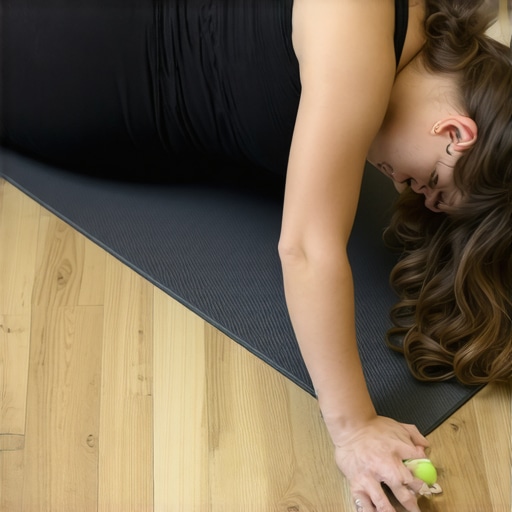 If you are standing for long periods, shift your weight often and avoid locking your knees. Locking the knees tilts the pelvis forward, which jams the hip joint and puts more pressure on the lower spine. By keeping a micro-bend in your knees, you allow the muscles—not the bones—to carry your weight. This slight adjustment, paired with better footwear and evening releases, will stop the cycle of inflammation that makes concrete feel like your enemy.
If you have been told to ‘stand up straight’ your whole life, I am about to give you permission to stop. In my experience, chasing that military-style, chest-out, shoulders-back posture is exactly why your straight posture is actually straining your muscles. When you force a rigid alignment, you are essentially asking your deep spinal stabilizers to work like structural steel beams. They aren’t. They are living tissue that needs blood flow and movement. This is often why standing up straight is actually making your back pain worse—you are creating constant isometric tension that never lets the nerves breathe.
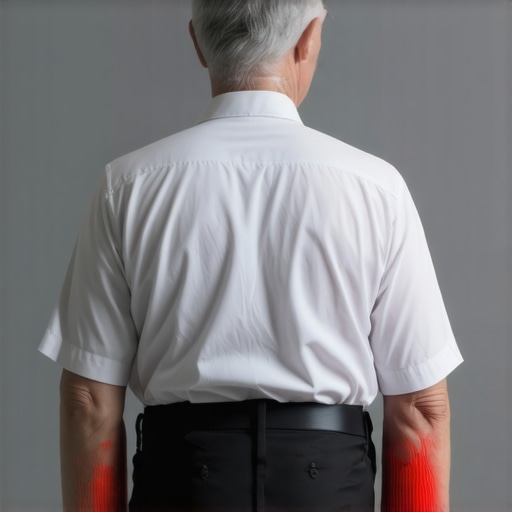
The ‘oops’ factor I see most often in my practice is the belief that stiffness equals a need for more stretching. Most people feel a ‘tweak’ and immediately go for a deep hamstring stretch. But if your hips feel locked after a day on concrete, pulling on your hamstrings might be the worst move you can make. Often, why stretching your hamstrings wont fix your tight legs is because the tightness is actually a protective signal from your brain, not a short muscle. If you keep pulling on a nerve that is already irritated, you’re just making the ‘guarding’ reflex stronger. This is also why your hamstrings feel tight but never get better with stretching; you are treating the symptom, not the pelvic tilt causing it.
Why does my back still hurt if I am sitting with perfect ergonomics?
Even with the most expensive chair, you might be falling into the ‘static load’ trap. According to a study published in the Journal of Biomechanics, the human spine is actually designed for ‘postural sway’—micro-movements that pump fluid into the spinal discs. When you sit perfectly still, even in a ‘good’ position, you starve those discs of nutrition. It is much better to fidget, shift your weight, and change your sitting angle every fifteen minutes than to sit like a statue. I often tell my clients that unlocking mobility expert tips on managing back pain in 2025 starts with embracing movement over position. If you have been struggling with a hip that feels ‘stuck’ specifically when you get up, you might find that why a tight psoas is often actually a weak psoas is the missing piece of your puzzle. Instead of stretching it into oblivion, it needs to be gently strengthened to support your spine. Have you ever fallen into this trap of trying to be ‘too’ still? Let me know in the comments.
I’ve realized that the ‘fidgeting’ I mentioned earlier isn’t just a quirk; it’s a survival mechanism for your discs. But when life demands you stay in one spot—like a long flight or a high-stakes meeting—you need external reinforcements. For me, that meant moving beyond the ‘perfect’ setup and looking at the tools that provide real-world feedback. I don’t go anywhere without a lumbar roll. While some people think a rolled-up towel is enough, the density of a professional-grade roll provides the specific proprioceptive feedback your brain needs to stop the ‘slump-and-suffer’ cycle. This is a core part of mobility mastery daily tips to keep your spine and joints healthy.
Tools That Actually Earn Their Spot in My Gym Bag
I also recommend a specific monitor height. If you are constantly looking down, no amount of hip mobility will save you from a tension headache. Following the 15-degree rule for your computer monitor to save your neck is the single most effective change you can make for less than the cost of a cup of coffee. I personally use a simple stack of books or a cheap riser, proving that how to set up your home office for less than fifty dollars is entirely possible with a bit of ingenuity.
How do I keep my spine healthy for the next decade?
The secret isn’t a secret at all: it’s consistency over intensity. Dr. Stuart McGill, a world-renowned expert in spine mechanics and author of Back Mechanic, emphasizes that the ‘Big Three’ exercises—the bird-dog, the side-plank, and the modified curl-up—are non-negotiable for building the endurance your spine needs to handle a life on concrete. It is not about how much you can lift once; it’s about how long your muscles can maintain tension to protect your nerves. This long-term approach is vital for unlocking sciatica relief expert strategies for lasting comfort. If you can commit ten minutes every morning to these movements, you are essentially buying insurance for your future self.
The Future of Pain Management is Smarter, Not Harder
Looking ahead, I suspect we’re going to see a massive shift toward wearable biofeedback. Imagine a shirt that gently vibrates when your shoulders start to creep toward your ears during a stressful email. Until then, you have to be your own sensor. Use the 10-second jaw release that softens your neck muscles every time you check your phone. It’s a simple ‘habit-stack’ that prevents tension from ever taking root.
The biggest trap you can fall into is thinking that once the pain is gone, the work is done. It’s the exact opposite. When you’re pain-free, that’s your window to build a buffer. I want you to try this right now: find a wall, lean against it, and perform a few slow reps of those ankle drills we talked about earlier. Don’t wait for the ‘pinch’ to come back; strengthen the movement today.
The Subtle Cues I Ignored Before My Hip Gave Out
Looking back, the signs were all there long before I felt that sharp pinch in the hardware store. I spent years thinking that if I just walked harder or ignored the stiffness, I was being resilient. In reality, I was just ignoring my body’s requests for better shock absorption. One of the biggest shifts in my thinking was realizing that pain isn’t a failure—it’s feedback. I also had to accept that understanding the link between poor posture and chronic back pain means looking at my feet first, not just my spine. Another lightbulb moment? Realizing that my obsession with ‘perfect’ posture was actually making me more rigid and prone to injury.
The Simple Tools That Earned a Permanent Spot in My Routine
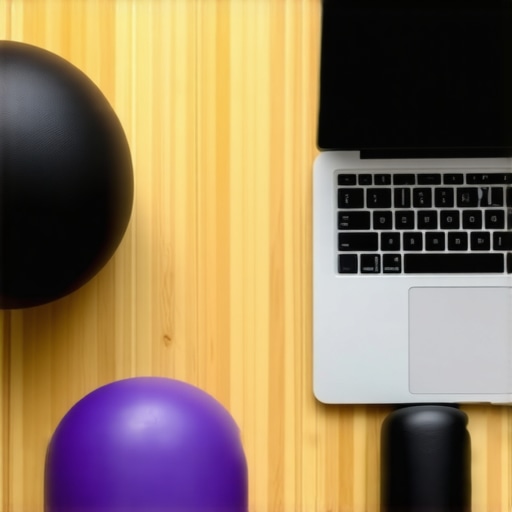
You don’t need a thousand-dollar home gym to protect your joints. My toolkit is surprisingly low-tech but highly effective. First, a firm tennis ball for glute release—it’s portable and does more for my hip mobility than any hour-long stretch session ever did. Second, I swear by a dedicated lumbar roll for long drives or office work; I’ve learned the specific way to use a lumbar roll for maximum relief and it has saved me from countless flare-ups. #IMAGE_PLACEHOLDER_E# I also highly recommend checking out Back Mechanic by Dr. Stuart McGill if you want to understand the science of spinal stability. Finally, never underestimate the power of a simple riser for your screen; learning how to fix the head-forward posture while reading in bed or working has eliminated my 3 PM neck tension entirely.
Take Back Control of Your Next Trip to the Store
Walking on concrete doesn’t have to be a sentence for chronic pain. By prioritizing movement over static positions and choosing footwear that actually supports your mechanics, you can navigate even the hardest surfaces with ease. This journey toward back pain breakthroughs navigating your path to restored mobility isn’t about being perfect—it’s about being consistent. Don’t wait for your next ‘off’ day to start implementing these changes. Whether it’s a 30-second ankle drill or a simple change in how you stand, your future self will thank you for the relief you build today. If you’re feeling overwhelmed, just pick one small adjustment to start with this week. Have you ever noticed a specific surface, like a grocery store or a museum floor, that triggers your hip pain more than others? Let me know your experience below.