
Why looking at your phone on your lap is a disaster for your spine

I remember sitting on my porch last Tuesday, lost in a rabbit hole of old photos, when I finally tried to look up. My neck didn’t just feel stiff; it felt like it was made of dry, cracking concrete. That sharp, electrical zing shot right down between my shoulder blades, and for a second, I couldn’t actually turn my head to the left. It was a wake-up call. I’ve spent years helping people move better, yet there I was, falling into the same trap we all do. We think our bodies are invincible until that one ‘pop’ tells us otherwise. Today, I want to show you exactly why that lap-scrolling habit is a slow-motion disaster for your health and, more importantly, how you can fix it without giving up your digital life.
The Hidden Physics of Your Heavy Head
Your head weighs about 10 to 12 pounds—roughly the size of a bowling ball. When you’re standing tall, your spine handles that weight effortlessly. But the moment you drop your chin to look at a phone resting on your thighs, physics takes over. At a 60-degree tilt, that bowling ball suddenly feels like it weighs 60 pounds. Imagine carrying an eight-year-old child around your neck all afternoon. According to research published in Surgical Technology International, this intense pressure can lead to early wear, tear, and even structural changes in the cervical spine. I made the classic mistake early on of thinking a plush chair would save me, but I soon realized the truth about soft sofas is that they often encourage the exact slouching that makes this pressure worse. This constant strain is the primary reason why your head feels heavy by 3 pm every single day.
Can looking down for a few minutes really do that much damage?
You might think you’re just checking a quick email, but these minutes aggregate into hours of micro-trauma. This isn’t just about a sore muscle; it’s about how poor posture and chronic back pain are inextricably linked. When you pull your head forward and down, you aren’t just stretching your neck; you’re overstretching the nerves and compressing the discs that act as your spine’s shock absorbers. I’ve seen it a thousand times: what starts as a mild ache eventually turns into rounded shoulders from scrolling that seem impossible to reverse. Have you ever caught your reflection in a window while looking at your phone and been shocked by how much you were hunching? Tell me, do you feel that familiar tightness right at the base of your skull after a long session of scrolling? It’s time we stop treating our spines like they’re unbreakable and start giving them the support they actually need.
Bring the Screen to Your Eyes Instead of Your Chin to Your Chest
To break the cycle of chronic tension, you have to stop the mechanical disadvantage at the source. The most immediate change you can make is what I call the ‘Eye-Level Rule.’ Think of your neck like a crane; the further out the load hangs, the more likely the cable is to snap. When you look down at a phone in your lap, you are essentially asking your small neck muscles to hold up a car. I remember being at the airport last month, waiting for a delayed flight. I looked around and saw a sea of hunched backs. I decided to stack my carry-on bag on my lap and rest my elbows on it, bringing my phone directly in front of my face. It felt a bit ridiculous at first, but the relief was instantaneous. This is the same logic you should apply when learning how to fix the head forward posture while reading in bed. If you aren’t bringing the device to your eye line, you are losing the battle against gravity.
Why You Need to Crank Up the Font Size Right Now
It sounds almost too simple to be effective, but your eyes and your neck are best friends. When text is tiny, you naturally lean your head forward to compensate. This ‘peering’ motion creates a massive amount of tension at the base of the skull. I’ve found that many of my clients don’t even realize they are doing it until they experience why your neck tension is making your eyes feel tired. By increasing the font size on your phone or tablet, you allow your head to stay back over your shoulders. This small adjustment reduces the suboccipital strain that often leads to those nagging afternoon headaches. 
The Propped Elbow Strategy for Instant Relief
If you are sitting on the couch, never let your hands float in space. Your arms are heavy, and that weight eventually pulls on your upper back and neck. Use a firm throw pillow on your lap to support your elbows. This elevates the screen without forcing your biceps to do the heavy lifting. This is a key component of how to sit on a couch without ruining your spinal alignment. I used this exact setup while recovering from a minor shoulder tweak, and it was the only way I could stay productive without a flare-up.
Undo the Slouch with the Wall Slide
Even with the best ergonomics, you need to active-reset your system. When you spend hours in a forward-folded position, the muscles on the front of your chest shorten and the muscles in your back become overstretched and weak. To combat this, you need a movement that opens the chest while engaging the mid-back. Performing the wall angel move that fixes rounded shoulders for just sixty seconds twice a day can retrain your brain to find a neutral position. It acts as a physical ‘reboot’ for your posture. If you find your monitor setup is also a problem, remember the 15-degree rule for your computer monitor to save your neck to ensure your workspace isn’t sabotaging your progress. Consistently checking your environment—from the height of your screen to the size of the letters on it—is the only way to keep that bowling ball of a head from dragging your spine into a permanent slouch.Let’s dig deeper. Most people think the solution to ‘tech neck’ or mid-back stiffness is to simply stand up as straight as a board. In fact, I see it all the time: clients pulling their shoulders back so hard they look like they’re in a military parade. But here is the contrarian truth—trying to hold a ‘perfect’ static position is actually exhausting your nervous system. Research published in the British Journal of Sports Medicine highlights that movement variability is the real key to a healthy spine, not a single rigid posture. This is exactly why your straight posture is actually making your back pain worse. Your spine is designed to move, and by forcing it to stay still, you’re actually creating more tension than if you were just relaxed. 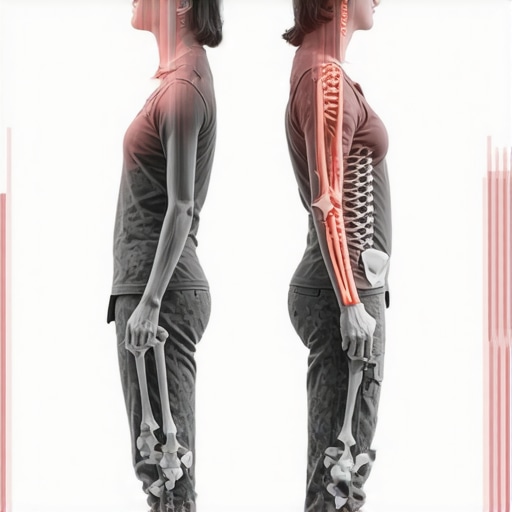
The Ice Trap Most People Fall Into
We’ve been conditioned to reach for the ice pack the second we feel a twinge in our lower back. This is what I call the ‘oops’ factor of recovery. While ice numbs the pain, why icing your lower back might be slowing down your recovery is a nuance that even experienced athletes miss. Inflammation isn’t the enemy; it’s the signal for your body to start repairing. By excessively icing, you’re restricting the blood flow that brings the necessary healing components to your discs and muscles. Instead of freezing the area, gentle movement is often the better ‘anti-inflammatory.’
Is Your Constant Hamstring Stretching Actually Making the Problem Worse?
This is the advanced question I get asked most by those who have been struggling for months. If you have sciatica, you probably feel a deep tightness in the back of your leg. Your instinct is to stretch it out. However, why reaching for your toes is the worst way to stretch your back is because you are likely pulling on a sensitized sciatic nerve, not a muscle. This mechanical tension can actually inflame the nerve further, explaining why some sciatica stretches actually pinch the nerve further. If your ‘stretching’ makes the pain more electrical or zingy, stop immediately. You need nerve flossing, not more length.
Look for the Source Far from the Pain
Often, the reason your neck or back won’t heal is that the problem isn’t actually in your back. For example, did you know that how a stiff big toe forces your lower back to overwork is a common driver of chronic pain? If your foot cannot push off the ground correctly, your pelvis tilts and your lower back has to stabilize a load it wasn’t meant to handle. Similarly, why your shoulder blade pain might actually be a neck issue is a diagnostic nuance that many people miss, spending years rubbing their shoulders when they should be treating their cervical spine. Achieving mobility mastery requires looking at the whole chain, not just where it hurts. Have you ever fallen into this trap where you focused on the spot that hurt but never got better? Let me know in the comments.I’ve spent thousands of dollars on high-end ergonomic chairs, only to realize that a fifteen-dollar foam roll was the missing link for my lumbar health. When it comes to long-term results, the goal isn’t just to be comfortable; it’s to provide the mechanical feedback your nerves need to stay quiet. I swear by the McKenzie method approach for this. A study in the Journal of Physical Therapy Science (2016) confirms that active lumbar support significantly reduces muscle fatigue and maintains the lordotic curve during prolonged sitting. If you’re struggling with positioning, learning the specific way to use a lumbar roll for maximum relief is a game-changer. I personally keep one in my car and one in my office chair because willpower is a terrible strategy for posture. It’s also important to realize that expensive setups aren’t mandatory; you can actually learn how to set up your home office for less than fifty dollars and see better results than some high-priced setups that don’t account for your specific height. 
How do I maintain my spine health without overthinking it?
Long-term success is less about a two-hour gym session and more about the five-minute daily reset. You need to address the neural tension before it becomes a structural problem. This is why I advocate for a nerve flossing routine for stubborn leg numbness and tingling even on days you feel perfectly fine. Think of it like brushing your teeth, but for your nervous system. By integrating mobility mastery into your morning coffee routine, you prevent the creeping stiffness that leads to major flare-ups. If you already feel a twinge, knowing these sciatica relief secrets can help you nip it in the bud before you’re stuck on the floor for three days. Be wary of popular fixes too; for instance, why your laptop stand might be making your neck knots worse is often down to the angle forcing your chin to tilt up too high.
Why Wearable Sensors are About to Change Your Posture Forever
Looking ahead, I predict that in the next five years, we will move away from ergonomic furniture and toward wearable biofeedback sensors. These tiny devices will vibrate when your rib cage loses its optimal position or when your shoulders begin to creep toward your ears. We won’t need to remember to sit straight; our technology will train our nervous system in real-time through subtle haptic feedback. This level of scaling will make professional-grade mobility accessible to everyone. For now, focus on the immediate wins. Try this: Tonight, instead of scrolling on the couch, perform one round of how a simple reach and breathe move can decompress your back and see if you breathe a little easier tomorrow morning. It’s the small, specific actions that compound into a life free of chronic pain.
Hard Truths I Discovered After Years of Fighting Chronic Stiffness
I used to think that a single ‘magic stretch’ would fix everything, but I quickly realized that consistency is the only thing that moves the needle. One of the biggest lightbulb moments for me was realizing that how your phones font size is impacting your neck tension is far more significant than any one-off massage. When the text is too small, your head leans forward reflexively, and no amount of stretching can outrun that ten-hour-a-day habit. Another lesson? Stop ignoring the ‘whispers’ of your body. If you wait for the ‘scream’ of a locked-up neck, you have waited too long. Finally, I learned that movement does not have to be a formal ‘exercise’—it just has to be a deviation from the static position you have been holding. Your spine craves variety, not just ‘perfect’ posture. #IMAGE_PLACE_HOLDER_E#
My Daily Essentials for a Resilient Spine
If you are looking for a starting point to fix your setup, I recommend three specific tools. First, grab a dedicated support for your chair; I have found that the specific way to use a lumbar roll for maximum relief is the easiest way to keep your spine in check without constant self-correction. Second, do not underestimate the power of self-myofascial release. Learning how a simple tennis ball can release your deep glute tension can actually take the pressure off your lower back in minutes by addressing the bottom of the kinetic chain. Lastly, I highly suggest following a consistent guide on mobility mastery to keep these habits at the front of your mind. These are not just tools; they are your insurance policy against the stiffness of modern life.
Reclaiming Your Freedom from Constant Aches
Your journey to a pain-free life does not happen overnight, but it does happen one small choice at a time. Whether you are dealing with a minor ache or searching for back pain breakthroughs that finally stick, remember that your body is incredibly capable of healing if you provide the right environment. If you ever worry and ask is your back pain a sign of something more serious, it is always worth checking in with a professional, but for most of us, the power to change is in the small adjustments we make every single hour. Your back pain does not have to be your permanent reality. Have you ever found a weird ‘life hack’ or a specific pillow that actually helped your neck tension? Let me know in the comments below!