
How to regain ankle dorsiflexion for a deeper squat
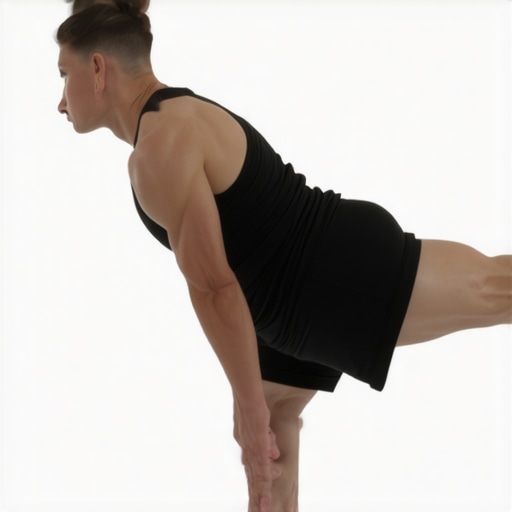
I remember the exact moment my ego hit the gym floor—literally. I was trying to show off a bit with a heavy barbell on my back, aiming for that ‘ass-to-grass’ depth everyone talks about. As I descended, my heels popped up like they were on springs, my knees wobbled, and I tipped forward like a folding chair. It wasn’t my quads that failed me; it was my ankles. They felt like they were encased in concrete. For years, I made the classic mistake of thinking I just had ‘short hamstrings’ and spent hours stretching them to no avail. The real culprit was a total lack of ankle dorsiflexion, a realization that changed everything about how I move. Today, I am going to show you exactly how to break through that concrete and reclaim your mobility so you can squat deeper than ever without the fear of falling over or wrecking your joints.
Stop Blaming Your Hamstrings for Your Shallow Squat
If you feel a sharp pinch at the front of your ankle or if your heels lift the second you try to go low, you aren’t alone. I’ve spent a lot of time helping people realize that the 30-second ankle drill that reduces your risk of back injury is often more valuable than an hour of static stretching. When your ankles don’t bend, your body finds that range of motion elsewhere—usually by arching your lower back or caving your knees. This is often why your calves are tight and how it pulls on your lower back, creating a chain reaction of discomfort. According to a study published in the Journal of Athletic Training, restricted ankle dorsiflexion is a primary contributor to dynamic knee valgus, meaning your lack of ankle mobility is literally forcing your knees into a dangerous position. We’re going to fix that by focusing on joint mechanics rather than just pulling on muscles that aren’t the problem.
Is This Mobility Work Actually Worth the Hype?
I get it—you just want to lift heavy things and get on with your day. You might be wondering if spending ten minutes on your ankles is just another fitness ‘fad.’ Trust me, I was the biggest skeptic until I realized that why your deep squat is causing a pinch in your hip is almost always linked back to the ground up. If your ankle is stuck, your hip has to overcompensate. I’ve even seen cases where how a stiff big toe forces your lower back to overwork starts with poor ankle mechanics. Have you ever felt like you are hitting an invisible brick wall the moment your thighs get parallel to the floor? If so, you are exactly where I was three years ago, and the solution is simpler than you think. By the end of this, you’ll have a roadmap to fluid, deep movement that feels natural rather than forced.
The Wall Test That Never Lies
To fix a problem, you have to find it first. Stand facing a wall with one foot about four inches away. Keep your heel glued to the floor and try to touch your knee to the wall. If your heel pops up or your knee stops short, you’ve found your bottleneck. This isn’t just about the muscle; it’s about the talus bone not sliding back into the joint properly. Think of it like a drawer that’s off its tracks—no amount of oil or stretching will help if the hardware is physically jammed. This is why your hamstrings feel tight but never get better with stretching; the tension is often just a secondary symptom of a mechanical block at the bottom of the chain. 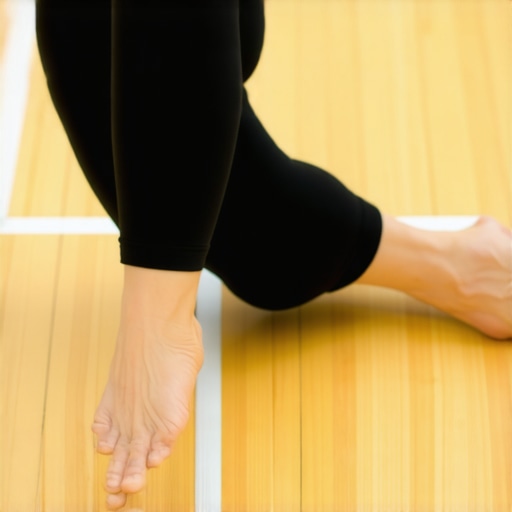
Force the Joint to Move Better
Instead of just pulling on your calves, we need to create actual space in the ankle joint. I remember a humid Tuesday in a local gym where I spent twenty minutes doing standard runners stretches against a post. I felt a minor stretch, but my squat depth didn’t move an inch. A physical therapist saw me struggling and handed me a heavy resistance band. He looped it around the very top of my ankle—right on the talocrural joint—and anchored it to a rack behind me. As I pushed my knee forward, the band pulled the bone backward into the socket. It felt weirdly spacious. That single session taught me that the 30-second ankle drill that reduces your risk of back injury works because it resets the joint mechanics rather than just tugging on stubborn tissue.
Check Your Big Toe and Breathing
We often forget that the foot is a tripod. If your big toe is stiff, your ankle won’t move correctly, and your arch will collapse. This is exactly how a stiff big toe forces your lower back to overwork during a heavy squat. While you are down there working on that ankle, try to breathe into your hips. Surprisingly, how your breathing pattern affects your core stability can change how much tension your nervous system holds in your lower limbs. If you are subconsciously holding your breath or bracing too hard, your brain keeps the brakes on your ankles to protect the spine.
Own the New Range with Load
Mobility without stability is just a recipe for a joint tweak. Once you’ve opened up that ankle space, you have to tell your brain it’s safe to be there. I used to make the mistake of doing five minutes of mobility work and then sitting on a bench for ten minutes before lifting. Now, I immediately go into a goblet squat, holding a kettlebell at chest height. This weight acts as a counterbalance, allowing you to sit deep into that new ankle range without falling backward. It stops the cycle of why your calves are tight and how it pulls on your lower back because you are finally using the muscles as they were designed. If you’ve spent years in elevated heels, remember how your high-heeled shoes are changing your spines-natural-curve; your body has adapted to a shortened state, and it will take consistent, loaded exposure to convince it that flat-footed depth is the new normal.Building on the idea of loaded exposure, I need to address the biggest lie in the fitness industry: that tightness is always a length issue. We have been conditioned to think that if a muscle feels stiff, we should yank on it until it gives way. However, in my experience, more stretching is rarely the answer. In many cases, why a tight psoas is often actually a weak psoas is because your brain is using tension as a makeshift stabilizer. If you stretch out that tight muscle without building the strength to support the new range, your brain will simply lock it down even tighter tomorrow to protect the joint. This is why so many people feel like they are starting from zero every single morning. There is also a dangerous trap I see people fall into when trying to fix their mobility: stretching through nerve pain. If you are trying to touch your toes and you feel a zinging, burning, or electric sensation down your leg, you are not stretching your hamstrings; you are irritating your sciatic nerve. It is vital to learn how to tell if your leg pain is a muscle strain or a pinched nerve before you keep pushing into the pain. In fact, why some sciatica stretches actually pinch the nerve further is a topic I wish more coaches understood. According to research by Dr. Stuart McGill, a world-renowned spine biomechanist, aggressively stretching a sensitized nerve can actually increase neural tension and lead to chronic inflammation. Instead of pulling, you should be focusing on the nerve flossing routine for stubborn leg numbness and tingling which allows the nerve to glide through its pathway without being overextended. 
Why Does My Mobility Disappear the Moment I Pick Up a Weight?
This is the ultimate indicator that your issue is not purely physical, but neurological. If you can sit into a deep squat while holding a doorframe for support, but you tip over the second you put a barbell on your back, your ankles are not short—your brain simply does not trust you yet. Your nervous system is detecting instability and is applying the brakes to your range of motion to keep you from falling or injuring yourself. This lack of trust is often tied to the breathing habit that is keeping your back muscles tight. When you breathe shallowly into your chest or hold your breath, you signal a stress response that increases muscle tone across your entire posterior chain. If you want real back pain breakthroughs navigating your path to restored mobility, you have to stop fighting your body and start working with its safety signals. Have you ever fallen into this trap where you stretched for weeks only to feel tighter than when you started? Let me know in the comments.To break that cycle of endless stretching and recurring tightness, you need to transition from ‘fixing’ to ‘maintaining.’ I’ve spent thousands of dollars on high-tech gadgets, including vibrating massage guns that mostly just numbed my skin without actually reaching the underlying tissue. Today, I stick to a simple lacrosse ball. I use it because its density doesn’t yield to my body weight, which is essential for finding and releasing those deep trigger points in the glutes that a foam roller simply cannot reach. It is essentially how a simple tennis ball can release your deep glute tension, but with a bit more aggressive ‘bite’ for those who have built up significant scar tissue over the years. Another non-negotiable tool in my kit is a sturdy wooden slant board. If you have restricted ankles, a 20-degree wedge is one of the only ways to force your nervous system to relax into a deep dorsiflexion stretch without your body instinctively fighting the incline or losing its balance. 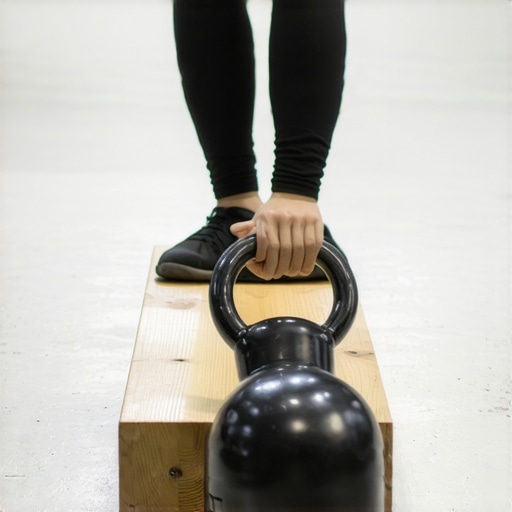
The Gear That Saved My Spine From Burnout
Beyond the gym floor, the real battle for your mobility is won in the boring moments of your day. I am a huge advocate of ‘environmental cues’ because they don’t require extra willpower. For example, I have learned how to adjust your rearview mirror to force better posture during my morning commute. By setting the mirror just a half-inch higher than my ‘slumped’ eye level, I am physically unable to see the traffic behind me unless I sit up tall and engage my core. It is a brilliant, low-tech way to implement mobility mastery daily tips to keep your spine and joints healthy without needing a dedicated hour for exercises. I also swear by the simple morning move to prime your spine for the day, which I perform while my coffee is brewing. It’s about making your environment work for your body, rather than constantly fighting against a world designed for convenience over health.
How do I maintain these mobility gains for the long haul?
Maintenance isn’t about intensity; it’s about frequency. According to Dr. Kelly Starrett, author of Becoming a Supple Leopard and a pioneer in human performance, the goal isn’t just to be flexible, but to have the ‘motor control’ to express that flexibility under tension. I personally maintain my results by never going more than 48 hours without a full-range-of-motion squat, even if it’s just a bodyweight hold while I’m brushing my teeth. This consistent ‘checking-in’ with your end-ranges tells your brain that these positions are safe and necessary. I also recommend checking out enhance your back mobility ergonomic tips for everyday comfort to ensure your workspace isn’t undoing all the hard work you put in during your morning routine.
The Future of Movement is Below Your Feet
Looking ahead, I predict that by 2030, the clinical standard for back and neck health will shift drastically toward foot mechanics. We are already seeing a massive move toward wide-toe-box footwear and minimalist soles. Understanding why your current sneakers are causing your lower back to ache is the first step in this revolution; when your toes are cramped, your big toe cannot stabilize your arch, which sends a shockwave of instability up to your knees, hips, and eventually your lumbar spine. I’ve personally switched to ‘barefoot’ style shoes for all my lifting, and the chronic SI joint discomfort I used to feel after deadlifts has essentially disappeared. As unlocking mobility expert tips on managing back pain in 2025 becomes more common, we will realize that our footwear is the foundation of our spinal health. My challenge to you today: adjust your rearview mirror slightly higher than usual tomorrow morning. Use it as your personal ‘posture coach’ and see how much better your back feels by the time you reach the office.
Stop Chasing the Stretch and Start Building Trust
The most profound realization I ever had wasn’t about a specific muscle; it was about my brain’s role in my mobility. For years, I treated my body like a collection of rubber bands that just needed to be pulled longer. I now know that tightness is usually a protective response. If your nervous system feels unstable at the bottom of a squat, it will apply the ‘neural brakes’ to keep you safe. This is why boost your back mobility simple exercises that make a difference aren’t just about length—they are about teaching your brain that these new ranges of motion are secure. Once I stopped fighting my body and started building that trust through consistent, low-intensity movement, the ‘concrete’ in my ankles finally began to crumble.
The Tools That Saved My Joints
You don’t need a gym full of expensive machines to fix your movement, but you do need the right intent. My personal arsenal is surprisingly low-tech. First, I never travel without a lacrosse ball; it is the only thing dense enough to reach the deep glute and calf tension that high-end foam rollers miss. Second, I highly recommend a slant board for anyone with stubborn ankles—it provides an unmistakable incline that forces the joint to adapt. Finally, I credit much of my progress to these mobility mastery daily tips to keep your spine and joints healthy. Having a set of specific, repeatable drills removes the guesswork and ensures I’m actually making progress rather than just going through the motions. These tools aren’t magic, but they provide the mechanical advantage your body needs to reset.
Reclaim the Movement You Were Born With
At the end of the day, mobility isn’t about being a gymnast or performing party tricks; it’s about reclaiming the fluid, effortless movement you were designed for. When you fix the foundation—your feet and ankles—the rest of your body can finally stop overcompensating. As we look toward the future, including unlocking mobility expert tips on managing back pain in 2025, we see a shift back to these foundational basics. Don’t let a ‘shallow squat’ be your permanent reality. You have the tools, the tests, and the roadmap to change how you move. If you ever feel stuck or need a more personalized approach, don’t hesitate to contact us to help bridge the gap. Your future self—the one squatting deep and pain-free—will thank you for starting today. #IMAGE_PLACEHOLDER_E#
Have you ever felt that annoying ‘block’ or pinch in the front of your ankle when trying to go deep in a squat? Let me know your experience in the comments below!