
Why You Should Stop Icing Your Back After the First Two Days
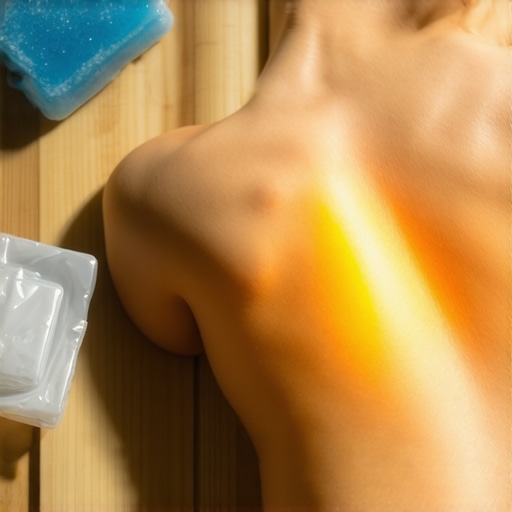
I remember the exact moment my loyalty to the ice pack died. It was a Tuesday morning, and I was sprawled on my kitchen floor because I’d tried to pick up a dropped spoon. My lower back didn’t just hurt; it felt like a rusted hinge that had finally snapped. For three days, I lived on a rotating shift of frozen gel packs. I thought I was being a model patient, ‘killing the inflammation’ while I binge-watched reruns. But every time I stood up to waddle to the fridge, I felt stiffer, colder, and more fragile than before. I was stuck in a cycle of numbing the pain without actually addressing the repair work my body was screaming to perform. If you are currently clutching a bag of frozen peas like a life raft, we need to talk about why that cold habit is actually holding your recovery hostage. Today, I’m going to show you exactly when to ditch the freezer and how to start inviting blood flow back into the room so you can actually move again.
The 48-hour rule that changed how I heal
When I first started dealing with these flare-ups, I made the classic mistake of thinking that if a little ice is good, a lot of ice must be better. I was wrong. The primary job of ice is to calm down the initial ’emergency’ phase—the swelling and the sharp, hot agony of a fresh tweak. But once you hit that 48-hour mark, your back isn’t an emergency zone anymore; it’s a construction site. By keeping it frozen, I was essentially sending the construction crew home early. You might be wondering why icing your lower back might be slowing down your recovery, and the answer is simple: blood flow. Healing requires oxygen and nutrients, and ice is the ultimate traffic jam for your circulatory system. When I finally swapped the ice for gentle movement and warmth, my ‘recovery weeks’ started turning into ‘recovery days.’ It was a lightbulb moment that changed my entire approach to back pain breakthroughs and restored mobility.
Won’t heat just make the inflammation worse?
This is the biggest fear I hear from neighbors and friends. We’ve been conditioned to fear inflammation like it’s a villain. However, a landmark study published in the British Journal of Sports Medicine highlights that while ice provides a nice analgesic effect, it can actually delay the natural tissue repair process by limiting the release of IGF-1 (Insulin-like Growth Factor). After those first two days, your body needs the ‘good’ kind of inflammation—the kind that cleans up debris and weaves new fibers. If you’ve ever noticed why your back hurts more after a day of resting on the couch, it’s usually because everything has stagnated. We need to get things moving. Have you ever felt like your back gets tighter the more you try to ‘protect’ it with cold? I’d love to hear if you’ve felt that same ‘tin man’ stiffness after over-icing. Transitioning to heat helps relax the protective muscle guarding that often leads to neck pain and stress cycles that are hard to break. In the next section, I’ll walk you through the specific ways to reintroduce warmth and movement without triggering another spasm.
Bring on the warmth safely
Once you move past the initial swelling phase, heat becomes your best friend. I remember the first time I tried to swap my ice pack for a heating pad. I made the mistake of cranking it to ‘high’ and leaving it there for two hours while I fell asleep. I woke up with skin that looked like a cooked lobster and a back that felt even more inflamed. The goal isn’t to cook your muscles; it’s to signal the blood vessels to open up. Think of your tight back muscles like a cold piece of taffy—if you try to pull it while it’s cold, it snaps. If you warm it up, it becomes pliable. Use moist heat—like a damp towel in the microwave or a specialized steam pack—for no more than 15 to 20 minutes. This is how you effectively learn how to use heat and ice the right way to encourage cellular repair without causing more irritation.
Motion is the secret sauce for your spine
Static rest is a lie. When I was stuck on that kitchen floor, my instinct was to never move again. But the longer I stayed still, the more my muscles ‘guarded’ the area, creating a suit of armor made of tension. You have to convince your nervous system that it is safe to move. I started with something as small as a pelvic tilt while lying in bed. It wasn’t even a full exercise; it was just a tiny rocking of the hips. This kind of ‘micro-movement’ acts like WD-40 for your vertebrae. If you are worried that movement might hurt, remember that why your back hurts more after a day of resting on the couch is usually due to the lack of nutrient exchange in your spinal discs. Start with the simple morning move to prime your spine for the day and build up from there. These small wins signal to your brain that the ’emergency’ is over.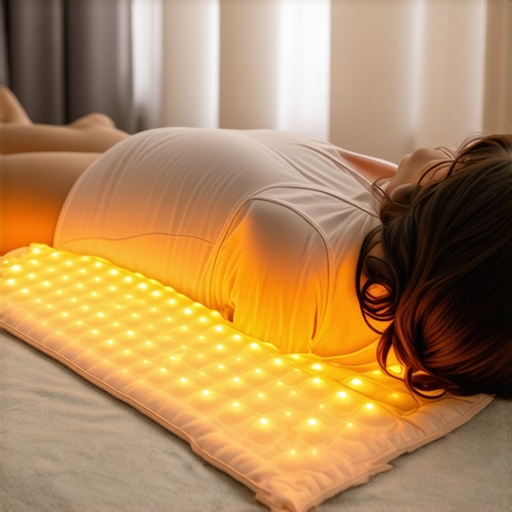
Use your lungs to push out the pain
It sounds airy-fairy until you realize that your diaphragm is physically attached to your lumbar spine. When we are in pain, we take shallow, chest-focused breaths. This keeps the core tight and the back under constant pressure. One afternoon, when my back felt like it was in a literal vice, I focused entirely on ‘belly breathing.’ By expanding my ribcage and stomach, I was essentially massaging my spine from the inside out. Learning how to breathe into your lower back to release deep muscle tension is the most underrated tool in your recovery kit. It drops your body out of ‘fight or flight’ mode and into ‘rest and repair’ mode. If you can breathe through a movement, your body knows it’s safe. If you have to hold your breath, you’re pushing too hard. Listen to that internal barometer.Once you’ve mastered that internal barometer of breathing, we need to dismantle the biggest myth in the recovery world: the ‘perfect posture’ trap. We’ve been conditioned to think that standing like a soldier is the gold standard for spine health, but why standing up straight is actually making your back pain worse usually comes down to the sheer amount of muscle tension required to hold that rigid position. This constant ‘on’ switch for your back muscles leads to the very fatigue and compression we’re trying to avoid. A study in the Journal of Bodywork and Movement Therapies points out that ‘ideal’ posture is less about a single rigid position and more about the body’s ability to move through various positions without undue strain. If you are locking your joints to look ‘straight,’ you’re likely just starving your discs of the movement they need to stay hydrated. 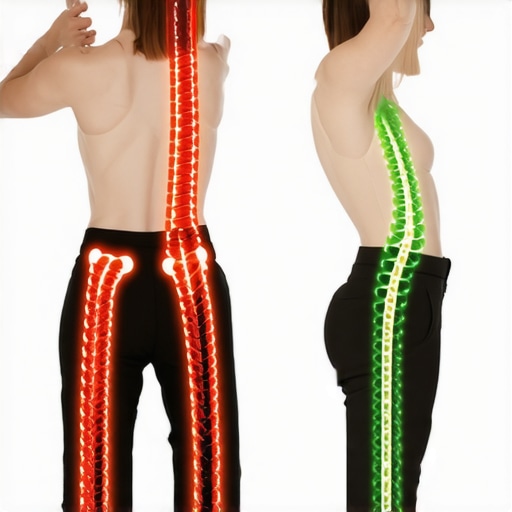
Is your quest for perfect posture actually causing your pain?
For many of my clients, the answer is a resounding yes. When you force your shoulders back and down, you often end up flaring your ribcage, which effectively disconnects your core and puts massive pressure on your lumbar-thoracic junction. I learned the hard way that my ‘perfect’ sitting posture was actually the reason my mid-back felt like it was on fire by 3 PM every afternoon. If you’re constantly feeling the need to adjust, it’s not because you’re lazy; it’s a signal your body wants variety, not a better ‘statue’ pose. This leads to the most common ‘Oops’ factor I see in recovery: the hamstring trap. If you have any sort of leg zing or sciatica, your first instinct is probably to stretch your hamstrings because they feel ‘tight.’ But if you’ve been stretching them for weeks with zero relief, it’s likely not a muscle issue at all. Yanking on a sensitized nerve is one of the fastest ways to prolong a flare-up. You need to stop the aggressive pulling and instead try the nerve tension test you can do in your living room. You might find that why some sciatica stretches actually pinch the nerve further is exactly why you haven’t turned the corner yet. We also see this nuance with the hip flexors; quite often, why a tight psoas is often actually a weak psoas is the missing link in your pelvic stability. Beyond the psoas, consider your foundation. Most people look at their back, but they ignore their feet. Understanding what your shoe wear pattern reveals about your sciatica can give you a roadmap of how your weight is shifting before you even feel the first twinge of pain. If you’re wearing out the outside of your heels, your hips are likely compensating in a way that puts the sciatic nerve on a constant, irritating stretch. It’s these tiny, advanced nuances—the difference between a muscle that needs a stretch and a nerve that needs space—that separate a quick recovery from a chronic struggle. Have you ever fallen into this trap of over-stretching or forcing ‘perfect’ posture? Let me know in the comments.Once you stop pulling on your nerves, you need a way to maintain those gains without spending hours in a gym. My personal breakthrough didn’t come from a thousand-dollar ergonomic chair; it came from a cheap foam cylinder. Understanding the specific way to use a lumbar roll for maximum relief changed the game for me during long writing sessions. It isn’t about just sticking it behind your back; it’s about placing it exactly at the beltline to maintain that natural curve. This prevents the ‘slump’ that starves your discs of oxygen. Speaking of oxygen and nutrients, we often forget that our discs are like sponges. If you aren’t drinking enough water, they can’t stay resilient. I’ve found that how proper hydration keeps your spinal discs plump and healthy is the simplest ‘hack’ for reducing that morning stiffness that makes you feel a decade older.
How do I keep my spine resilient for the long haul?
Sustainability comes down to what Dr. Stuart McGill calls ‘spine hygiene’ in his foundational work, Back Mechanic. It’s the realization that how you brush your teeth, tie your shoes, and get out of bed matters as much as your workout. For me, that meant integrating mobility mastery daily tips to keep your spine and joints healthy into my existing routine rather than making it a separate chore. I predict that within the next five years, we won’t be relying on memory; we’ll see bio-responsive wearables that provide real-time haptic feedback the moment your lumbar spine enters a high-risk shear position. But until then, we have to be our own sensors.
The five-dollar tool that beats high-end gadgets
If you’ve got a nagging ache in your glute that feels like a toothache in your butt, stop looking at expensive massage guns. I carry a tennis ball in my laptop bag everywhere. Knowing how a simple tennis ball can release your deep glute tension allows you to hit the piriformis and obturator muscles that are often the secret culprits behind ‘pseudo-sciatica.’ When things feel particularly stuck, I lean into the nerve flossing routine for stubborn leg numbness and tingling. This isn’t a stretch; it’s a gentle slide that keeps the nerve from getting snagged on scar tissue.  Combining these tools with the simple morning move to prime your spine for the day creates a protective ‘buffer’ for your body. It moves you from a state of fragile recovery to robust health. I want you to try one thing today: swap your slouch for a lumbar roll (even a rolled-up towel) for just twenty minutes of your workday and notice the difference in your leg tension. You might be surprised at how quickly the ‘zing’ disappears when the pressure is off.
The Hardest Realizations on My Journey to a Pain-Free Spine
If there is one thing I wish I could go back and tell myself while I was lying on that kitchen floor, it is that pain is a signal, not a life sentence. My biggest lightbulb moment was realizing that I couldn’t stretch my way out of a nerve problem. I spent years aggressively pulling at my hamstrings, only to find out later that I was essentially tugging on an already frayed electrical wire. I also had to learn the hard way that is your back pain a sign of something more serious key symptoms to watch is a question you need to answer with a professional early on, so you can stop the mental spiral of ‘what ifs.’ Once you rule out the red flags, the path to back pain breakthroughs becomes much clearer. The most profound shift for me was moving from a state of ‘protecting’ my back to ‘preparing’ it. I stopped treating my spine like it was made of glass and started treating it like the resilient engine it is. I learned that how to tell if your leg pain is a muscle strain or a pinched nerve is the foundation of choosing the right movement. If it’s a nerve, it needs space; if it’s a muscle, it needs blood flow.
What Is Actually Worth the Shelf Space in My Recovery Kit
We are bombarded with gadgets promising instant relief, but after a decade of trial and error, I’ve whittled my kit down to the basics. First, Dr. Stuart McGill’s book, Back Mechanic, is my bible for understanding spine hygiene. Second, I never travel without a simple tennis ball to tackle glute tension. Third, I have learned the specific how to use a foam roller on your mid back without causing pain to keep my upper body from compensating for my lower back. I trust these tools because they don’t just mask the ‘zing’—they help change the mechanical environment of my spine. I also keep a lumbar roll in my car and office chair; it’s a five-dollar fix that prevents the disc compression that leads to those mid-afternoon flare-ups. Finally, never underestimate the power of how proper hydration keeps your spinal discs plump and healthy. It sounds too simple to work, but your discs are largely water; if you’re dehydrated, you’re literally deflating your own shock absorbers.
Reclaiming the Life You Thought Was Gone
It is easy to feel like your world is shrinking when every movement feels like a gamble. But by shifting your focus from ice-packs and rest to strategic warmth and micro-movements, you are taking the driver’s seat in your recovery. You aren’t just ‘getting better’; you are building a more durable version of yourself. By applying these conquering sciatica proven approaches to end discomfort now, you’re moving toward a future where you can pick up your kids, go for a hike, or just sit through a movie without fear. The journey isn’t always linear, but the body has an incredible capacity for repair when we give it the right signals. Don’t let sciatica or back stiffness define what you are capable of in 2025. Have you ever felt like your back got tighter the more you tried to ‘protect’ it with cold or total rest? Let me know your experience in the comments below.