
Why Your Heavy Purse Is Slowly Rotating Your Pelvis
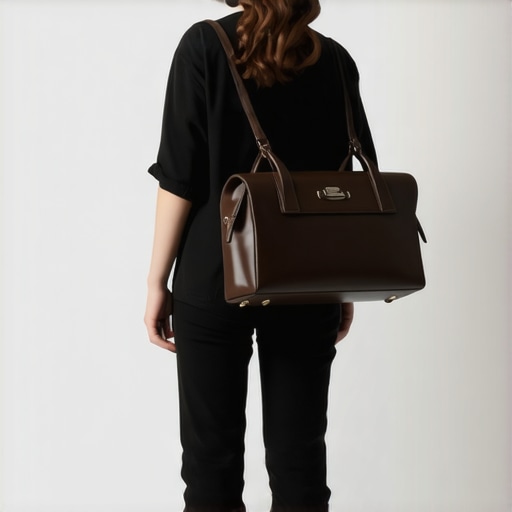
I stood there, staring at my reflection in a shop window, and for a second, I didn’t even recognize my own gait. My left hip was kicked out like I was perpetually posing for a 90s magazine cover, and my right shoulder was hitched up, bracing against the three-pound leather tote I lugged around daily. It wasn’t just a quirk of my posture; I was literally crooked. My back was screaming, my hips felt “off,” and I was starting to experience that nagging ache that eventually turns into full-blown chronic back pain. Today, I’m going to show you exactly how that heavy purse is slowly rotating your pelvis and, more importantly, how you can stop the spiral before you’re scheduled for a series of adjustments. We are going to look at the physics of your daily carry and some simple shifts to get your alignment back on track. [image_placeholder]
That One-Shoulder Lean is Doing More Than You Think
When I first started dealing with this, I made a classic mistake: I thought I could just “stand up straighter” and the problem would vanish. I didn’t realize that my body had already compensated for the weight by shifting my spine to the left. Every time you throw that strap over your shoulder, your brain sends a signal to your muscles to hike up that side so the bag doesn’t slide off. Over months and years, your nervous system accepts this lopsidedness as the “new normal.” It’s not just about your shoulders, though. Your pelvis, the very foundation of your spine, begins to rotate to counter-balance the uneven weight. This is why crossing your legs at the office feels so natural when you’re already out of alignment—your body is desperately trying to find a “center” that no longer exists. According to the American Chiropractic Association, carrying a bag that exceeds 10% of your body weight can significantly alter your gait and lead to long-term spinal curvature.
Does carrying a heavy bag really matter that much?
You might be thinking, “It’s just a purse, I only wear it from the car to the office.” But the cumulative effect is what gets you. If you don’t believe me, you can try the simple way to check your own spine for pelvic tilt right now in front of a mirror. Have you ever noticed that your pants hem is longer on one side than the other, or that your belt never seems to sit level? If that sounds familiar, drop a comment below—I’d love to know if you’ve noticed your own “purse lean.” This one-sided back pain isn’t a mystery once you see the mechanics. We need to talk about why this happens because once you see it, you can’t unsee it.
Rebalancing Your Body Without Ditching the Bag
To fix the damage done by a heavy carry, you have to treat your body like a high-performance vehicle that has had its alignment knocked out by a massive pothole. You wouldn’t just keep driving a car that pulls to the left, and you shouldn’t ignore a body that leans. The goal here is to reset the ‘neutral’ point for your nervous system. I remember a specific Tuesday when I finally hit my breaking point. I was walking into a meeting and caught my reflection in a glass door—my left hip was literally inches higher than my right. I looked like I was mid-salsa dance while just trying to walk to a chair. That night, I dumped my bag on the floor and realized I was carrying two old planners, three battery packs, and a massive set of keys I hadn’t used in months. By stripping three pounds of junk, I could immediately feel my shoulder drop back to its natural shelf. You can enhance your back mobility by doing this same ‘bag audit’ every Sunday night.
Empty the Bag to Stop the Strain
The first rule of thumb is the 10% rule: your bag should never exceed 10% of your body weight. If you weigh 150 pounds, a 15-pound tote is an absolute disaster for your discs. Aim for under five pounds if possible. When you lighten the load, you stop the aggressive muscle guarding that leads to that permanent ‘hike’ in your shoulder. If you find yourself still struggling with a heavy daily load, learning the correct way to wear a backpack might be a better lifestyle shift than sticking with a single-strap tote. 
Switch Sides Regularly to Distribute Pressure
Most of us are ‘handed’—we have a preferred side for everything. I always carried on my left. My left traps were like steel cables, while my right side was overstretched and weak. You must force a switch every 15 minutes. Set a vibration timer on your watch if you have to. This prevents the pelvis from locking into a rotated position. Think of your spine like a mast on a ship; if the ropes on the left are always pulled tighter, the mast will eventually warp. By switching sides, you give those deep stabilizers a chance to breathe and follow mobility mastery principles that keep your joints lubricated.
Fix Your Foundation with Pelvic Resets
Once you’ve addressed the bag itself, you have to talk to the muscles that have ‘forgotten’ how to stay level. A rotated pelvis creates a functional leg-length discrepancy, which is why your shoes might wear out unevenly. You can actually how to fix your pelvic alignment while washing dishes by simply shifting your weight and engaging your glutes properly. Another great tool is the wall slide. Perform the 30-second wall slide for better shoulder alignment twice a day to remind your shoulder blades that they belong down and back, not up in your earlobes. These small, direct movements signal to your brain that the ’emergency’ of carrying a heavy lopsided weight is over, allowing the muscles to finally let go of that chronic tension.But here is where most people get it wrong: they try to stretch their way out of a problem that is actually caused by instability or neural tension. I used to be the ‘hamstring stretch’ queen. Every time my back felt tight, I would reach for my toes, thinking I was helping. In reality, I was just yanking on my sciatic nerve. You see, why your hamstrings are not the real reason your back is tight usually comes down to your pelvis being out of position, not the muscle being too short. If you keep stretching a nerve that is already irritated, you are just pouring gasoline on a fire. This is a classic ‘oops’ factor—confusing muscle tightness with protective guarding.
The Stretching Trap That Keeps You Stiff
The biggest myth in the mobility world is that ‘more range is always better.’ If your brain senses that your spine is unstable because your deep stabilizers are ‘off,’ it will physically lock down your hamstrings and glutes to act as secondary supports. When you force those muscles to stretch, you are removing the only thing keeping your spine safe. I have seen so many people follow mobility mastery routines that actually ignore this fundamental safety mechanism. Instead of mindlessly stretching, you need to determine if you are dealing with a true muscle shortening or a neurological lock. You can actually perform the nerve tension test you can do in your living room to see if your ‘tightness’ is actually your nervous system screaming for help. 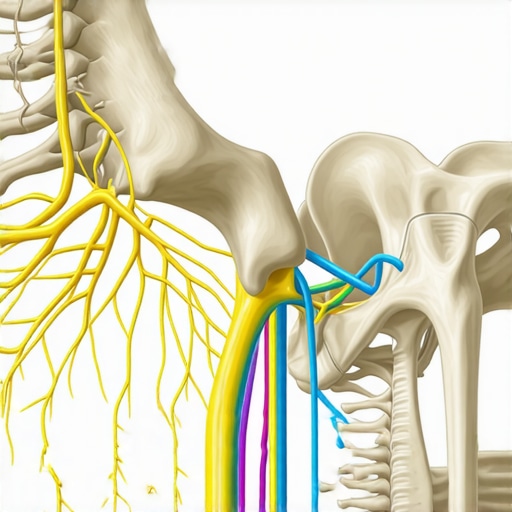
How Can You Tell if Your Leg Pain Is a Muscle Strain or a Pinched Nerve?
This is the nuance that separates a quick recovery from a chronic cycle. If you feel a sharp, electric, or ‘thin’ line of pain, you are likely dealing with nerve irritation. A muscle strain feels broader and duller. A study published in the Journal of Orthopaedic & Sports Physical Therapy highlights that aggressive static stretching can increase neural mechanosensitivity, meaning you are making your nerves more ‘touchy’ rather than more flexible. This is why why some sciatica stretches actually pinch the nerve further instead of providing relief. Another common mistake is the ‘weak vs tight’ confusion. For instance, why a tight psoas is often actually a weak psoas is a nuance most people miss; the muscle feels tight because it is overworked from trying to stabilize your spine, not because it needs a deep stretch. Finally, stop the ice! I know it feels good in the moment, but why you should stop icing your back after the first two days is that you are actually slowing down the blood flow needed for real cellular repair. Have you ever fallen into this trap of stretching a pain that would not go away? Let me know in the comments below, because I have been there too.Once you stop the cycle of useless stretching, you have to replace those bad habits with tools that actually change your tissue quality. I don’t go anywhere without my ‘peanut’—which is just two lacrosse balls taped together. This simple tool allows you to target the muscles on either side of your spine without putting pressure on the vertebrae themselves. You can learn how to use a foam roller on your mid-back without causing pain, but the pinpoint accuracy of a tennis or lacrosse ball is a game changer for stubborn knots. I personally use this method every evening for five minutes to undo the damage of sitting. If you have deep hip issues, how a simple tennis ball can release your deep glute tension is the secret to keeping your sciatic nerve from getting compressed by a tight piriformis. It’s about creating a ‘buffer’ in your body so that a single heavy grocery bag doesn’t ruin your whole week. 
How Can You Keep Your Spine Supple Every Single Day?
Maintenance isn’t about two-hour gym sessions; it’s about ‘spinal hygiene.’ Dr. Stuart McGill, a leading expert in spine biomechanics and author of Back Mechanic, emphasizes that the most successful patients are those who adopt ‘movement snacks’ throughout the day rather than one giant workout. This is why I swear by mobility mastery principles. I also keep a lumbar support in my car at all times. Knowing the specific way to use a lumbar roll for maximum relief has saved me from thousands of dollars in physical therapy bills and hours of discomfort. I predict that in the next few years, we are going to see a massive shift toward wearable biofeedback sensors that vibrate when your pelvis tilts or your shoulders round, essentially acting as a digital coach. For now, we have to be our own coaches by paying attention to the signals our bodies send. Beyond the tools, look at your environment. Your feet are your foundation, and why your current sneakers are causing your lower back to ache often comes down to a lack of arch support that forces your pelvis to tilt forward. I switched to a wider toe box and a neutral drop, and within three weeks, my morning back spasms disappeared. It’s these small, compounding shifts that lead to back pain breakthroughs. To build real stability that lasts, I recommend mastering the dead bug exercise variation that actually protects your spine. It is the gold standard for core integration because it forces your limbs to move while your spine stays rock solid. If you’re tired of the ‘one step forward, two steps back’ routine, try adding just one of these tools—like the lumbar roll or the tennis ball—to your evening wind-down tonight and feel the difference in your morning stiffness. You can find more sciatica relief secrets that actually stick if you’re ready to commit to the long-term work rather than looking for a five-minute fix that never lasts.
The Hard Truth About My One-Sided Habits
Reflecting on my years of ‘purse lean,’ I realized that the biggest mistake wasn’t just the weight of the bag, but the mindset of ignoring the subtle signals. I used to think I could simply force myself to stand tall, but understanding the link between poor posture and chronic back pain taught me that my body was actually trying to protect me by bracing against the load. Symmetry isn’t the goal; functional balance is. I also learned that pain is a late-stage warning. By the time my hip started aching, the rotation had been happening for months. Now, I focus on mobility mastery through small, daily ‘movement snacks’ rather than trying to fix a week’s worth of damage in one gym session. It takes more than willpower to reset a nervous system that has spent years compensating for a three-pound tote.
The Gear That Restored My Alignment
I’ve tested dozens of gadgets, but three things actually changed my daily comfort level. First, the ‘peanut’ (two lacrosse balls taped together) is non-negotiable for releasing the tension between my shoulder blades after a long day. Second, knowing the specific way to use a lumbar roll for maximum relief has made my daily commute feel like a recovery session instead of a strain. Finally, I realized why your current sneakers are causing your lower back to ache: if your feet can’t spread out and ground you, your pelvis simply cannot stay level. Switching to shoes with a wider toe box and a flat profile was a hidden key to my recovery. These tools, combined with the ability to determine how to tell if your leg pain is a muscle strain or a pinched nerve, allow me to manage minor flare-ups before they become debilitating.
Your Journey Back to Center Starts Now
It is incredibly easy to feel overwhelmed by the ‘physics’ of back health, but you do not have to overhaul your entire life overnight. Start by simply swapping your bag to the other shoulder today or performing a single wall slide during a commercial break. Every small, intentional choice you make builds toward back pain breakthroughs that actually stick. You deserve to move through your day without that constant, nagging pull in your hip or the sharp zing in your shoulder. You now have the tools, the knowledge, and the plan to leave chronic back pain behind and reclaim your alignment. Have you ever struggled with one-sided tension or a ‘preferred shoulder’ for your heavy work bag? Let me know in the comments below—I’d love to hear how you’re balancing the load!