
Why your laptop screen height is the primary cause of your headaches

It was 3:14 PM when the vice tightened. That familiar, nagging throb started behind my left eye and quickly wrapped around my skull like a wet wool hat that was two sizes too small. I used to think it was the third cup of coffee or maybe just the general stress of the day. I was wrong. It wasn’t my workload; it was the fact that I spent seven hours a day looking down at a screen that sat four inches too low. I was literally crushing my own nerves and wondering why it hurt. If you’ve ever felt like your skull was suddenly too heavy for your shoulders, you’re not alone, and it’s likely your laptop—not your life—that’s the culprit. Today, we are going to fix your setup so you can finally stop the cycle of afternoon agony and reclaim your focus.
Stop Cranking Your Neck Down Every Single Day
For years, I made the classic mistake of thinking any flat surface was a ‘desk.’ I’d park myself at the kitchen table, hunching over my keyboard like I was guarding a precious treasure. It turns out, I was just straining my neck every single day because my screen was nowhere near eye level. When you look down at a laptop, your neck muscles have to work overtime to keep your head from falling forward. This is not just a hunch; it is physics. According to a landmark study by Dr. Kenneth Hansraj published in Surgical Technology International, while the average human head weighs about 10 to 12 pounds in a neutral position, tilting it forward just 45 degrees can increase the force on your cervical spine to a staggering 49 pounds. No wonder your head feels heavy by 3 pm every afternoon. This constant tension is the express lane to tension headaches and that burning sensation in your traps that never seems to go away. I remember one afternoon I was so desperate I stacked three thick cookbooks under my laptop just to see if it helped. It looked ridiculous, but for the first time in months, I finished a workday without reaching for the ibuprofen.
Does a tiny shift in height really change anything?
You might be skeptical. I certainly was. I thought buying a laptop stand was just an excuse to spend money on tech gadgets I didn’t need. But the truth is, your body operates on a series of tiny levers. If you can revitalize your neck by simply lifting your gaze, the relief is almost instantaneous. By following the 15-degree rule for your computer monitor, you take the ‘brakes’ off those overworked muscles. Have you ever noticed that your ‘work headaches’ magically disappear on your days off, even when you’re still stressed? It’s not a coincidence; it’s your posture. I’m curious—do you find yourself constantly rubbing the base of your skull while you type? If so, you aren’t dealing with a mystery illness; you’re dealing with a screen height problem that we can solve in under five minutes.
Get That Screen Up to Eye Level Right Now
Your laptop is a portability dream but a postural nightmare. The keyboard and the screen are physically connected, which forces a compromise: either your wrists are happy and your neck is screaming, or your neck is straight but your shoulders are bunched up at your ears. To break this cycle, you must elevate the screen. I remember a grueling week in a Chicago hotel where I didn’t have my usual gear. I ended up stacking two shoe boxes and a thick phone book just to get my screen high enough so I wasn’t staring at the desk. It looked like a middle-school science project, but it worked. When you lift the monitor so the top third is level with your eyes, you stop the ‘forward head’ drift. You can perform the simple test for text neck you can do in the mirror to see just how much you usually slouch. This adjustment is the foundation of innovative strategies for fast recovery because it removes the daily mechanical stress that keeps you inflamed. 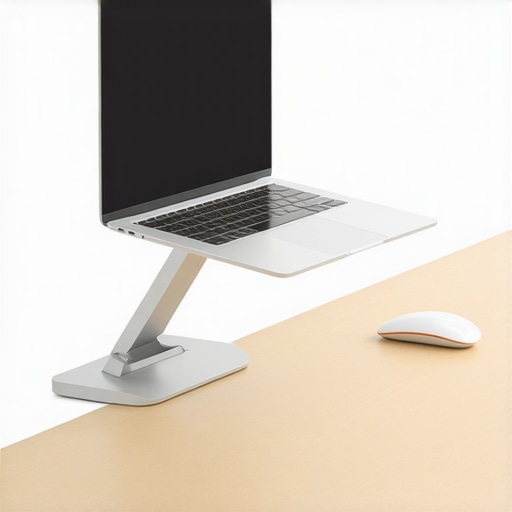
Stop Chaining Your Hands to Your Monitor
Once the screen is up, your built-in keyboard becomes useless. If you try to type on a laptop that is sitting on a stand, you will trade neck pain for wrist strain in a heartbeat. You need a separate keyboard and mouse. This allows your elbows to drop to a 90-degree angle and your shoulder blades to slide down your back. Think of your arms like heavy pendulums; when they hang freely, there is no tension. When you reach up or forward to type, those muscles stay ‘on’ for hours. This is why looking at your keyboard while typing is ruining your neck—it pulls the entire chain out of alignment. If you are tight on space, even a small Bluetooth keyboard makes a world of difference. Proper alignment here ensures you aren’t developing a burning sensation between your shoulder blades by lunchtime.
The Two-Minute Mobility Cheat Code
Even with a perfect setup, the human body was not designed to be a statue. Static posture, no matter how ‘perfect’ it is, eventually leads to stiffness. Think of your joints like a bicycle chain; if it sits in the rain without moving, it rusts. Your spinal discs need movement to stay hydrated. Every hour, I perform a quick ‘reset.’ I like the 10-second wall slide for instant shoulder tension relief because it forces my mid-back to do its job. Often, how a stiff upper back is forcing your neck to move too much is the real culprit behind that nagging ache. By integrating mobility mastery into your work blocks, you prevent the ‘creaky’ feeling that usually sets in by Friday. I have found that a simple 30-second chest opener during a phone call is more effective than an hour of stretching at the end of a long day of slouching.Most of us were raised with the constant command to “sit up straight” or “shoulders back!” I spent years trying to maintain a military-grade posture, thinking I was doing my spine a favor. I wasn’t. In fact, this is one of the biggest myths in the ergonomic world: the idea that there is a single, frozen “correct” position you must hold. When you force yourself into a rigid upright stance, you are often just trading one type of strain for another. This is precisely why standing up straight is actually making your back pain worse. You aren’t designed to be a statue. By bracing your muscles to look “perfect,” you create a high-tension environment that leads to early fatigue and localized spasms. True mobility mastery isn’t about finding a better way to stay still; it’s about finding better ways to move.
Stop Stretching Your Hamstrings to Fix Sciatica
Here is a common “oops” factor I see constantly: the aggressive hamstring stretch. If you feel a zing down the back of your leg, your instinct is to reach for your toes. But if that pain is neurological—meaning it’s coming from the sciatic nerve—stretching the muscle like a rubber band can actually make the nerve more angry. This is why stretching your hamstrings won’t fix your tight legs if the root cause is nerve tension. In many cases, why some sciatica stretches actually pinch the nerve further is because they over-sensitize the tissue rather than creating space. Dr. Stuart McGill, a world-renowned expert in spinal biomechanics, has often noted that many people perform stretches that actually increase the load on their discs. Instead of a deep stretch, you might need a nerve flossing routine for stubborn leg numbness and tingling to gently glide the nerve through its pathway without the aggressive pull. 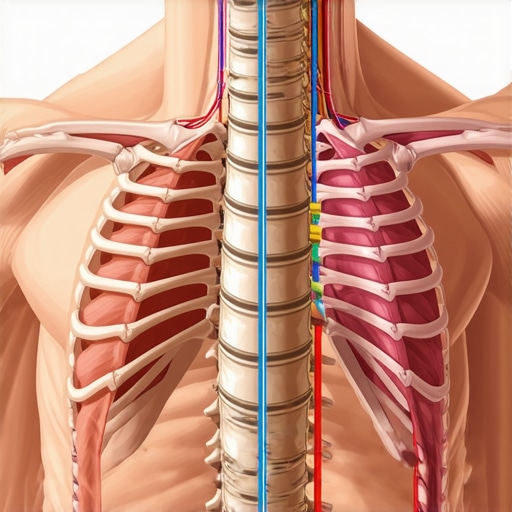
Can your breathing habit actually lock up your spine?
It sounds far-fetched, but your rib cage is the foundation for your neck and shoulders. If you are a “chest breather”—meaning your shoulders shrug up every time you inhale—you are using your neck muscles to do the work of your diaphragm. This is a subtle but destructive nuance. I’ve found that why your rib cage position determines your shoulder health is often the missing piece for people who have “fixed” their monitor height but still feel tight. When you learn the breathing habit that is keeping your back muscles tight, you realize that your lungs are basically a 24/7 internal massage for your mid-back. If you aren’t breathing into your belly, you are missing out on thousands of tiny spinal mobilizations every single day.
The Trap of the Ergonomic Quick Fix
The most dangerous trap is thinking a new chair or an expensive pillow will do the work for you. These tools are helpful, but they don’t replace the need for mechanical awareness. You can have a five-thousand-dollar setup, but if you have a wrist position at your desk that affects your neck health, you’ll still end the day in pain. It’s about the chain of command in your body. Your neck moves more when your upper back is stiff, and your lower back takes the hit when your hips are locked. Have you ever fallen into this trap of buying a “fix” that didn’t actually change how you felt? Let me know in the comments. We need to stop looking for the magic gadget and start looking at how we actually move through our day. To really see results, you have to look at the link between poor posture and chronic back pain as a dynamic problem, not a static one. Your best posture is your next posture. Keep moving.If you want to move beyond just ‘not hurting’ and into a state of actual resilience, you need to look at your environment as a training ground rather than just a place where you work. I eventually transitioned to a split mechanical keyboard—specifically a Lily58—not because I’m a tech geek, but because it allows my shoulders to stay open and neutral. Traditional keyboards force your wrists into a permanent state of ‘ulnar deviation,’ which creates a ripple effect of tension that travels all the way up the kinetic chain into your neck. I realized that why your laptop stand might be making your neck knots worse is usually because it is positioned just an inch too high, forcing a subtle but constant shrug in your traps. To combat this, I follow the advice of Alan Hedge, a Professor Emeritus at Cornell University and a leading ergonomics expert, who emphasizes the ‘neutral reach zone.’ This means keeping everything you frequently use within a forearm’s distance to minimize musculoskeletal effort. If you are constantly reaching forward for your mouse or coffee, you are losing the battle against gravity.
Ditch the Fancy Chair for the Floor
We spend so much time molded into the shape of our office chairs that our hips eventually forget how to function as the powerful hinges they are. I’ve found that the best way to scale my progress long-term wasn’t a better chair, but spending at least 20 minutes every evening on the rug. Learning how to sit on the floor with your kids without hurting your hips was a massive turning point for my lower back recovery. When you utilize the floor seated position that actually fixes your stiff hips, you are forcing your spine to support itself without the false crutch of a foam cushion. This simple habit prevents the ‘glute amnesia’ that often triggers a secondary sciatica flare-up. It turns your evening relaxation time into a passive mobility session that pays dividends the next morning.
How do I keep my spine mobile for the next decade?
Consistency will always beat intensity. You don’t need a grueling 90-minute yoga session every weekend; you need three minutes of mobility mastery every single morning. I’ve made it a non-negotiable rule to perform one spinal reset before I ever check my email. Looking ahead, I predict that by 2025, we will see a massive shift toward wearable biofeedback. Instead of guessing if our posture is ‘good,’ we will have haptic sensors that gently vibrate when our rib cage slumps, but until that tech is mainstream, you have to be your own sensor. Staying ahead of the curve means managing back pain in 2025 by listening to the ‘whispers’ of stiffness before they become the ‘screams’ of a herniated disc. Incorporating these back pain breakthroughs into your daily routine is about creating a lifestyle, not just finishing a checklist. If you’re feeling tight right now, stand up and try the 30-second doorway stretch for people who work at a laptop. It is the single fastest way to reverse the damage of a long Zoom call and reset your posture in real-time.
The Hardest Lessons My Aching Back Taught Me
I spent years thinking that if I just sat perfectly still in the ‘right’ way, I’d be immune to injury. I was wrong. Here are the realizations that finally allowed me to work without that 3 PM brain fog and back ache.
- Posture is a verb, not a noun: There is no one perfect position. Your best posture is your next posture. I stopped trying to be a statue and started focusing on mobility mastery through frequent small shifts.
- Pain is a liar: Where it hurts is rarely where the problem started. My neck pain was actually a symptom of my stiff rib cage and tight hips.
- Equipment is a support, not a savior: A fancy chair won’t fix a lifestyle that avoids movement. You have to earn your comfort with mechanical awareness.
The Three Simple Tools That Changed My Life
You don’t need a thousand-dollar setup to find relief. These are the specific items I use every single day to stay resilient and productive:
- A Split Mechanical Keyboard: This was the biggest game-changer for my upper body. It allows me to keep my shoulders wide and my chest open, preventing that slumped ‘C’ shape that creates tension.
- A Simple Tennis Ball: I keep this in my desk drawer for self-massage during long calls. Learning how a simple tennis ball can release your deep glute tension saved me from several sciatica flare-ups during long travel days.
- A Roost Laptop Stand: It’s incredibly light and ensures my screen is always at eye level, no matter if I’m at a coffee shop or a hotel desk.
Your Spine Deserves More Than Just Survival
I know how exhausting it is to live with constant physical ‘background noise.’ But you don’t have to accept afternoon agony as a part of your job description. By implementing these back pain breakthroughs and prioritizing movement over static sitting, you can reclaim your focus. Start small—try the 30-second doorway stretch for people who work at a laptop right now and feel the immediate relief. Your body will thank you by the time the clock hits 5 PM. If you are looking for even deeper solutions, exploring sciatica relief secrets can provide that extra edge for long-term health. Have you found a specific desk hack or tool that finally made your neck or back feel better? Let me know in the comments below!