
The ‘one-foot-up’ rule for pain-free dishwashing and chores
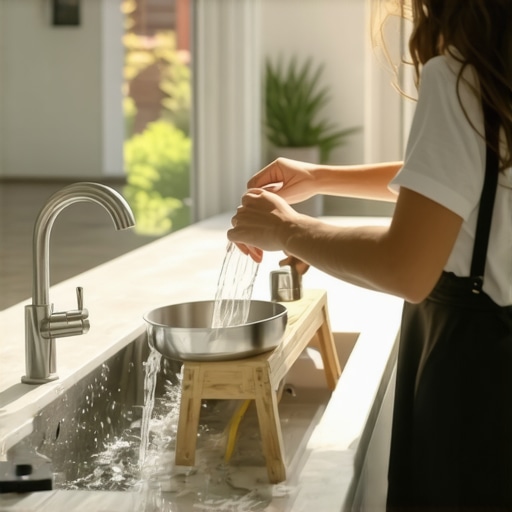
I was standing at my kitchen sink three months ago, staring down a pile of crusty lasagna pans, when my lower back decided to stage a mutiny. It wasn’t just a dull ache; it was a sharp, electric twinge that made me wonder if I’d ever stand up straight again. I felt like I was eighty years old instead of someone just trying to get through the Tuesday night chores. Have you ever felt that sharp pinch while trying to finish the dinner dishes?
Give Your Lower Back the Break It Deserves While You Scrub
For the longest time, I blamed my shoes, my mattress, or the fact that I hadn’t hit the gym. I even tried looking up how to load the dishwasher without hurting your lower back, but the actual standing part remained my absolute kryptonite. The truth is, most of us stand at the sink with our knees locked and our pelvis tilted forward, putting a massive amount of stress on the L4 and L5 vertebrae. I made the mistake of thinking a fancy $100 ergonomic mat would be my savior, but I quickly learned understanding the link between poor posture and chronic back pain that expensive equipment cannot fix a bad stance. Research published by the Journal of Biomechanics indicates that prolonged static standing significantly increases the stiffness in your lumbar tissues compared to even slow walking, which explains why your back feels like a rusty hinge after twenty minutes of cleaning. Today, I’m going to share a dead-simple rule that changed my life: the one-foot-up rule. By using a small step stool—or my favorite neighborly hack, just opening the cabinet doors and resting one foot on the base—you take the load off your psoas muscle and flatten your lumbar spine. This simple shift is a game-changer if you’re worried that is your back pain a sign of something more serious.
Can a six-inch stool really beat chronic sciatica?
I get it. It sounds way too simple to be effective. When you’re hunting for sciatica relief secrets, you expect the solution to involve complicated machines or hours of specialized therapy. But think about this: when you lift one foot onto a small stool, you instantly reset your pelvis. I spent years ignoring why your core strength won’t fix your back if your hips are locked, thinking I could just brace my way through the pain. I was wrong. By the time I finished the dishes, my legs would be numb. This rule isn’t just about comfort; it is about spine longevity. Whether you are scrubbing pots or learning how to vacuum your house without straining your lower back, you have to work with your anatomy. Let’s dive into exactly how to set up your kitchen for success.
Turn Your Kitchen Sink into a Low-Stress Zone
Setting up for success at the kitchen sink means changing the geometry of your stance. Think of your spine like a mast on a ship; if the base is tilted, the whole structure wobbles. When you stand with your feet flat and your knees locked, you are essentially pulling your pelvis into an anterior tilt, which arches your back and pinches those sensitive nerves. To fix this, you need to provide a ‘landing pad’ for one foot. I learned how to use a step stool to save your lower back in the kitchen during a particularly brutal holiday season. My back was screaming after just twenty minutes of prep, but simply shifting one foot onto a four-inch elevation changed the game.
The Cabinet Door Trick for Instant Relief
If you do not have a stool handy, you already have the perfect tool built into your kitchen. Open the cabinet doors directly under the sink. Place one foot on the base of the cabinet, right where the floor meets the wood. This slight elevation—usually just three or four inches—is enough to slacken the psoas muscle, which is often the culprit when your back feels ‘tight’ rather than ‘injured.’ I remember trying this while scrubbing a massive Thanksgiving roasting pan last year. Normally, I would have had to take a twenty-minute break on the couch afterward, but by alternating my feet every five minutes, I finished the entire pile of dishes without that familiar electric zing in my tailbone. 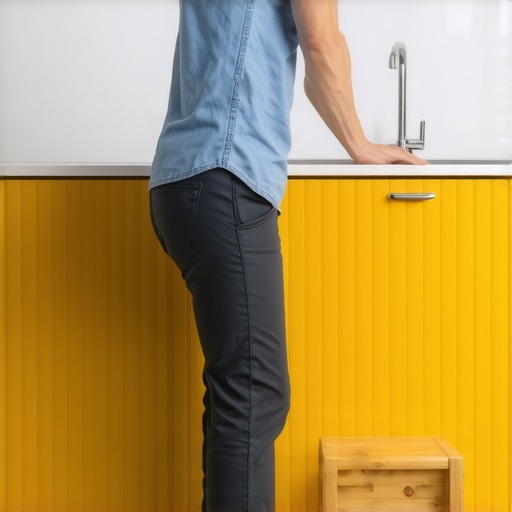
Engagement is Your Secret Weapon Against Stiffness
Most people think ‘relaxing’ means letting everything go limp, but that is how you end up slumping into your joints. You need a little bit of active support. Use the 5-second glute squeeze that prevents sciatica flares while standing to create a natural corset of muscle around your lower spine. This isn’t about a full workout; it’s about a gentle ‘wake up’ call to your posterior chain. If you find that your back still aches despite these changes, it might be time to how to check your own hip mobility in under a minute. Often, the back is just overcompensating for hips that have turned into blocks of concrete from years of sitting. You can have the strongest core in the world, but why your core strength won’t fix your back if your hips are locked becomes obvious once you realize your spine is doing all the bending that your hips should be handling. If you start feeling a radiating pain down your leg while standing, use the simple test to see if your leg pain is actually sciatica to determine if you’re dealing with nerve compression or just muscle fatigue. Integrating boost your back mobility simple exercises that make a difference into your morning routine will make these standing sessions significantly easier, as your joints will be lubricated and ready for the load before you even pick up the sponge.
Stop Stretching Your Hamstrings if Your Back Hurts
We have been told for decades that if your back is tight, you need to stretch your legs. I fell for this for years, thinking my hamstrings were just stubborn. But here is the nuance most people miss: if you are dealing with nerve irritation, that ‘tightness’ isn’t a short muscle; it is a protective neural tension. When you bend over to touch your toes because your back feels stiff after the dishes, you might actually be tugging on a sensitized sciatic nerve like a frayed guitar string. This is why stretching your hamstrings can actually flare up sciatica rather than fixing it. In fact, research into clinical neurodynamics, pioneered by experts like Michael Shacklock, suggests that nerves do not respond well to traditional static stretching. They need ‘sliding’ or ‘flossing’ movements. If you keep pulling on a nerve that is already inflamed, your brain will keep the surrounding muscles locked tight to protect it. This is the hidden reason your hamstrings always feel tight no matter how much you stretch.
The Counter-Lean Trap You Are Probably Falling Into
Watch yourself next time you are at the sink. Do you lean your belly or hips against the edge of the counter for support? It feels like you are giving your muscles a break, but you are actually creating a mechanical ‘hinge’ right at your lumbar spine. This force pushes your vertebrae into an exaggerated curve, and you should know why you should stop stretching your back into a c-shape even when it feels like a temporary relief. This leaning habit creates a localized ‘hot spot’ of pressure on your discs. It is a classic ‘oops’ factor: seeking support from the furniture instead of your own structural alignment.
Does nerve tension explain why your pain feels like a wire?
For the advanced reader who has tried every foam roller and massage gun on the market, you have to ask if you are treating the right tissue. If the pain feels electric, zapping, or like a tight wire running down your leg, you are likely dealing with a neuro-mechanical issue. Knowing how to tell if your sciatica is a disc or muscle issue is the first step toward the right solution. Most people mistake nerve sensitivity for muscle weakness. They try to ‘strengthen’ their way out of a flare-up, but if the nerve is currently ‘stuck’ or compressed, adding more muscle load just increases the internal pressure. Have you ever fallen into this trap of stretching a ‘tight’ muscle only to feel worse an hour later? Let me know in the comments below. To truly fix the cycle, you need to focus on back pain breakthroughs navigating your path to restored mobility that address the nervous system, not just the muscles. By shifting from a ‘stretch it out’ mindset to a ‘move it safely’ mindset, you can stop the kitchen sink from being a place of punishment.
Ditch the Expensive Gadgets for These Two Basic Tools
Maintenance doesn’t mean you have to turn your living room into a physical therapy clinic. Over the years, I have wasted hundreds of dollars on vibrating foam rollers and ‘posture-correcting’ shirts that just ended up in the back of my closet. What actually stuck were two items that cost less than a lunch out. First is the McKenzie Lumbar Roll. I learned how to use a lumbar roll to prevent mid-day back fatigue, and it is the only thing that keeps me from slumping into a C-shape during long writing sessions. The second is a simple tennis ball. When I feel that familiar tightness in my piriformis after a long drive, knowing how a simple tennis ball can fix deep glute tension allows me to perform a self-release in about two minutes. However, you have to be tactical. If you just roll over a sensitive nerve without a plan, you are asking for a flare-up. Always make sure you understand how to use a foam roller for sciatica without making it worse before you start applying heavy pressure to your legs. 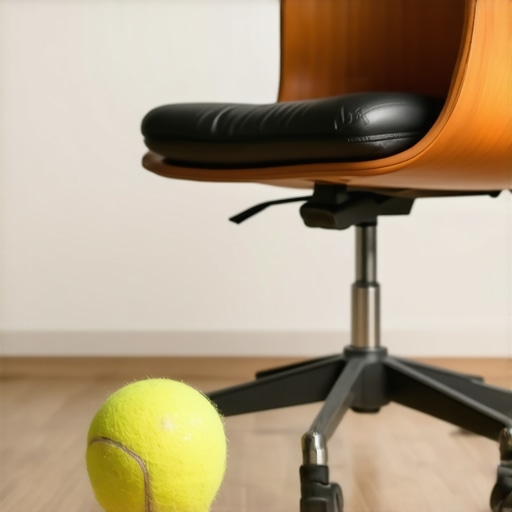
How can I keep my spine pain-free for the next decade?
Long-term success is less about the ‘big’ workouts and more about the boring, daily wins found in mobility mastery daily tips to keep your spine and joints healthy. Dr. Stuart McGill, a world-renowned spine biomechanics expert at the University of Waterloo, emphasizes in his research that ‘spine hygiene’—the way you move during non-exercise tasks—is often more important than the exercises themselves. This is why I advocate for a lifestyle shift. It is about overcoming sciatica top lifestyle changes for better quality of life rather than just looking for a quick fix at the pharmacy. As we look toward unlocking mobility expert tips on managing back pain in 2025, I predict we will see a massive rise in personalized biofeedback tools—wearable sensors that vibrate when your pelvic tilt shifts—helping us correct our ‘sink stance’ in real-time before the pain even starts. For now, your best defense is a little bit of mindful engagement. I want you to try one thing today: next time you are standing at the sink, use the 5-second glute squeeze that prevents sciatica flares while standing. It is a tiny, invisible move that builds the specific endurance your spine needs to handle everyday life without another ‘mutiny’ from your lower back.
Three Realizations That Finally Fixed My Kitchen Fatigue
Reflecting on my journey, I discovered that micro-adjustments beat massive interventions every single time. I used to think I needed a week-long spa retreat to fix my stiffness, but I found that practicing the 10-second breathing trick for instant lower back relief while waiting for the kettle to boil did more for my nervous system than any expensive massage. Another lightbulb moment was realizing that ‘pushing through’ is a recipe for disaster; if you feel a zing, your body is asking for a change in geometry, not more willpower. I also learned the truth about using heat packs versus ice for chronic stiffness—for me, gentle warmth before a big cleaning session kept my muscles pliable and prevented that ‘locked’ feeling afterward. Finally, I realized that spinal health is a 24/7 job, which includes even small habits like the proper way to brush your teeth without straining your back.
What I Keep Within Reach for Lasting Relief
I’ve narrowed down my survival kit to a few essentials that actually work. First, the McKenzie Lumbar Roll is non-negotiable for my office chair to prevent that dreaded slumping. Second, I keep a tennis ball in the kitchen drawer; using it for a quick glute release can be a lifesaver. I also recommend following mobility mastery daily tips to keep your spine and joints healthy to build a sustainable routine. For those looking to dive deeper into long-term habit changes, overcoming sciatica top lifestyle changes for better quality of life is my favorite guide for looking beyond the kitchen sink. These tools work because they address the root cause—our daily movement patterns—rather than just masking the symptoms.
#IMAGE_PLACEHOLDER_E#
Ready to Scrub Without the Struggle?
Your kitchen should be a place where you create meals and memories, not a source of physical dread. By implementing the one-foot-up rule and being mindful of your pelvic tilt, you can effectively manage your lower back pain and reclaim your evening energy. Remember, you aren’t just cleaning dishes; you are practicing ‘spine hygiene’ that will pay off for decades. For more detailed guidance on your journey, explore these back pain breakthroughs navigating your path to restored mobility. You have the tools and the plan—now it is time to move with confidence. Do you have a favorite trick to keep your back happy while doing chores? Let me know in the comments below!