
The hidden reason your legs feel heavy during your evening walk

I was halfway through my usual sunset loop around the neighborhood last Tuesday when it hit me—that familiar, frustrating sensation that I was dragging two concrete pillars instead of legs. Every step felt like I was wading through waist-deep molasses. I looked at my fitness tracker, then at the pavement, wondering if the gravity in my zip code had suddenly doubled. I remember one specific evening where the air was crisp and perfect, and I had promised my dog a long trek. Three blocks in, my shins started to throb and my thighs felt like they were made of cast iron. I actually sat down on a stranger’s retaining wall, staring at my sneakers in total betrayal. It wasn’t a lack of cardio, and it certainly wasn’t a lack of effort. It was that heavy leg syndrome that steals the joy out of a perfectly good evening.
That Lead-Weight Feeling in Your Calves Needs an Explanation
For the longest time, I made the classic rookie mistake: I assumed my legs were just tight and needed more stretching. I spent weeks religiously hitting the floor every night, but why your hamstrings feel tight but never get better with stretching eventually became clear to me—I was treating the symptom, not the source. If you’ve ever finished a walk feeling like your lower half is twice its actual weight, you aren’t alone. Today, we are going to find the mechanical glitches in your gait and the surprising role your spine plays in how light or heavy your feet feel. We’ll uncover why your body is putting on the brakes mid-stride and how to release that tension for good.
Is this just a sign that I’m out of shape?
It’s the first thing we all ask ourselves. We blame the extra slice of pizza or the three days we missed at the gym. But here’s the kicker: heavy legs are often a mechanical or circulatory signal, not a fitness failure. According to the Society for Vascular Surgery, nearly 40 percent of people in the U.S. may experience chronic venous insufficiency, which causes that weighted sensation when blood struggles to climb back up from your ankles. However, even if your veins are clear, a simple stiff ankle causing your recurrent lower back aches could be forcing your calf muscles to overwork until they simply give up. I spent years fighting my own body because I didn’t realize that my thin shoes were impacting my lower back shock absorption and sending fatigue signals straight down to my feet. Have you ever had to cut a walk short because your legs just wouldn’t cooperate? It’s incredibly demoralizing. The good news is that once you stop attacking the wrong problem, the solution is usually much simpler than you think. Let’s look at the real reason your hamstrings feel tight after a long walk and what’s actually happening under the hood when you step off that curb.
Stop Fighting the Pavement and Start Fixing Your Foundation
Think of your body like a high-performance car. If you drive with the emergency brake halfway up, you can still move, but the engine is going to scream and the fuel efficiency will plummet. That lead-weight feeling in your legs is often your body’s version of that dragging brake. Instead of trying to power through the fatigue, we have to find where the tension is snagged. Usually, it starts at the very bottom of the chain. If your ankles are locked up, your calf muscles never get a chance to go through their full range of motion. They stay in a constant state of semi-contraction, which burns through energy and leaves you feeling like you’re walking through wet cement. I remember one specific trip to the zoo with my niece where I felt this intensely; by the time we hit the primate exhibit, I was ready to call a cab just to get to the parking lot. I realized I hadn’t moved my ankles properly in days.
Wake Up Your Ankles with a 30-Second Reset
The first step to lightening the load is restoring the pivot point of your stride. When your ankle doesn’t bend correctly, your foot slaps the ground rather than rolling over it. This creates a jarred impact that travels up to your knees and lower back. To fix this, you don’t need a gym; you need a wall. Performing the 30-second ankle drill that reduces your risk of back injury allows the joint to glide without forcing the muscles to overcompensate. 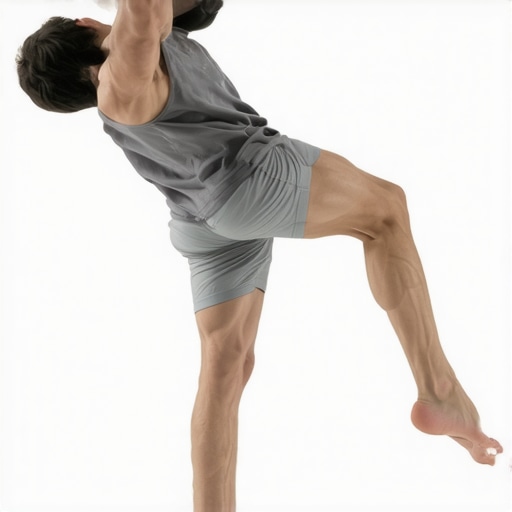
Turn Off the Nerve Brakes with a Simple Glute Activation
Sometimes the heaviness isn’t about the muscles at all, but about how your nerves are communicating. If your glutes are “asleep” from sitting too much, your hamstrings and calves try to do their job, but they aren’t built for that kind of heavy lifting. This often happens to people who use standing desks incorrectly, and they wonder why your standing desk is giving you lower back pain along with that leg fatigue. To flip the switch, try the 5-second glute squeeze that prevents sciatica flares while standing. By waking up the larger muscle groups, you effectively “release” the tension in the lower leg. I started doing this every time I stood up from my desk, and the vibrating heaviness in my calves disappeared within a week.
Why You Need to Quit the Traditional Toe-Touch
If your legs feel heavy, your first instinct is likely to reach for your toes and pull. Stop. If the heaviness is caused by nerve tension—which is very common if you have any history of back issues—stretching can actually make the “weight” feel worse by irritating the nerve sheath. This is exactly why reaching for your toes is the worst way to stretch your back and legs when they feel tight. Instead, focus on soft tissue release. Learning how a simple tennis ball can relieve deep glute and sciatic pain is a much safer way to address the source of the tension without triggering a protective spasm from your nervous system. By using the ball to find those trigger points, you’re essentially melting the “lead” out of your legs without the trauma of a forced stretch.We’ve talked about the mechanical brakes in your feet, but we need to address the biggest myth in the mobility world: the idea that there is a “perfect” posture you must maintain at all times. Most of us were told to “stand up straight” or “pull your shoulders back,” but in my experience, forcing this rigid, military-style stance is exactly why your perfect upright posture is actually tensing your spine and keeping your legs feeling heavy. When you lock your back into a position it isn’t ready for, you create a low-level “tonic” tension. This tension acts like a dimmer switch for your nervous system, turning down the power to your legs while turning up the feeling of fatigue.
Can your neck stiffness secretly weigh down your legs?
It sounds like a stretch, literally, but the human body is a continuous tether of nerves from the base of your skull to your big toe. I’ve seen countless people who focus entirely on their calves, yet never realize the hidden link between tight calves and neck stiffness. If your “dura”—the protective sleeve around your spinal cord—is under tension because your head is jutting forward at a desk, that tension pulls all the way down the chain. A study published in the Journal of Bodywork and Movement Therapies highlights how myofascial continuity means a restriction in one area can manifest as “heaviness” or “drag” in a completely different limb. If you’ve been ignoring your neck while trying to fix your legs, you’re only solving half the puzzle. 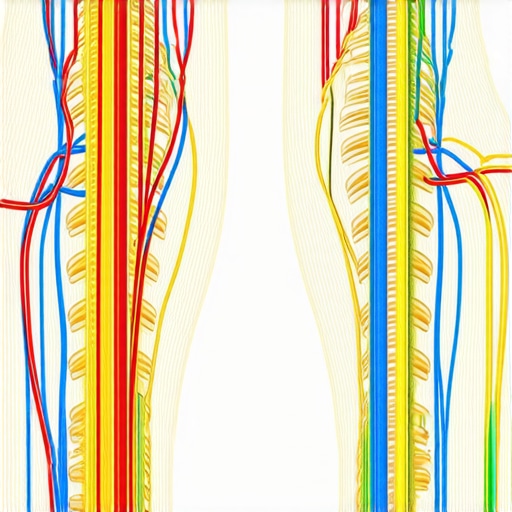
Stop stretching through the zing and the burn
Here is the “oops” factor that stalls most progress: the belief that if something feels tight, we should pull on it until it lets go. But if that tightness is actually nerve-related, you are walking into a trap. This is specifically why stretching your hamstrings can actually flare up sciatica rather than soothing it. When a nerve is irritated, it doesn’t want to be lengthened; it wants to be desensitized. If you feel a “zing” or a sharp “electrical” sensation while trying to loosen up, stop immediately. You aren’t stretching a muscle; you’re tugging on a live wire. Instead of brute force, look for expert strategies for lasting comfort that prioritize gentle movement over aggressive static holds. By shifting your focus to daily tips to keep your spine and joints healthy, you stop the cycle of irritation. Have you ever fallen into this trap of trying to stretch away a pain that only seemed to get sharper? Let me know in the comments below!
The Tools I Actually Use to Stay Mobile Every Day
Once you get that initial relief, the real challenge is making sure that heavy-leg feeling doesn’t creep back in during your next commute or laundry day. I’ve tried every fancy foam roller and vibrating massage gun on the market, but I always come back to a simple lacrosse ball. I keep one in my glove box and one by my couch. Why? Because it’s the only thing small enough to reach the deep rotators of the hip. When I feel my calves starting to tighten up, I know the tension is actually coming from my glutes, and learning how a simple tennis ball can release your deep glute tension is far more effective than any expensive gadget. It’s about precision, not power.
How do I keep my legs feeling light month after month?
Maintenance isn’t about a grueling hour-long mobility routine; it’s about ‘spinal hygiene.’ As world-renowned spine biomechanics expert Dr. Stuart McGill points out in his research on low back disorders, it is the cumulative effect of our daily postures—the way we sit, stand, and move—that determines our long-term health. I started auditing my home habits and realized I was wrecking my progress every morning. Now, I focus on the proper way to brush your teeth without straining your back and being mindful of how to unload the dishwasher without rounding your spine. These tiny moments are where you either win or lose the battle against sciatica. 
Make Your Environment Do the Work for You
I am a huge fan of ‘passive’ corrections—things you set up once that force you to move better without thinking. My favorite hack is the mirror trick. I purposefully adjust my rearview mirror to force better driving posture by tilting it just a fraction of an inch higher than ‘normal.’ If I start to slouch during a long drive, I can’t see behind me, which is an immediate, silent cue to sit up tall and decompress my spine. This prevents that numbing sensation in my thighs before it even starts. If you spend hours in the car or at a desk, these environmental shifts are the key to mobility mastery and daily tips to keep your spine and joints healthy. I predict that in the next few years, we’ll see AI-driven wearable sensors that do this for us in real-time, but for now, a slightly tilted mirror is a free and perfect solution.
Advanced Strategies for Long-Term Results
We often overlook the ‘boring’ chores as opportunities for recovery. I used to dread the weekly chores until I learned how to carry a heavy laundry basket without a back spasm by using my hips as a shelf rather than my lower back. When you stop seeing movement as something that only happens at the gym, you start navigating your path to restored mobility with much more ease. If you’re ready to take this a step further, I highly recommend trying the ‘one-foot-up rule’ next time you’re at the sink. It’s a game-changer for lower back pressure. I want you to try the rearview mirror adjustment tomorrow morning. It’s the simplest way to see how your posture directly impacts the weight of your legs by the time you reach the office.
The Hard Lessons My Heavy Calves Taught Me
After years of frustration, I’ve had a few lightbulb moments that changed how I approach my body every single morning. First, I stopped assuming every tight muscle needed a stretch. If I’m feeling that lead-weight sensation, I check my nerve tension first. I also learned that why your perfect upright posture is actually tensing your spine was the reason my back felt like a board—I was trying too hard to be rigid instead of being mobile.
Another realization? Your feet are the ultimate messengers. If I spend all day in narrow shoes, my lower back eventually pays for it. I’ve found that simple exercises that make a difference aren’t about intensity; they are about teaching the brain that it’s safe to let go of the brakes. Lastly, never ignore the neck. The tension at the top of your spine creates a pull that travels through your entire nervous system all the way down to your heels.
My Non-Negotiable Kit for Moving Better
I don’t believe in expensive gadgets that gather dust. Instead, I rely on a few specific things to stay light on my feet. I always recommend Dr. Stuart McGill’s research; his work on spinal stability is the gold standard for anyone navigating your path to restored mobility. I also keep a simple tennis ball handy because how a tennis ball can relieve deep glute and sciatic pain is often more effective than any professional massage. Finally, I’ve swapped my footwear. Learning how your high-heeled shoes are changing your spine’s natural curve was enough to make me prioritize flat shoes that allow my ankles to function as the shock absorbers they were meant to be.
You Don’t Have to Settle for Heavy Feet
It’s easy to feel like your best days of walking or hiking are behind you when every step feels like a chore. But once you stop fighting your anatomy and start working with it, the gravity in your world starts to feel normal again. Whether it’s applying sciatica relief secrets to your morning routine or simply implementing the one foot up rule for pain-free dishwashing, these small wins add up to a much lighter life. Your body is incredibly resilient; it just needs you to stop pulling on the wrong levers. Have you ever felt that strange electrical zing when trying to stretch your legs? Let me know in the comments below!