
The link between your digestion and your lower back pain
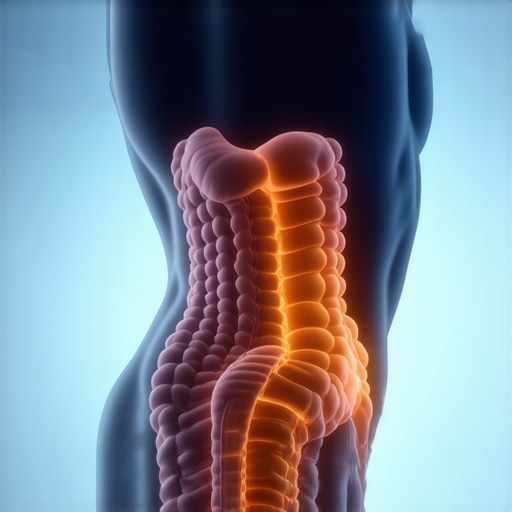
I remember the exact moment I realized my heating pad was a band-aid for a much deeper problem. It was a Tuesday evening, right after a particularly heavy pasta dinner. I wasn’t lifting anything heavy or twisting the wrong way; I was just sitting on the sofa, yet my lower back felt like it was being squeezed in a hot vise. For years, I’d blamed my chair, my sleep position, and even my shoes. I’d spent countless hours on the floor because I thought stretching my hamstrings would fix my tight legs, but the relief never lasted more than an hour. That night, between the bloating and the burning ache in my lumbar spine, the lightbulb finally flickered on. My gut was angry, and it was taking my back down with it. Today, I want to show you how your digestive health is the hidden puppet master behind your mobility, and more importantly, how you can finally break the cycle of systemic tension.
The Invisible Tug-of-War Inside Your Belly
I made the classic mistake of treating my body like a collection of separate parts rather than a connected web. I focused entirely on the back of my body while ignoring the chaos happening in the front. Your internal organs are anchored to your spine by a complex network of connective tissue called mesentery. When your digestive system is inflamed or backed up, that tissue physically pulls on your vertebrae. It’s like someone is constantly tugging on the front of your shirt; eventually, your shoulders and back have to lean into the tension just to keep up. This internal pressure is a huge reason why poor posture and chronic back pain are so often linked to what we eat. If your insides are swollen, no amount of ‘sitting up straight’ will fix the structural pull coming from your core.
Does changing my diet really affect my physical mobility?
It sounds a bit far-fetched at first, right? I was the biggest skeptic. I thought ‘mobility’ was something you did in a gym, not in a kitchen. But the science of referred pain is undeniable. According to research cited by Harvard Health Publishing, systemic inflammation—the kind that starts in a stressed-out digestive tract—can directly trigger muscle spasms and joint stiffness in the lower back. I had to learn the hard way that how you breathe and stabilize your core is completely compromised when your midsection is distended. Have you ever noticed that your back feels twice as stiff the morning after a night of heavy, processed food? You aren’t imagining things. That’s your gut signaling a flare-up through your spine. If you’ve felt this weird connection before, please reach out or leave a comment—I honestly thought I was losing my mind until I saw the patterns myself. Now, let’s look at how we can actually soothe this internal tension to improve your back mobility from the inside out.
Stop Sucking It In and Start Breathing Wide
Most of us have a subconscious habit of bracing our midsection to look thinner or feel ‘supported,’ but this constant tension is a disaster for your mobility. When you grip your abdominal muscles, you prevent your diaphragm from dropping fully. This forces your neck and upper back to do the heavy lifting of breathing, leading to that chronic stiffness we all hate. I remember being at a formal wedding, wearing a tight suit and ‘sucking it in’ for hours. By the time the cake was served, my lower back was in such an acute spasm I could barely stand to give a toast. It wasn’t the standing that hurt; it was the fact that I’d locked my internal organs in a cage of muscular tension. The first thing you must do is learn how your breathing pattern affects your core stability. Instead of breathing ‘up’ into your shoulders, imagine your waist expanding 360 degrees like a barrel. This internal expansion creates space for your organs and sends a signal to your nervous system to let go of the defensive guarding in your lumbar spine.
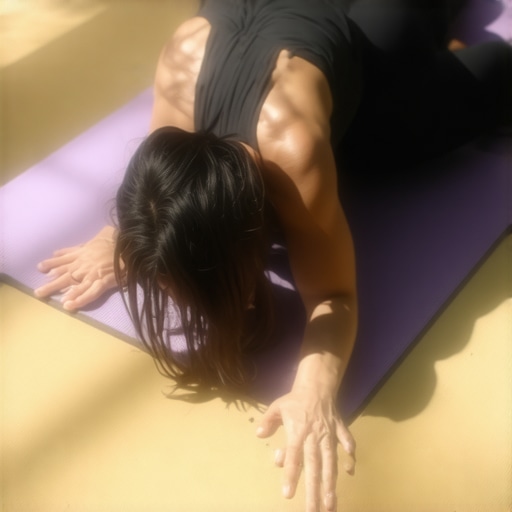
The Breathing Trick That Releases Deep Muscle Tension
If you feel that deep, internal ache that no massage can reach, you likely need to decompress from the inside out. I started practicing a specific technique where I lay on my back with my knees bent and focused on sending my breath toward my tailbone. It felt weird at first, almost like I was trying to push air into my hips. However, this is the most effective way to how to breathe into your lower back to release deep muscle tension. When you master this, you aren’t just stretching a muscle; you are physically moving the connective tissue that anchors your digestive tract to your spine. I found that doing this for just two minutes before a meal significantly reduced the ‘post-pasta’ back flare-ups I used to suffer from.
How Water Actually Cushions Your Vertebrae
We often think of hydration as something for our skin or energy levels, but your spinal discs are essentially high-tech sponges. If you are dehydrated, those sponges shrink, leaving your vertebrae to grind closer together, which irritates the nerves and causes that familiar radiating pain. Since your digestive system also requires massive amounts of water to process food, it will literally ‘steal’ moisture from your joints and discs if you aren’t drinking enough. This is why how proper hydration keeps your spinal discs plump and healthy is a non-negotiable part of mobility. I noticed a massive shift when I stopped drinking water only when I was thirsty and started sipping consistently throughout the day. My morning stiffness, which I’d blamed on my mattress for years, vanished within a week of consistent hydration.
Move Your Body Before You Sit on the Sofa
After a long day, the temptation to melt into the cushions is real, but a compressed gut is a heavy gut. If you go straight from a heavy dinner to a soft chair, you are doubling the mechanical pressure on your lower spine. Instead, try a simple morning move to prime your spine and repeat a version of it in the evening. Even a five-minute slow walk around the house helps the mesentery stay supple and prevents your organs from ‘settling’ into your lumbar region. If you must sit, ensure you are using the specific way to sit on a couch that protects your discs, keeping your hips slightly higher than your knees to maintain the natural curve of your back and give your digestive system room to breathe.
I’ve seen so many people double down on their stretching routine when their back flares up, only to find themselves unable to walk the next day. Here is the nuance most people miss: muscles often tighten up as a defense mechanism, not because they are actually short. If you have sciatica, that ‘tightness’ in the back of your leg is actually your nervous system trying to protect a sensitive nerve from being overstretched. When you force a deep stretch, you aren’t lengthening a muscle; you’re yanking on a raw, inflamed nerve. This is exactly why some sciatica stretches actually pinch the nerve further and prolong your recovery time. In my experience, the more you fight the tension with force, the more your body fights back with inflammation.
How do I tell if my leg pain is a muscle pull or a nerve root?
It is the most common question I get, and the answer changes everything about your treatment. A muscle strain usually feels like a dull ache that improves with gentle movement, but how to tell if your leg pain is a muscle pull or a nerve root often comes down to the quality of the sensation. Nerves don’t just ‘ache’—they burn, zip, or go numb. If you find that stretching makes the pain travel further down your leg, stop immediately. You can actually perform the nerve tension test you can do in your living room to see if your ‘tightness’ is actually neural. A study published in the Journal of Orthopaedic & Sports Physical Therapy (JOSPT) highlights that neural mobilization, or ‘nerve flossing,’ is far superior to static stretching for reducing radiating pain because it allows the nerve to slide through the tissue without being tensioned. 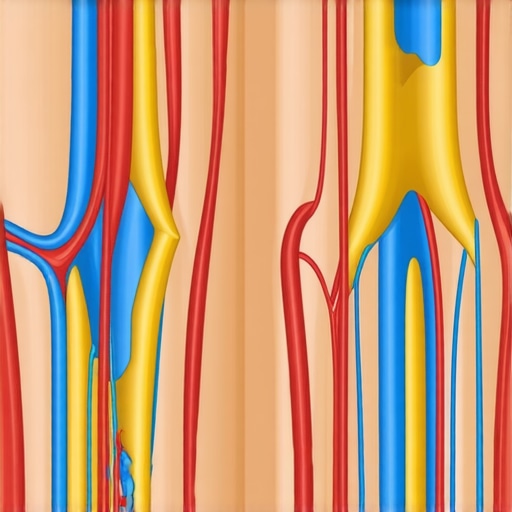
The Trap of Standing Up Straight
We’ve been told since kindergarten to ‘stand up straight,’ but for many, this is the worst possible advice. When you force your shoulders back and march your chest forward, you often create an exaggerated arch in your lower back. This mechanical compression closes the gaps where your nerves exit the spine. It’s a classic mistake: why standing up straight is actually making your back pain worse is because you are trading one form of tension for another. Instead of forced posture, you need to find a ‘neutral’ spine that allows for natural movement. If you’ve spent years trying to maintain perfect posture only to find your pain increasing, you aren’t failing—you’re likely over-correcting. Instead of aggressive stretches, try the nerve flossing routine for stubborn leg numbness and tingling to calm the system down. Have you ever fallen into this trap of over-stretching or forcing ‘perfect’ posture? Let me know in the comments below—I’d love to hear how your body reacted when you finally let go of the tension.
Why My Ten-Dollar Lumbar Roll Beats a Thousand-Dollar Chair
For years, I believed the lie that I needed a high-tech office chair to stop my back from aching. I spent a small fortune on mesh and adjustable armrests, but the tension persisted because I was still ‘slumping’ into the expensive material. It wasn’t until I discovered the work of Robin McKenzie, the founder of the McKenzie Method of Mechanical Diagnosis and Therapy (MDT), that I realized the problem was mechanical. He famously noted that most back pain is caused by the physical displacement of tissues from constant slouching. I finally understood that I needed to physically support the lumbar curve rather than just sitting in a ‘better’ chair. I started using the specific way to use a lumbar roll for maximum relief, and the change was almost instant. It wasn’t about the chair; it was about the support. I even learned how to set up your home office for less than fifty dollars using things I already had around the house, like a stack of books and a small towel.

The Simple Trick for Pelvic Stability
If you find that your lower back still feels ‘loose’ or unstable even after hours of stretching, the issue might actually be coming from your feet. When I was working from my dining room table, the height forced me to either dangle my feet or cross them at the ankles, which shifted my pelvis into a tilt. The moment I implemented the simple footstool trick to stop lower back pain while sitting, my SI joints felt anchored for the first time in months. This isn’t just about comfort; it’s about keeping the spine in a neutral state so your nerves aren’t being tugged. When your feet are grounded, your glutes can actually relax and stop ‘guarding’ your spine. This mechanical support provides the ‘slack’ your nervous system needs so that your previous efforts with conquering sciatica and ending discomfort actually stick rather than fading away the moment you sit down. Speaking of glutes, I still swear by how a simple tennis ball can release your deep glute tension to keep my sciatica from flaring up after a long drive or a day of meetings.
How do I maintain my mobility gains over time?
Consistency is the only secret here, but it doesn’t have to be a sixty-minute gym session. Maintenance is built into the small, invisible habits of your day, like following mobility mastery daily tips to keep your spine and joints healthy. Looking forward, I predict that in the next few years, we’ll move away from generic stretches and toward wearable biofeedback sensors that tell us exactly when our specific vertebrae are losing their neutral alignment in real-time. We are entering an era of ‘precision mobility’ where AI will analyze our gait and sitting angles to prevent pain before it starts. Until then, my best advice for revitalize your neck with effective techniques is to set a timer every forty-five minutes to reset your eye level and your lumbar curve. If you want a real breakthrough today, I challenge you to try the one-minute lumbar roll check: sit with a rolled-up towel behind your lower back for your next meal and see if your neck feels lighter afterward. You’ll be surprised how much the lower spine dictates the tension in your head and shoulders.
The Three Brutal Truths About My Recovery
Looking back, I wasted years on a search for the ‘perfect stretch’ when the solution was actually a total lifestyle shift. First, I had to accept that pain is a messenger, not an enemy; it was my body’s way of saying something was wrong with my internal pressure, not just my muscles. Second, I learned that you cannot out-stretch a poor diet or chronic dehydration because your spinal discs need moisture more than they need a complex yoga pose. Finally, I realized that five minutes of mindful breathing every day is far more effective than a two-hour gym session once a week. My own back pain breakthroughs didn’t come from a pill, but from listening to these quiet signals before they turned into a crisis.
#IMAGE_PLACEHOLDER_E#
The Gear That Actually Rescued My Lumbar Spine
I’ve tested dozens of gadgets, but only a few have earned a permanent spot in my routine. I always recommend Robin McKenzie’s work for anyone who wants to understand the mechanics of their own body—it is the gold standard for self-treatment. Next, I never go anywhere without a simple support cushion; the specific way to use a lumbar roll is far more important than how much you spend on the chair itself. I also swear by a small wooden footstool to keep my hips in a neutral tilt while I work. These tools are essential for anyone serious about managing back pain in 2025 and maintaining long-term relief.
Believe Your Body Can Heal Again
It’s easy to feel like your body has betrayed you when every move feels like a chore, but your tissues are constantly regenerating and looking for a way to find balance. By addressing your hydration, your breathing, and your internal tension, you are giving your nervous system the safety it needs to let go of the protective guarding that causes stiffness. Don’t be afraid to start small—even a morning routine that prevents stiffness can be the catalyst for a total transformation in how you feel. You deserve to move without fear. If you have questions about your specific situation or need a push in the right direction, please contact us for more personalized guidance. Have you ever noticed your lower back flaring up specifically after a day of poor hydration or a heavy meal? Let me know in the comments below!