
The truth about decompression tables for herniated discs
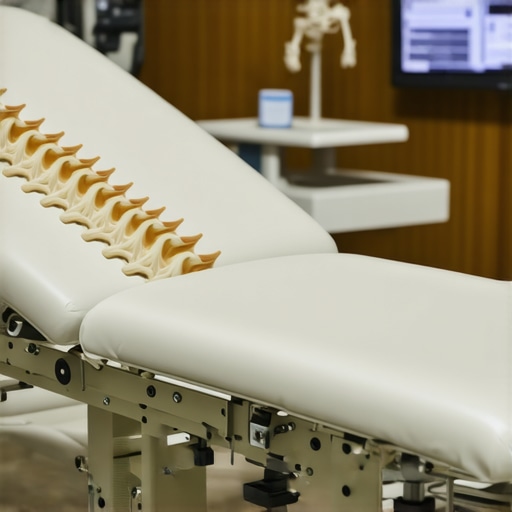
I remember lying on my living room floor at 3 AM, staring at the ceiling and wondering if I would ever tie my own shoes again without a bolt of lightning shooting down my leg. The pain from a herniated disc is not just a physical ache; it is an emotional thief that steals your ability to participate in your own life. Back then, I was desperate. I tried every gadget under the sun, and I made a massive mistake: I assumed that if a machine stretched my spine, the pain would simply vanish. I spent hundreds of dollars on a basic inversion setup, only to realize I was actually making my symptoms worse because I didn’t understand the difference between a bulging disc and a herniated disc. My muscles were so tight that they fought the stretch, causing a protective spasm that nearly put me out of commission for a month. Today, I want to pull back the curtain on decompression tables so you don’t repeat my expensive, painful blunders. We are going to look at what these machines actually do and, more importantly, whether they are the right tool for your specific recovery.
The Night I Realized Gravity Was My Greatest Enemy
For years, I treated my spine like a rusty hinge that just needed a good tug. I thought that if I could just get enough space between those vertebrae, my disc would pop back into place like a Lego brick. But the reality is much more complex. When you have a herniated disc, the inner jelly has leaked out, and that material often irritates the surrounding nerves. If you jump onto a decompression table without a plan, you might just be stretching irritated tissue. You need to know if is your back pain a sign of something more serious before you start mechanical traction. Research from the Journal of Neurosurgery indicates that while decompression can significantly reduce intradiscal pressure, the success rate drops if the patient has underlying instability or severe stenosis. Have you ever felt like your back was a ticking time bomb, just waiting for the wrong move to set it off? Share your experience in the comments, because I’ve been right there with you.
Is this fancy equipment actually worth the hype?
Many of my neighbors ask if these computerized tables are really any better than the cheap versions you see on late-night infomercials. The short answer is yes, but with a huge asterisk. Professional-grade decompression tables use sensors to detect when your muscles are tensing up. When your body fights the pull, the machine relaxes, tricking your nervous system into staying calm. This is why the truth about inversion tables for chronic sciatica relief is often disappointing—they are too blunt of an instrument for a delicate problem. If you are looking for unlocking sciatica relief expert strategies for lasting comfort, you have to understand that the table is just one piece of the puzzle. It’s about creating a window of opportunity where the disc can heal, but you have to fill that window with the right movements afterward. We’re going to dive into exactly how to structure that recovery so you aren’t just paying for temporary relief.
You Can’t Just Pull a Tense Muscle and Expect It to Relax
Think of your spine like a kitchen sponge. When you are standing or sitting all day, gravity is essentially squeezing that sponge dry, pushing out the fluids that keep your discs healthy. Decompression is the act of letting that sponge soak back up. However, if your muscles are in a state of high alert, they act like a rigid cage around the sponge, preventing any expansion. This is why many people fail to see results; they are fighting the machine. Before you even touch a table, you have to address why your body is guarding. Often, why a tight psoas is often actually a weak psoas becomes the primary roadblock. If those deep hip flexors are pulling on your lumbar spine, no amount of mechanical traction will provide a permanent fix because the moment you stand up, the psoas will just yank the vertebrae back together.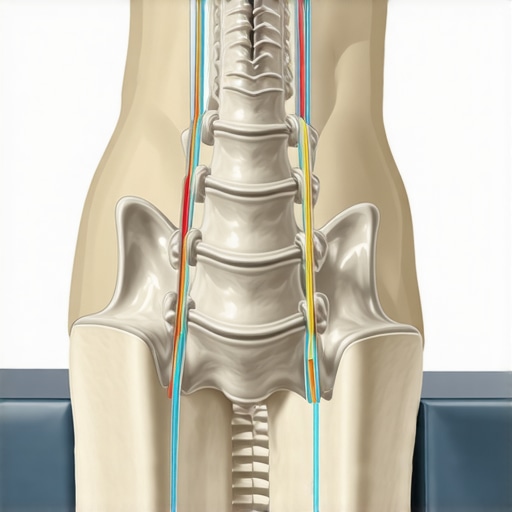
Master the Breath to Lower Your Body’s Guard
The secret sauce to a successful decompression session isn’t the weight setting on the computer—it is your diaphragm. When the table begins its gentle pull, your nervous system’s instinct is to tighten up to ‘protect’ the spine. To bypass this, you must learn how to breathe into your lower back to release deep muscle tension. I tell my clients to imagine their breath as a physical tool that pushes against the inner walls of their spine from the inside out. This internal pressure works in tandem with the table’s external pull, creating a true vacuum effect that allows the herniated material to move away from the nerve root.
Stabilize the Window Before It Slams Shut
The biggest mistake I see—and one I made for years—is walking straight from the decompression table to the car and sitting for a 30-minute commute. You have just created a ‘window’ of space and hydration in your discs, but that space is incredibly unstable. If you don’t lock it in with stability work, you’re just wasting your time. Immediately following a session, you should perform a low-threshold core move. Something like the dead bug exercise variation that actually protects your spine is perfect because it teaches your brain how to hold that newly created space without compressing the disc again. It’s like putting a spacer in a doorway while the glue dries.
My Messy First Attempt at Self-Correction
I remember the first time I felt that ‘pop’ of relief on a professional table. It felt like a miracle. I was so excited that I went home and immediately tried to ‘enhance’ the results by doing heavy toe touches and aggressive stretches. By 8 PM, I was curled in a fetal position on the floor. I had over-stretched the irritated ligaments that the table had just loosened. I learned the hard way that recovery is a slow burn, not a sprint. You have to be meticulous about your habits outside the clinic, even down to the morning habit that prevents your sciatica from flaring up. Consistency in how you move during the 23 hours you aren’t on the table is what determines if the 1 hour on the table actually works. If you’ve been traveling, you might even need the single movement that resets your posture after a flight to ensure your pelvis is level before you attempt any decompression.
Most people I talk to assume that if something feels tight, it must be stretched. I fell into this trap for years, spending hours every week trying to touch my toes to ‘loosen up’ my lower back. But here is the contrarian truth that most gurus won’t tell you: if your pain is nerve-based, stretching is often the fastest way to stay injured. When you have sciatica, that nerve is already sensitized and physically restricted. Imagine the nerve as a frayed electrical wire; every time you do a deep hamstring stretch, you are essentially yanking on that frayed wire from both ends. This is exactly why some sciatica stretches actually pinch the nerve further and lead to that frustrating ‘one step forward, two steps back’ recovery cycle.
Stop Treating Your Nerves Like Rubber Bands
The ‘oops’ factor here is treating neural tension like muscular tension. If you feel a sharp, zingy, or cold sensation while stretching, you aren’t hitting a muscle—you’re aggravating a nerve. I’ve seen so many people try to ‘power through’ this sensation, only to wake up the next morning unable to put weight on their leg. A study published in the Journal of Manual & Manipulative Therapy highlights that for patients with nerve-related symptoms, traditional static stretching can actually increase mechanosensitivity. In plain English? The more you pull on it, the more ‘angry’ and sensitive the nerve becomes. Instead of aggressive pulling, you should be looking at the nerve tension test you can do in your living room to see what is actually restricted. Have you ever noticed your pain getting sharper after a long stretching session? Let me know in the comments, because that’s the first sign you need to change your approach.
How Do You Know If It’s a Muscle Pull or a Nerve Root?
This is the question that separates the beginners from the experts. If your ‘tightness’ disappears after a few minutes of movement but returns the moment you sit down, you likely aren’t dealing with short muscles. You’re dealing with a protective output from your brain. Often, why your hamstrings are not the real reason your back is tight comes down to the fact that your brain is keeping them ‘locked’ to protect a vulnerable spine. When you force those muscles to relax through stretching, you’re removing the only brace your spine has. This is also how to tell if your leg pain is a muscle strain or a pinched nerve: muscle strains usually have a specific point of tenderness, while nerve pain feels like it’s ‘everywhere and nowhere’ at once.
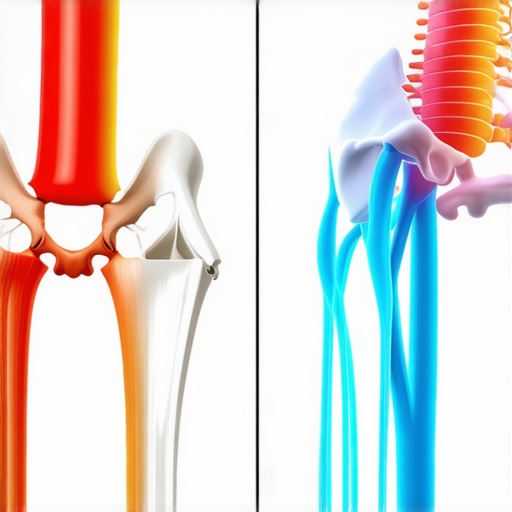
If you find that your symptoms are indeed neural, the solution isn’t more intensity—it’s more nuance. You need to use ‘flossing’ techniques that move the nerve through its pathway without tensioning it at both ends. Integrating the nerve flossing routine for stubborn leg numbness and tingling can create space and blood flow for the nerve without the trauma of a heavy stretch. And remember, your environment matters just as much as your exercises. I see people do great rehab work only to ruin it by lounging on a soft sofa for four hours; understanding why your back hurts more after a day of resting on the couch is crucial for breaking the cycle of inflammation. Finally, never underestimate the power of your breath; how your breathing pattern affects your core stability is the foundational ‘internal decompression’ that makes every other movement safe.
Recovery isn’t a finish line you cross and then forget about; it’s more like tending a garden. If you stop weeding, the pain grows back. Once I got my sciatica under control, I realized that the real challenge wasn’t getting out of pain, but staying there. I had to shift my focus from ‘fixing’ myself to maintaining mobility mastery daily tips to keep your spine and joints healthy. We are seeing a massive shift in 2025 toward bio-feedback wearables that track your pelvic tilt in real-time, but until those are perfected, you have to be your own sensor. I’ve found that the secret to long-term success is making your environment do the work for you. For instance, I no longer rely on willpower to sit up straight; I use the specific way to use a lumbar roll for maximum relief to force my spine into a neutral position without thinking about it.
Build a Spine That Doesn’t Break Every Time You Sneeze
I used to live in constant fear of a ‘tweak.’ One wrong reach for a grocery bag and I’d be horizontal for a week. To break that cycle, I had to stop fearing movement and start building what Dr. Stuart McGill calls ‘proximal stiffness.’ In his technical manual Low Back Disorders, McGill argues that a stable core is the bedrock of extremity mobility. I started incorporating the bridge variation that targets deep spinal stabilizers every single morning. It’s not about getting a six-pack; it’s about creating a biological corset that protects your discs when you’re doing mundane things, like the specific way to lift a grocery bag to avoid a spasm. If you don’t build this stability, you’re just a loose pile of blocks waiting for a breeze to knock you over.
How do I keep my back feeling this good for the next decade?
Maintenance is less about 2-hour gym sessions and more about 10-second micro-habits. I’ve found that the single movement that resets your posture after a flight is just as effective for a long day at the desk. You have to look at your daily ergonomics as a form of passive rehab. This means knowing how to set up your home office for less than fifty dollars so you aren’t constantly fighting your furniture. I also swear by the simple morning move to prime your spine for the day because it lubricates the facet joints before I even have my first cup of coffee. When you stack these tiny wins, you create a buffer against the wear and tear of modern life. If you’re feeling bold, try my ‘floor-sitting’ rule: once an evening, get down into the floor seated position that actually fixes your stiff hips while watching TV. It’s uncomfortable at first, but it’s the best tool I have for keeping my lower back from locking up.
The trend is clearly moving toward personalized biomechanics—using your own smartphone to film and analyze your gait. I think in the next few years, we will all have AI ‘coaches’ in our pockets telling us when our stride is off. But for now, you need to rely on the fundamentals of back pain breakthroughs navigating your path to restored mobility. Don’t wait for the next flare-up to start caring about your alignment. My challenge to you today: pick one ‘mechanical’ habit, like the way to sleep on your side without crushing your shoulder, and commit to it for one week. You’ll be surprised how quickly your body thanks you when you stop fighting your own anatomy.
The Hard-Won Truths About Healing a Spine That Feels Broken
Looking back at my 3 AM floor-staring sessions, I realized that the biggest hurdle wasn’t the disc itself; it was my own impatience. I’ve learned that recovery is rarely a straight line. You will have days where you feel invincible and days where a simple sneeze makes you question everything. The key is to understand that a flare-up isn’t a reset to zero—it is just your body’s way of saying it needs a different stimulus. I also discovered that the decompression table is merely a facilitator, not a magic wand. It creates the space, but your daily habits determine whether that space stays open or gets crushed by poor movement patterns. Most importantly, I learned to stop fear-avoiding movement. When you stop moving because you’re afraid of pain, you’re actually teaching your nervous system to stay in a state of high alert. You have to gently reintroduce motion to show your brain that you are safe.
The Toolkit That Actually Keeps Me Out of the Doctors Office
I don’t leave my spinal health to chance anymore. My essential toolkit starts with the specific way to use a lumbar roll for maximum relief, which I use in my office chair and car to maintain that crucial curve. I also religiously follow the dead bug exercise variation that actually protects your spine every morning to wake up my stabilizers. For the days when I feel a slight zing of nerve tension, I turn to sciatica relief secrets how to banish pain quickly today rather than reaching for painkillers. These aren’t just gadgets; they are lifestyle anchors. I also highly recommend looking into the work of Dr. Stuart McGill, whose focus on spinal hygiene changed the way I think about every bend and twist. By incorporating micro-adjustments, like how to fix your pelvic alignment while washing dishes, I’ve turned my mundane chores into a form of active physical therapy.
Your Recovery Starts with the Smallest Possible Choice
You don’t need a thousand-dollar machine to start feeling better today. You just need the willingness to listen to what your body is trying to tell you through the pain. Whether it’s changing how you sit or finally mastering your breath, every small win compounds over time. Remember that back pain breakthroughs navigating your path to restored mobility are built on the foundation of consistency. You have the power to change your biomechanical story, one movement at a time. Once you recognize the one sign that your sciatica is finally starting to heal, the momentum will carry you forward. Don’t be afraid to start slow, but don’t you dare stop moving. Have you ever felt like you were doing everything right but still hitting a wall in your recovery? Let me know in the comments below.