
How a manual adjustment helps your body process stress

I remember sitting at my desk three years ago, staring at a screen that seemed to be vibrating. My shoulders were practically touching my earlobes, and my lower back felt like a tightly wound spring about to snap. I thought I just needed a vacation or maybe a stronger cup of coffee. I didn’t realize my spine was literally holding onto every deadline, every argument, and every sleepless night like a physical archive of anxiety. It is a heavy burden to carry, and I bet you know exactly what that weight feels like. Today, I want to show you why your body gets ‘stuck’ in this state and how a manual adjustment acts as a literal pressure valve for your nervous system.
Your Nervous System is Stuck in Traffic
Look, I’ve been there—thinking I could just ‘mind over matter’ my way through a stiff neck and a racing heart. I even made the rookie mistake of thinking why your firm mattress is making your morning sciatica worse was my only problem, ignoring the fact that my spine was physically locked in a ‘fight or flight’ response. When you are under chronic stress, your muscles tighten and your joints lose their normal range of motion. This sends a constant stream of ‘danger’ signals to your brain. It is a vicious loop. A study published in the Journal of Manipulative and Physiological Therapeutics found that spinal manipulation can actually influence heart rate variability, which is the gold standard for measuring how well your body handles stress. By restoring movement to those stuck joints, we aren’t just ‘cracking’ a back; we are telling the brain that the emergency is over. Have you ever felt like your body was still on high alert even when you were finally trying to relax on the couch?
Placeholder for image
Is this just a temporary fix for a deeper problem?
I get it—you’re worried that the relief will wear off the moment you step back into the office. I used to think the same thing. I would ignore the reason your neck feels stiff every time you get a headache and just hope it would go away. But here is the reality: if your physical structure is compromised, your chemistry follows suit. When your spine is aligned, you can finally address the breathing habit that is keeping your back muscles tight and actually make progress. We need to look at neck pain and stress how to break the cycle for good as a two-way street. If you are ready to stop just managing the pain and start actually processing the stress, you can contact us to see how we can get your gears moving again. The steps that follow are about more than just posture; they are about reclaiming your peace of mind.
Stop breathing with your shoulders
Most of us are ‘chest breathers’ when we are stressed. If you watch yourself in a mirror, you will likely see your collarbones and shoulders rising with every inhale. This is essentially doing thousands of tiny, weighted shrugs every single day. It keeps the muscles in your neck and upper back in a state of permanent contraction. To break this, you need to master how your breathing pattern affects your core stability. Think of your torso like a canister; when you breathe in, the pressure should expand outward toward your belt line, not upward toward your ears. I remember a particularly grueling month of deadlines where I couldn’t figure out why your head feels heavy by 3-pm every afternoon. It wasn’t just the work; it was the fact that I was basically holding my breath for eight hours straight. Switching to diaphragmatic breathing was like hitting a reset button on my internal alarm system.
Fix your digital cockpit to save your neck
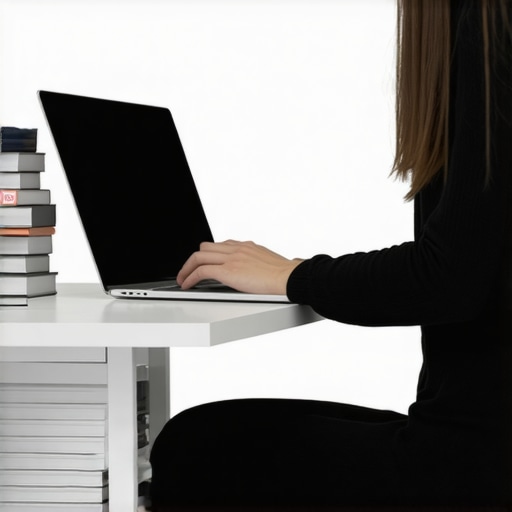
Your spine is like a crane. The further the ‘load’ (your head) moves away from the center of the crane, the more strain is put on the cables (your muscles). If you are looking down at a laptop or phone, you are effectively doubling or tripling the weight your neck has to support. This is the fastest way to develop the simple test for text neck you can do in the mirror. Start by raising your screen. If you don’t want to buy expensive gear, learn how to set up your home office for less than fifty dollars using just some books and a separate keyboard. When your eyes are level with the top third of your screen, your chin naturally tucks back, which unloads the joints in your upper back.
The hamstring trap that keeps you tight
I spent years falling into the ‘hamstring trap.’ My lower back felt like a board, so I would spend twenty minutes every night aggressively stretching my legs, hoping for relief. It never came. In fact, it often made the zing in my leg worse. I eventually realized that why your hamstrings are not the real reason your back is tight was actually due to my pelvis being tilted and my nerves being irritated, not the muscles being short. If you find that why some sciatica stretches actually pinch the nerve further, stop the static stretching and focus on nerve flossing instead. Movement is medicine, but only if you aren’t pulling on a nerve that is already screaming for space.
Use the 30-second wall reset
When you feel that familiar tightness creeping in, don’t just ‘crack’ your own neck. That often just moves the joints that are already too loose, ignoring the ones that are actually stuck. Instead, try the 10-second wall slide for instant shoulder tension relief. Stand with your back against a flat wall, heels about six inches away. Try to keep your lower back, upper back, and the back of your head in contact with the surface while you slowly slide your arms up and down. It feels awkward because it’s forcing your body out of its ‘slumped’ comfort zone. This simple move helps with mobility mastery daily tips to keep your spine and joints healthy by reminding your brain where your center of gravity actually is. Consistency beats intensity every single time.I’ve seen it a thousand times: someone walks into my office with their chest puffed out and shoulders pinned back, thinking they’ve finally mastered ‘good posture.’ But here’s the kicker—that rigid, military-style stance is actually one of the main reasons your mid-back feels like it’s on fire. It’s a classic case of why standing up straight is actually making your back pain worse. True stability isn’t about being stiff; it’s about being adaptable. When you force a ‘perfect’ posture, you’re just replacing one type of stress with another. Your muscles never get a chance to relax because you’re constantly fighting gravity with brute force. We need to focus on back pain breakthroughs navigating your path to restored mobility that allow for natural, fluid movement rather than a statuesque pose.
The cold truth about your ice pack
Another trap people fall into is the ‘ice it and forget it’ mentality. While ice can numb the pain, it can also act as a physiological handbrake. A study published in the British Journal of Sports Medicine suggests that excessive icing can actually delay the body’s natural healing process by restricting the very blood flow needed to repair tissues. This is exactly why icing your lower back might be slowing down your recovery. Instead of just numbing the area, we want to encourage gentle movement that flushes out inflammatory markers. Have you ever iced your back for three days straight only to find it feels stiffer than when you started? You’re likely caught in this exact cycle. 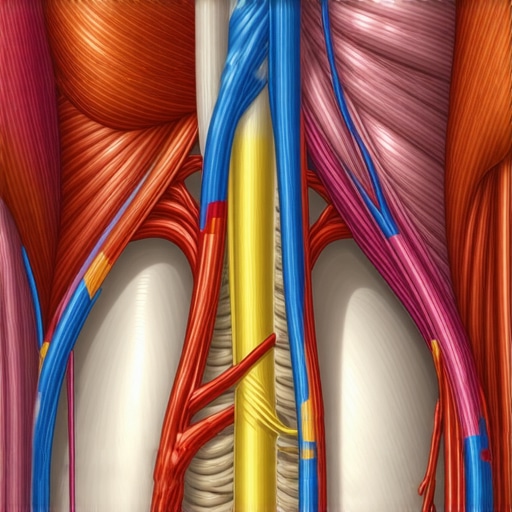
Why does resting on the sofa feel worse than working?
It sounds counterintuitive, right? You take a day off to ‘recover,’ but by late afternoon, your sciatica is screaming. This happens because why your back hurts more after a day of resting on the couch is usually due to the lack of ‘intermittent loading.’ Your spinal discs are like sponges; they need movement to pump nutrients in and waste out. When you sink into a soft cushion, your pelvis tilts, your spine rounds, and those discs just sit there, starving for circulation. If you’re struggling with this, looking into unlocking mobility expert tips on managing back pain in 2025 will show you that movement—even just a five-minute walk—is more restorative than any recliner. Have you ever fallen into this trap of ‘resting’ yourself into more pain? Let me know in the comments. If you’re ready to break this cycle for good, feel free to contact us and we can look at the specifics of your movement patterns.I’ve realized that the ‘secret’ to staying pain-free isn’t found in a once-a-month appointment; it’s found in the tools you use for the 160 hours you aren’t in my office. For instance, I’ve seen so many people buy a fancy riser, only to realize why your laptop stand might be making your neck knots worse because they didn’t adjust their keyboard. If you’re using a laptop stand, you must use a separate mouse and keyboard. Otherwise, you’re just trading lower back pain for a brand-new shoulder impingement.
The two-dollar tool that beats a professional massage
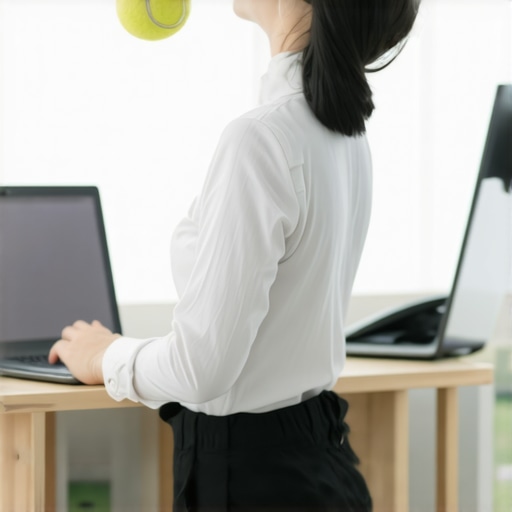
It sounds like a gimmick, but a simple lacrosse ball or tennis ball is my favorite way to handle those ‘knots’ that feel like they’re burning through your shoulder blades. Using it for how a simple tennis ball can release your deep glute tension is a game-changer for anyone with a desk job. It provides a localized pressure that foam rollers just can’t reach. Speaking of rollers, you need to be careful with the mid-back; learn how to use a foam roller on your mid-back without causing pain by avoiding the floating ribs and focusing on the thoracic segments.
How do I keep my spine mobile for the next decade?
Sustainability comes down to the ‘3-minute rule.’ I tell my clients that if they can’t find three minutes to move, they don’t have a life—they have a prison sentence. Incorporating mobility mastery daily tips to keep your spine and joints healthy into your morning coffee routine makes it automatic.
I’ve also found that small environmental tweaks, like the simple footstool trick to stop lower back pain while sitting, can reduce the sheer force on your L5-S1 disc by up to 20%. It’s these tiny, compounding wins that prevent you from needing a major intervention later. We often overcomplicate things with expensive ‘ergonomic’ chairs, but if your feet aren’t flat and your knees aren’t slightly below your hips, even a $2,000 chair won’t save you from understanding the link between poor posture and chronic back pain. I predict that by 2030, our workspaces will transition toward ‘dynamic loading’ environments where haptic feedback in our wearables tells us exactly when our lumbar discs are reaching their fatigue limit. Until then, we have to be our own advocates. According to the Occupational Safety and Health Administration (OSHA), maintaining a neutral spine is the single most effective way to prevent long-term musculoskeletal damage. This means your ears should be over your shoulders, and your shoulders over your hips. If you’re feeling a bit lost on how to implement this, check out unlocking mobility expert tips on managing back pain in 2025. Stop waiting for the ‘perfect time’ to start—try the 30-second doorway stretch right now and feel your ribs finally expand. If the tension won’t budge, contact us and let’s find the specific tool your body is missing.
The Truth About Why Healing Is Not a Straight Line
One of the hardest things to accept is that a ‘flare-up’ isn’t a failure; it is often just your nervous system being overprotective. In my years of practice, I have learned that consistency always beats intensity. You do not need a grueling hour-long workout; you need three minutes of intentional movement. I also realized that everything is connected—for instance, I was shocked to discover the link between your digestion and your lower back pain. If your gut is inflamed, your deep core stabilizers often go on strike. Another lightbulb moment was realizing why your calves are tight and how it pulls on your lower back. Your body is a single unit, and you have to treat it that way rather than just chasing the spot that hurts.
#IMAGE_PLACEHOLDER_E#
Tools I Actually Use When My Own Back Tightens Up
I don’t just preach these strategies; I live them. When I feel that familiar tightness creeping in, I reach for a simple lacrosse ball. Learning how a simple tennis ball can release your deep glute tension has saved me more money on massages than I care to admit. For sleep, I swear by the simple towel roll trick for better sleep with neck pain; it keeps your cervical spine in a neutral position without the need for expensive, ‘gimmicky’ pillows. I also make sure to stay on top of my fluids because how proper hydration keeps your spinal discs plump and healthy is the cheapest way to maintain shock absorption in your spine. Finally, I always recommend the book ‘Back Mechanic’ by Dr. Stuart McGill for anyone wanting to master their own spinal hygiene.
Take the First Small Step Toward Feeling Like Yourself Again
You do not have to live in a body that feels like a prison. The journey toward back pain breakthroughs navigating your path to restored mobility starts with a single, gentle choice. Whether it is fixing your monitor height or trying a new breathing pattern, these small wins stack up. By following mobility mastery daily tips to keep your spine and joints healthy, you are giving your nervous system the safety it needs to let go of the tension. You have got this, and I am here to help you through the process. If you ever feel stuck, do not hesitate to contact us for a more personalized plan. Which part of your daily routine do you think is contributing most to your stiffness—is it the desk, the couch, or the commute? Let me know in the comments below.