
How to return to running after a severe back spasm

I was staring at the ceiling for three days straight, listening to my running shoes mock me from the corner of the room. It started with a simple reach for a towel—a sharp, electric jolt that sent me straight to the carpet. If you have been there, you know that terrifying feeling where your own body suddenly feels like a stranger. My back wasn’t just sore; it was an angry, vibrating knot of muscle that refused to let me stand up straight. For a long time, I honestly thought that was the end of my morning miles. I panicked. I even made the classic rookie error of trying to aggressively stretch out an acute spasm, which is basically like poking a grizzly bear with a toothpick. I thought if I could just touch my toes, the pain would vanish. Instead, I ended up stuck on the floor for another four hours. This is why I wanted to share what actually works, because the path back to the pavement isn’t paved with ibuprofen and hope; it is built on smart, incremental movement.
The Long Road Back to the Pavement
Returning to the road after your back decides to quit on you is more of a mental game than a physical one. You are terrified of that one “wrong” step or a hidden pothole. But here is the truth: resting on the couch for two weeks is often the worst thing you can do for a healing spine. Research actually shows that prolonged bed rest can lead to muscle atrophy and increased stiffness, which only invites the next spasm. According to the Mayo Clinic, gentle movement is far superior to total immobilization for most back issues. Today, I want to show you exactly how to navigate this transition without re-triggering that lightning bolt in your lumbar. We are going to look at why your previous attempts might have failed and how to rebuild your foundation using expert tips on managing back pain in 2025. Have you ever felt that sudden “click” and immediately thought your running days were over? It’s a lonely feeling, but you aren’t stuck there. We have to start by understanding if your back pain is a sign of something more serious before we even think about the first mile.
Is running again actually worth the risk?
I know what you are thinking because I thought it too: Is my spine going to crumble if I hit the asphalt? The short answer is no, but only if you stop treating your back like a fragile piece of glass and start treating it like a system that needs better calibration. My own recovery didn’t start with a jog; it started with learning how your breathing pattern affects your core stability. I realized that my “huff and puff” style of running was actually putting more pressure on my discs than the impact itself. I also had to learn that why icing your lower back might be slowing down your recovery was a hard pill to swallow after years of frozen gel packs. Once you clear the initial hurdle of the acute spasm, the goal is controlled, purposeful movement. We are going to dive into the specific mechanics of the return-to-run transition so you can stop being a “former runner” and get back to being an active one.
Rebuild Your Base Without Breaking Your Spirit
The biggest mistake most of us make is treating recovery like a binary switch: either you are on the couch or you are sprinting. I learned the hard way that this mindset is exactly why your back hurts more after a day of resting on the couch. Your spine is not a fragile stick; it is a dynamic crane that requires constant, small adjustments. Before you even think about lace-up time, you must ensure your internal stabilizers are actually firing. Think of it like trying to drive a high-performance car with the parking brake partially engaged; eventually, something is going to smoke. I spent weeks trying to stretch my way out of the pain, only to realize that my tightness was actually a protective ‘brake’ my brain had applied because it didn’t trust my core. To release that brake, you need to master how to breathe into your lower back to release deep muscle tension. This isn’t just yoga fluff; it is a mechanical reset that signals to your nervous system that the danger has passed.
Stop Fighting Your Reflexes and Start Stabilizing
Once the ‘brakes’ are off, the goal is to build a brace made of muscle, not Velcro. When I first tried to get back out there, I jumped straight into standard planks and crunches, which only made my lumbar feel like it was being compressed in a vice. The game changer for me was switching to the dead bug exercise variation that actually protects your spine. It teaches your limbs to move while your spine stays rock-solid, which is essentially the core requirement of a healthy running gait. 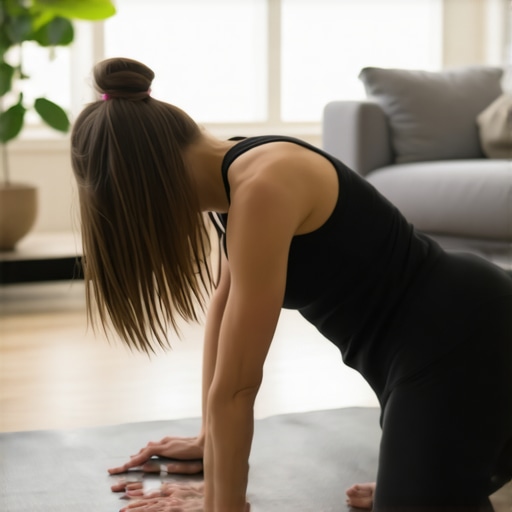
The 10-Minute Walk Test That Saved My Sanity
I remember the first morning I felt ‘okay.’ I put on my gear, stepped onto the sidewalk, and immediately felt that familiar, dull ache. Instead of pushing through, I pivoted to a strict walking protocol. Walking is just a low-impact version of running, and if you can’t walk for 30 minutes without pain, your spine isn’t ready for the vertical oscillation of a jog. During these walks, I had to pay close attention to how to tell if your leg pain is a muscle pull or a nerve root. If the pain stayed in my back, I kept moving. If it started traveling down my glute, I headed home. This boundary-setting is what prevents a minor setback from becoming a three-month sabbatical.
Check Your Feet Before You Trash Your Spine
Your feet are the first point of contact with the ground, and any imbalance there travels straight up to your lumbar. I was shocked to find out that why your current sneakers are causing your lower back to ache had nothing to do with the cushion and everything to do with how they altered my pelvic tilt. If your shoes are worn down on one side, you are essentially running on a slanted road every single day. I also had to focus on my ankles; I realized that because I lacked range of motion, my lower back was ‘cheating’ to help me move forward. Learning how to regain ankle dorsiflexion was the final piece of the puzzle that allowed me to strike the ground without my spine absorbing 100% of the shock.We have all been told that sitting up straight is the holy grail of spinal health. But here is the contrarian truth: forcing yourself into a rigid, upright position is often why standing up straight is actually making your back pain worse. When you lock your spine into a military posture, you are creating constant muscular fatigue in your erectors, which leads to those deep, gnawing aches by mid-afternoon. Your spine loves variety, not static perfection. The nuance most people miss is that good posture is actually your next posture. Movement is the lubricant for your discs, and staying in any one position—even a supposedly correct one—will eventually cause discomfort. Divide your day into small movement snacks rather than trying to hold one pose for eight hours.Then there is the hamstring trap. I cannot tell you how many runners I see religiously stretching their legs because their back feels tight, unaware that why your hamstrings feel tight but never get better with stretching is often because the nervous system is using that tightness as a protective shield. If you have sciatica, those traditional toe-touches are often the oops factor that keeps you sidelined. In fact, why some sciatica stretches actually pinch the nerve further is a harsh reality for those of us with disc issues. You are not stretching a muscle; you are yanking on an already inflamed nerve. Research published in the Journal of Orthopaedic and Sports Physical Therapy suggests that neurodynamic sliding techniques are far more effective for radiating pain than traditional static stretching.
Could your tight muscles actually be a sign of weakness?
This is the advanced level of recovery where we stop guessing and start testing. We often mistake a muscle that is on guard for a muscle that needs to be elongated. For example, why a tight psoas is often actually a weak psoas is a common discovery for chronic back sufferers. If the muscle is not strong enough to support your stride, it will seize up to prevent injury. Stretching it only makes it weaker and more prone to seizing again. You need to focus on simple exercises that make a difference by building capacity, not just flexibility. 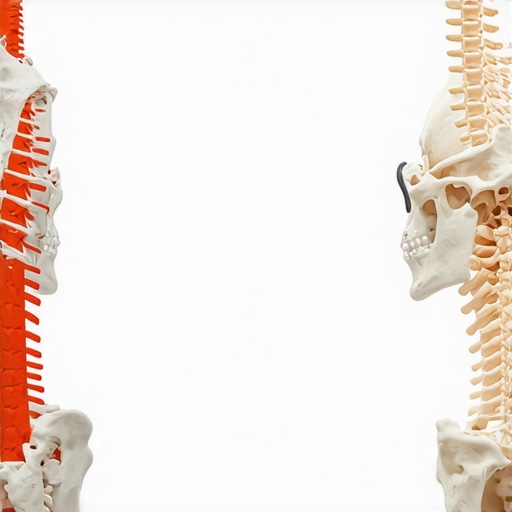 This brings us to a critical realization: the real reason your adjustment didn’t last through the weekend is often because the brain did not get the stability memo. Have you ever fallen into this trap—stretching a muscle for months without seeing any real progress? Let me know in the comments. We need to stop fighting our body’s protective reflexes and start giving it the stability it is actually asking for by navigating your path to restored mobility and focusing on core integration.
Stop the Cycle of Recurring Pain Once and for All
Maintenance is usually the part where people lose interest, but it is exactly where I found my long-term freedom. Once you have navigated the initial crisis, you have to transition from ‘fixing’ to ‘sustaining.’ I stopped looking for a magic pill and started looking at the daily variables I could actually control. The most overlooked tool in my arsenal is surprisingly low-tech: water. I learned that spinal discs are primarily made of water, and if you are dehydrated, those discs lose their height and their ability to absorb shock. This is exactly how proper hydration keeps your spinal discs plump and healthy and prevents that afternoon stiffness. If I’m not hitting my gallon-a-day goal, I can feel the ‘creak’ returning to my lower back by 4 PM. Beyond hydration, I rely heavily on a McKenzie lumbar roll. Most people use them wrong by placing them too high; you need to master the specific way to use a lumbar roll for maximum relief by nestling it right at the belt line to maintain that natural curve while you work.
How do I maintain my spine health over the long haul?
Sustainability comes down to your environment, not just your exercises. I used to think I needed a $1,200 ergonomic chair to be healthy, but I eventually learned how to set up your home office for less than fifty dollars using basic props and a better monitor height. Dr. Stuart McGill, a leading expert in spine biomechanics and author of Back Mechanic, often discusses the concept of ‘spinal hygiene.’ He argues that it’s not the one hour of rehab that saves you; it’s the 23 hours of how you sit, stand, and move that determine your disc health. I’ve taken this to heart by integrating mobility mastery and daily tips into every part of my routine, from how I unload the dishwasher to how I stand in line at the grocery store. 
Small Tools with Big Results
If you are still struggling with nerve pain, don’t just ‘wait it out.’ I found that conquering sciatica with proven approaches requires specific tools like a firm massage ball for the piriformis and regular nerve flossing. Looking forward, I predict we will see a massive shift toward biofeedback wearables that alert you the moment your pelvic tilt shifts into a high-stress position. But until then, we have to rely on our internal awareness. Your path back to the road isn’t a straight line; it’s a series of small, intentional loops. My best advice for you right now? Pick one tool—whether it’s the hydration habit or the lumbar roll—and commit to it for seven days straight. You’ll be surprised how quickly your body responds when it finally feels supported. For more advanced support, you can always check out navigating your path to restored mobility to keep your progress moving forward.
The Lessons My Back Taught Me the Hard Way
Reflecting on my journey from the floor to the finish line, there are a few hard-won truths I have to share. First, pain is often an alarm, not a death sentence. Just because your back is screaming doesn’t always mean something is permanently broken; it often means your nervous system is on high alert. I also realized that my ‘bad days’ weren’t setbacks, they were data points. If I flared up, I stopped asking ‘why is this happening?’ and started looking at how to unload the dishwasher without rounding your spine, because those tiny, repetitive movements are where the real damage—or healing—happens. Finally, I learned that you cannot stretch your way out of instability. If you feel like your muscles are ‘tight,’ they might actually be weak and trying to protect you.
The Recovery Gear That Actually Works
I’ve spent a small fortune on gadgets, but only a few actually made the cut for my daily routine. I highly recommend Back Mechanic by Dr. Stuart McGill; it is the definitive ‘owner’s manual’ for the human spine. For physical tools, how a simple tennis ball can release your deep glute tension is a trick I still use every single night before bed. I also swear by a high-quality lumbar roll for any car ride longer than 20 minutes. These aren’t just accessories; they are the scaffolding that allows your body to heal while you go about your life. If you feel overwhelmed by the options, starting with a simple path to restored mobility and focusing on the basics will always yield the best results.
Don’t Let the Fear of Pain Keep You Sidelined
The transition from ‘patient’ back to ‘runner’ is as much about your mind as it is your muscles. It is normal to feel a spike of anxiety every time you feel a twinge in your lumbar. But remember: your body is designed for movement. By focusing on smart mechanics and listening to your body’s signals, you can overcome back pain and get back to the activities you love. If you ever feel stuck or if the pain starts to feel unmanageable again, don’t hesitate to contact us for professional guidance. You have the tools, you have the knowledge, and now it’s time to take that first, confident step. Have you ever struggled with the fear of that first run after a spasm? Let me know below.