
How to fix the rounded shoulders you get from scrolling your phone
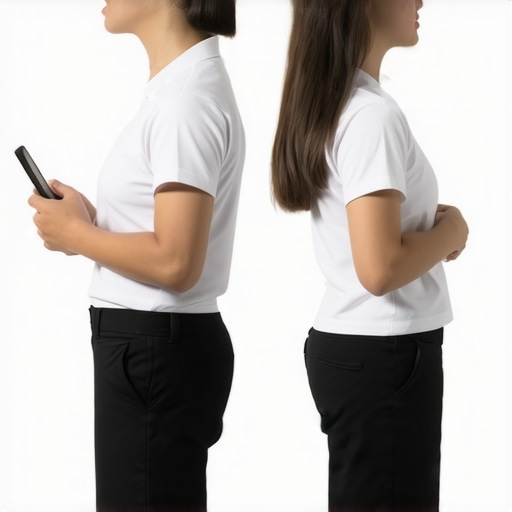
I was catching my reflection in a grocery store window when I saw him—a guy who looked like he was perpetually searching for a lost contact lens on the sidewalk. His head was jutted forward, his upper back was curved like a question mark, and his shoulders were practically meeting in front of his chest. Then I realized: that guy was me. It was a visceral, gut-punch moment. My late-night scrolling and endless email checking had physically reshaped my body into a ‘C’ curve. I wasn’t just tired; I was structurally collapsing under the weight of my own habits. If you have ever caught a glimpse of your profile and felt that same pang of ‘how did I get here?’, you are exactly where I was two years ago. Today, we are going to fix that. I am going to show you how to pull your frame back into alignment and stop that heavy, dragging feeling in your upper back once and for all.
The High Cost of Our Digital Leash
It is funny how we don’t notice the change while it is happening. We think we are just looking at a recipe or a text, but our bodies are recording every second of that downward tilt. I made the classic mistake of trying to ‘fix’ it by just pulling my shoulders back with brute force whenever I remembered. It didn’t work. In fact, I eventually learned why your straight posture is actually straining your muscles when you try to force it. My back felt like a coiled spring ready to snap. I spent months wondering why your head feels heavy by 3 pm every afternoon, never connecting the dots to the device in my hand. Most people don’t realize that when you tilt your head forward at a 60-degree angle to look at a screen, your neck is suddenly supporting about 60 pounds of pressure. That is like carrying a chunky eight-year-old around on your shoulders all day. No wonder we feel trashed by dinner time. Have you noticed your own reflection looking a little more ‘hunched’ than usual lately?
Are these stretches really worth the time?
You might be skeptical. I certainly was. I figured my ‘tech neck’ was just a permanent part of my 21st-century identity. But the truth is, your muscles are incredibly adaptable. The reason you feel stuck is often because your chest is too tight and your back is too weak. I even found that how your phones font size is impacting your neck tension was a huge part of the puzzle I was missing. I used to think the pain was just in my bones, but then I realized why your shoulder blade pain might actually be a neck issue. Once I stopped trying to force my spine into a straight line and started addressing the soft tissue, everything changed. We aren’t just going to ‘sit up straight’—we are going to recalibrate the way your body holds itself naturally, starting with a few moves that actually work.
Reclaim Your Frame Without Brute Force
Most people treat their posture like a discipline problem, but it is actually a mechanical one. If your chest muscles are as tight as overtuned guitar strings, they will physically pull your shoulders forward no matter how much you ‘remind’ yourself to stand tall. To fix the collapse, you have to create space in the front and tension in the back. This isn’t about rigid military posture; it is about building a body that naturally wants to stay upright. I learned the hard way that why standing up straight is actually making-your-back-pain-worse when you don’t address the underlying muscle imbalances first. You are fighting against your own anatomy. To win, we have to stop the tug-of-war and start recalibrating the tension.
The 30-Second Doorway Reset
This is the bread and butter of my routine. Stand in a doorway, place your forearms on the frame with your elbows at shoulder height, and gently lean forward. You should feel a stretch across your chest, not a pinch in your shoulders. I call this the doorway move that opens your chest and fixes your slouch because it targets the pectoralis minor—the exact muscle that acts like a winch, pulling your frame into that ‘C’ curve. When I first started, I was so tight I could barely lean forward an inch without wincing. I’d do this three times a day, often while waiting for my coffee to brew. 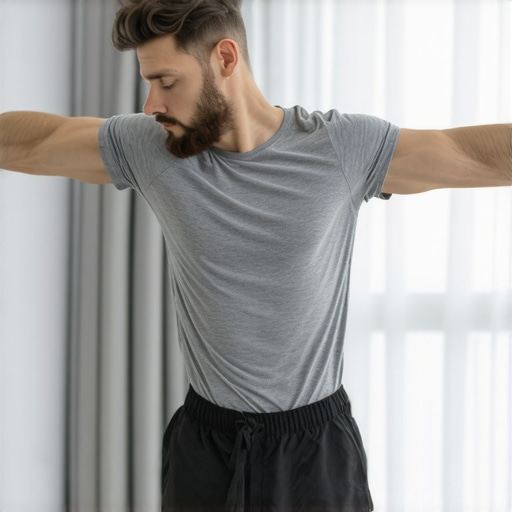
Wake Up Your Dormant Back Muscles
Once you have opened the front, you need to ‘turn on’ the muscles that keep your shoulder blades anchored. Think of your shoulder blades as the stabilizers for your entire upper body. If they are floating too far forward, your neck has to work twice as hard to keep your head level. I found that the wall angel move that fixes rounded shoulders is the fastest way to wake up those sleepy middle-back muscles. I remember trying these for the first time in a public restroom at my old office because my neck was screaming after a four-hour meeting. A coworker walked in while I was pinned against the wall, arms moving up and down like a slow-motion bird. It was embarrassing, but that thirty seconds of ‘frisk-style’ exercise was the only thing that stopped the burning sensation in my traps.
Adjust Your Digital Environment
You can do all the stretches in the world, but if you go right back to staring at a laptop on your lap, you are undoing the work. I had to learn the 15-degree rule for your computer monitor to save your neck. Your eyes should hit the top third of the screen so your chin stays tucked. I also realized why looking at your keyboard while typing is ruining your neck—it keeps you in a perpetual state of ‘looking down.’ By raising my monitor and learning to touch-type, I stopped the constant micro-nodding that was shredding my cervical spine. It’s also vital to realize that how a stiff upper back is forcing your neck to move too much. If your mid-back is a solid block of ice, your neck becomes the only point of movement, which is a recipe for chronic inflammation.It’s time to talk about the ‘stretching trap.’ When your back or neck feels like it’s in a vice, your first instinct is to pull, tug, and lengthen. But here is the nuance most beginners miss: tension does not always mean a muscle is short. In fact, constantly stretching your hamstrings can be the very reason your lower back never heals. I spent years trying to touch my toes to fix my stiffness, but why your hamstrings feel tight but never get better with stretching is usually because they are over-lengthened and screaming for stability, not more flexibility. If you keep pulling on a nerve that is already irritated, you’re essentially picking a scab that’s trying to close.
Stop Stretching Your Hamstrings to Fix Your Back
It sounds counterintuitive, right? We’ve been told for decades that ‘tight hamstrings equal back pain.’ But often, those muscles are pulled taut like a bowstring because your pelvis is tilted. If you keep stretching them, you’re just making the bowstring thinner and more fragile. Instead of mindless stretching, you need to look at understanding the link between poor posture and chronic back pain through the lens of stability. I also had to accept that why a tight psoas is often actually a weak psoas—my hip flexors weren’t short; they were just exhausted from trying to hold my spine together.
Is your pain coming from a disc or just a cranky nerve?
This is the million-dollar question for anyone dealing with radiating leg pain. Most people panic and assume they have a permanent injury, but the difference between muscular sciatica and a slipped disc is massive in terms of how you treat it. If it’s muscular, a simple how a simple tennis ball can release your deep glute tension might do the trick. But if it’s a disc, that same move could flare you up for weeks. A study published in the Journal of Orthopaedic & Sports Physical Therapy suggests that mechanical sensitivity—the way your nerves respond to movement—is a better predictor of recovery than what shows up on an MRI. This is why why some sciatica stretches actually pinch the nerve further and why you need to stop ‘powering through’ the sharp zaps.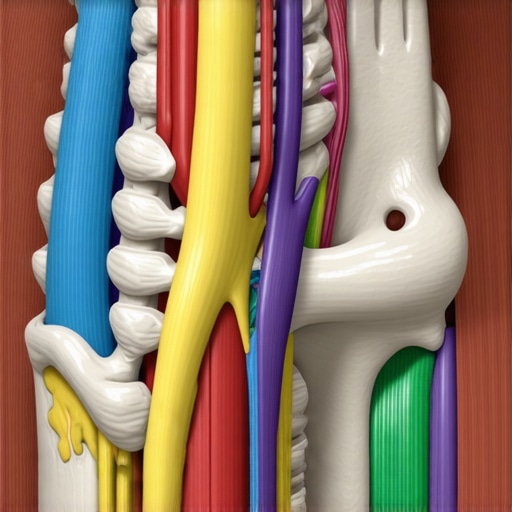
The Ice Trap You Should Avoid
Here is another controversial truth: that ice pack you’re sitting on might be slowing you down. While it feels good in the moment, why icing your lower back might be slowing down your recovery is a hot topic in modern sports medicine. Cold restricts blood flow, and blood flow is exactly what your discs and nerves need to heal. We want movement, not stagnation. I moved away from ‘rest and ice’ toward gentle mobility, specifically learning how to breathe into your lower back to release deep muscle tension. It sounds ‘woo-woo’ until you realize that your diaphragm is physically attached to your spine. If you aren’t breathing right, your back can’t relax. Have you ever fallen into this trap of over-stretching or over-icing? Let me know in the comments. I’d love to hear which ‘common wisdom’ actually made your pain worse.I spent years thinking I needed a magic pill or a thousand-dollar ergonomic chair to fix my broken frame. The reality was much simpler, and honestly, cheaper. To keep your body working, you have to transition from ‘fixing’ to ‘maintaining.’ This is where most people fail—they stop doing the work the second the sharp pain fades into a dull ache. But I’ve found that the right toolkit makes the habit effortless. For me, that meant moving beyond basic stretches and looking at the environment I live in every single day.
Why a simple footstool beats a luxury ergonomic seat
It sounds ridiculous, but a $20 plastic stool changed my lower back health more than any high-end office chair ever did. When you sit, your knees should ideally be slightly higher than your hips to take the pressure off your lumbar discs. I started using the simple footstool trick to stop lower back pain while sitting, and it was an instant game-changer for my sciatic nerve. Combine that with a lumbar support, and you’re golden. However, most people get the placement wrong. I had to research the specific way to use a lumbar roll for maximum relief because if it’s too high, it actually forces your back into a stressful arch. According to Dr. Stuart McGill, a world-renowned expert in spine biomechanics and author of ‘Back Mechanic,’ the goal is to build ‘spinal stiffness’—not the kind of stiffness that makes you feel like a statue, but the kind of core stability that protects your discs like a biological corset. 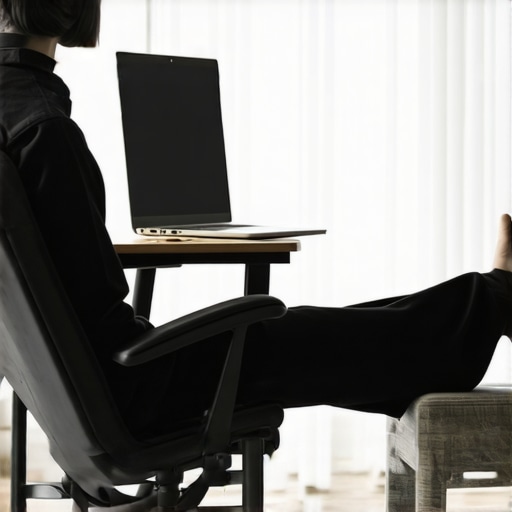
How do I maintain my spinal health over time?
Consistency beats intensity every single time. You don’t need a grueling hour-long gym session to stay mobile; you need ‘movement snacks’ throughout the day. I’ve integrated mobility mastery daily tips to keep your spine and joints healthy into my workflow. Every time I finish a long email, I do one chest opener. Every time I get up for water, I do a quick hip reset. If you’re struggling with stiffness, focusing on boost your back mobility simple exercises that make a difference can prevent that ‘locked’ feeling from ever returning. I also keep a foam roller near my desk, but I learned the hard way that you can’t just roll aimlessly. You need to know how to use a foam roller on your mid-back without causing pain to avoid irritating the very nerves you’re trying to soothe.
The future of mobility is in your pocket
As we move further into 2025, I predict that posture correction will move away from manual ‘reminders’ and toward haptic technology. We are already seeing wearable sensors that vibrate when your rib cage flares or your chin dips. Until then, we have to be our own sensors. Whether you are conquering sciatica proven approaches to end discomfort now or just trying to find neck pain solutions proven techniques to regain your range of motion, the tools are only as good as the person using them. My biggest piece of advice? Don’t wait for a flare-up to care about your alignment. My challenge to you tonight: check your workspace. Use the 15-degree rule for your computer monitor to save your neck and see if you don’t feel 50% better by Friday.
The Quiet Realizations That Changed My Recovery Forever
Looking back on my journey from a ‘C-curve’ reflection to a body that actually moves without a groan, I realized a few things that weren’t in the standard medical pamphlets. First, I had to stop viewing my pain as an enemy and start seeing it as a dashboard warning light. When my neck flared up, it wasn’t just ‘bad luck’; it was often because I had spent three hours staring at a small screen. I finally understood neck pain and stress how to break the cycle for good by realizing my shoulders were naturally creeping toward my ears every time my inbox got full. Another huge epiphany was that my lower back wasn’t always the ‘weak’ link—sometimes it was just the victim of what was happening elsewhere, like how to get out of your car without twisting your lower spine. Little micro-movements add up to big results over time.
Tools That Earned Their Keep in My Recovery Journey
I’ve wasted plenty of money on gimmicks, but a few items became my daily essentials. I swear by a simple lacrosse or tennis ball for soft tissue work; it is the most portable therapist you’ll ever own. I also rely heavily on a lumbar roll for long drives and a footstool for my desk. These aren’t just ‘nice-to-haves’; they are the infrastructure for back pain breakthroughs navigating your path to restored mobility. #IMAGE_PLACE_HOLDER_E# If you are looking for deeper dives, I highly recommend the work of Dr. Stuart McGill—his focus on stability over flexibility changed my entire perspective on unlocking sciatica relief expert strategies for lasting comfort. I trust these resources because they focus on the biomechanics of how we actually live, not just how we look in a mirror.
A Future Where Your Body No Longer Limits Your Life
The transition from constant discomfort to effortless movement doesn’t happen overnight, but it is closer than you think. By making small, intentional adjustments to how you sit, breathe, and move, you are rewriting the story of your physical health. You aren’t stuck in that ‘C’ curve forever. Your body is remarkably resilient and ready to heal if you just give it the right environment. Reclaiming your mobility is the best gift you can give your future self. Don’t wait for the next flare-up to start—choose one small change today and stick with it. Have you ever tried a ‘posture hack’ that ended up making your back or neck feel worse? Let me know in the comments below so we can discuss what actually works!