
How to stretch your neck safely while sitting in a zoom meeting
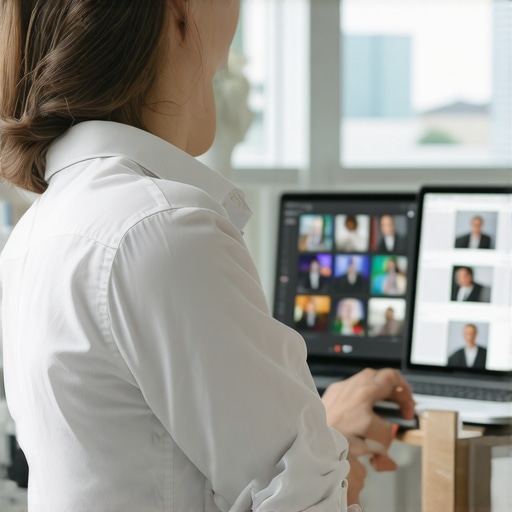
I was sitting in my fourth back-to-back meeting, camera discreetly turned off, when I tried to glance at my second monitor and heard a sound like a bag of potato chips being crushed right in my ear. It wasn’t just a noise; it was a physical wall of tension that had finally reached its breaking point. If you have ever felt like your head weighs fifty pounds by lunchtime, you are not alone. That heavy sensation is exactly why your head feels heavy by 3 pm every afternoon, and it is usually the result of what I call the ‘Zoom-stare’—that locked-in, frozen posture we adopt when we are trying to look professional. Today, I want to show you how to break that cycle without looking like you are doing a full yoga routine in front of your boss. We are going to tackle that stiffness safely and effectively right from your chair.
Stop Wincing at Your Webcam and Start Moving
For the longest time, I thought the only way to deal with my stiff neck was to wait until the end of the day and then ‘crack’ it myself. I would grab my chin and give it a sharp twist. Honestly, that was a huge mistake. I eventually learned the truth about cracking your own neck, and it turns out I was likely making my joints hypermobile and more prone to pain. You do not need force; you need subtle, intentional movement. When we sit still, our muscles essentially become ‘glued’ in a shortened position. This is especially true if your desk setup is working against you. If you are constantly looking down, you might want to try the simple test for text neck to see just how much stress you are putting on your cervical spine. According to Harvard Health Publishing, for every inch your head tilts forward, the pressure on your neck increases by about 10 pounds. By the time you are hunched over a laptop, your neck is effectively supporting a 40-pound weight.
Will these stretches actually make a difference if I am still sitting?
It is easy to be skeptical. You might think that a thirty-second stretch is just a band-aid for a much larger problem, but the goal here is to maintain your range of motion so you do not end up needing proven techniques to regain your range of motion later. Small, frequent movements tell your nervous system that it is safe to let go of that protective guarding. It is also about managing the neck pain and stress cycle that inevitably ramps up during high-pressure calls. Have you ever felt your neck lock up or a headache start to creep in right as someone asked you a direct question in a meeting? I’d love to hear if you’ve found any ‘secret’ moves that help you survive long calls—drop a comment or let me know! By focusing on safe, slow transitions, you can revitalize your neck without even missing a beat in the conversation.
Shift Your Setup Before You Shift Your Spine
It took me years to realize that I was treating the symptoms of my neck pain while ignoring the environment that caused it. I used to think that ‘sitting up straight’ was the gold standard, but in reality, why standing up straight is actually making your back pain worse is because it forces your muscles into a rigid, unsustainable military posture. Instead of fighting your biology, start with your screen. I once spent an entire week wondering why I had a nagging ache at the base of my skull, only to realize I had lowered my chair, forcing me to look slightly up at my monitor all day. To fix this, you need to follow the 15-degree rule for your computer monitor to save your neck. Your eyes should naturally rest on the top third of the screen without you having to tilt your chin. Think of your head like a bowling ball balanced on a toothpick; even a tiny tilt forward or backward makes the ‘toothpick’ (your neck) work ten times harder to keep things from toppling over. 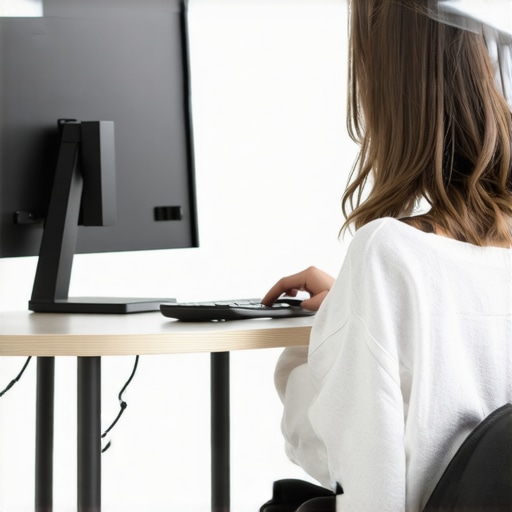
Stop Clenching During Stressful Emails
We often carry our stress in our jaws, and that tension travels directly down the sides of the neck. During a particularly high-stakes project last quarter, I noticed I was grinding my teeth every time a notification popped up. I started using the 10-second jaw release that softens your neck muscles, and the results were almost immediate. Simply let your tongue drop from the roof of your mouth and allow your teeth to part slightly. This tiny gap sends a signal to your nervous system that the ‘threat’ is over, which helps revitalize your neck by lowering the baseline of muscle guarding. If you find yourself squinting at the screen, remember that how your phones font size is impacting your neck tension applies to your laptop too. Increasing the zoom to 125% can prevent you from leaning in like a turtle.
Breathe into Your Ribs Not Your Shoulders
When we are stressed or hyper-focused, we become ‘chest breathers.’ Our shoulders shrug up toward our ears with every inhale, which is essentially doing a thousand tiny shrugs a day. This is the breathing habit that is keeping your back muscles tight and your neck exhausted. I tried a ‘reach and breathe’ technique during a lunch break when my neck felt particularly brittle. By reaching my arms forward and breathing into my back ribs, I felt a stretch that no amount of neck-cracking could match. Learning how a simple reach and breathe move can decompress your back is a game changer because it addresses the foundation of your spine. If the base of your neck is stuck, the top has no choice but to compensate. By expanding your rib cage, you provide a stable platform for your head to sit on, reducing that ‘heavy’ sensation by the time the clock hits 3 pm.Let’s dig deeper into why those ‘classic’ fixes often fail when that 3 pm slump hits. Most of us have been taught that if a muscle feels tight, we should stretch it until it lets go. But here is the expert nuance: tightness is often a protective signal from your brain, not a request for more length. For instance, why your hamstrings feel tight but never get better with stretching is often because they are already over-lengthened and weak, desperately trying to stabilize a tilted pelvis. If you keep pulling on them, you are just agitating the nervous system further. Similarly, why a tight psoas is often actually a weak psoas explains why your hip flexor stretches never seem to ‘stick.’ You do not always need more flexibility; often, you need the stability that comes from intentional, quiet strength.
Why does my sciatica feel worse after I do those ‘relief’ stretches?
This is a sophisticated trap that catches many high-achievers. If you have a ‘zinging’ pain or numbness down your leg, you might be tempted to pull your knee to your chest or touch your toes. However, why some sciatica stretches actually pinch the nerve further is because nerves do not respond to stretching the way muscles do. Nerves are like electrical cables; they prefer to be ‘slid’ or ‘glided’ within their tunnels. Instead of traditional static holds, you should be looking into the nerve flossing routine for stubborn leg numbness and tingling. This movement allows the nerve to move through the surrounding tissue without creating more inflammation or a ‘tug-of-war’ effect on your spine. #IMAGE_PLACE_HOLDER_C#
Ditch the Ice Pack for Faster Recovery
We have been conditioned to reach for the ice the moment we feel a neck twinge or a back spasm, but we need to talk about the ‘Oops’ factor here. While ice numbs the pain temporarily, why icing your lower back might be slowing down your recovery is because it constricts blood flow and halts the very inflammatory process required for actual tissue repair. You are essentially hitting the ‘pause’ button on your body’s natural healing mechanism. Furthermore, do not fall into the trap of the ‘perfect’ military posture. Research published in the Journal of Orthopaedic & Sports Physical Therapy (JOSPT) suggests that there is no single ‘ideal’ posture that prevents pain—the real key is movement variability. In fact, why standing up straight is actually making your back pain worse is a reality for many because it creates unnecessary muscular rigidity and compression. Have you ever fallen into the trap of over-stretching or icing a back spasm only to feel stiffer the next day? Let me know in the comments! If you are ready to move beyond basic band-aid solutions, check out unlocking mobility: expert tips on managing back pain in 2025 to stay ahead of the curve.
Once you stop making the classic mistakes like over-stretching or over-icing, the focus has to shift from putting out fires to building a fireproof house. I have spent thousands on ergonomic gadgets, but the most effective tools I use daily are often the simplest. For instance, I never sit in a car or an office chair without a lumbar support anymore. But here is the catch: most built-in chair supports are in the wrong place. I personally use a dedicated roll because the specific way to use a lumbar roll for maximum relief depends on placing it right at the belt line, not higher up in the mid-back. This keeps your pelvis from tucking under, which is the root cause of that 3 pm slump. If you are working from home, you do not need a five-hundred-dollar setup; you just need to know how to set up your home office for less than fifty dollars by prioritizing eye level and hip angle.
Support Your Natural Curve Without Spending a Fortune
Another tool that lives in my desk drawer is a simple tennis ball. When I feel that deep, achy tension in my hips from sitting too long, I don’t reach for a foam roller. I use the ball to pinpoint the piriformis. Knowing how a simple tennis ball can release your deep glute tension is a lifesaver when you are trying to prevent a full-blown flare-up. It is about precision, not power. According to the Business and Institutional Furniture Manufacturer’s Association (BIFMA) G1-2013 Ergonomics Guideline, the key to long-term comfort is ensuring your backrest supports the lumbar region specifically between 6 and 10 inches above the seat pan. If your chair doesn’t do that, you are fighting a losing battle against gravity every single minute. 
How can I keep my mobility gains as I get older?
Consistency beats intensity every single time. You do not need an hour-long routine; you need a few ‘spine-priming’ movements that you actually do. I have found that mobility mastery daily tips to keep your spine and joints healthy usually boil down to moving in the directions your desk job forbids. This means more rotation and more extension. I also swear by the simple morning move to prime your spine for the day because it resets your nervous system before you even have your first cup of coffee. Speaking of coffee, keep an eye on your habits, as why your morning coffee routine is secretly hurting your lower back might surprise you—it is often the way we lean over the counter or sit hunched while scrolling that does the damage.
The Future of Posture and Personal Maintenance
I predict that in the next five years, we will see a massive shift toward ‘posture-aware’ technology. We are already seeing glasses and wearables that track head-tilt, but soon, AI-driven sensors in our clothing will likely provide haptic feedback the moment our rib cage gets out of alignment. Until then, we have to be our own sensors. Start by mastering the wall angel move that fixes rounded shoulders to keep your chest open. If you are struggling with recurring issues, it might be time to look at back pain breakthroughs navigating your path to restored mobility for a more structured approach. My challenge to you today: try that tennis ball glute release for just two minutes before you go to bed tonight. Your lower back will thank you tomorrow morning.
The Hardest Lessons I Learned Managing My Own Spine
It took me a decade to realize that ‘stiff’ doesn’t always mean ‘short.’ For years, I treated my body like a collection of tight rubber bands that just needed more pulling, but the reality was much more complex. I eventually learned that why your straight posture is actually straining your muscles was often due to my obsession with being ‘perfectly aligned’ in a military-style seat. True comfort comes from being dynamic and shifting your weight frequently, not being frozen in a textbook position. I also realized that why reaching for your toes is the worst way to stretch your back is because it often puts excessive tension on the nerves rather than the muscles you are trying to target. My biggest lightbulb moment was realizing that my body wasn’t ‘broken,’ it was just sending me signals that I had been ignoring for far too long.
Tools I Actually Use to Stay Pain-Free
I have tested almost every ergonomic gimmick on the market, but a few basic staples have earned a permanent spot in my daily routine. First, a dedicated lumbar roll is non-negotiable for any chair I sit in for more than twenty minutes. Second, I keep a simple tennis ball in my desk drawer; it is the most cost-effective tool for releasing deep glute tension that builds up during long calls. Third, I always keep a mental checklist to see if is your back pain a sign of something more serious by monitoring for red flags like leg weakness or pins and needles. Finally, I rely on peer-reviewed research from the Journal of Orthopaedic & Sports Physical Therapy (JOSPT) to separate evidence-based movement from internet myths. These tools prioritize long-term stability over the quick, temporary relief of a ‘crack’ or an ice pack.
Stop Waiting for a Miracle and Start Moving
You do not have to live with a head that feels like a fifty-pound weight or a back that is constantly on the verge of a painful spasm. By making small, intentional adjustments today, you can boost your back mobility and reclaim your energy for your life outside of the office. That heavy sensation at 3 pm is not an inevitability—it is just your body’s way of asking for a change in scenery and a little bit of movement. Start with just one change, like adjusting your monitor height or finally letting your jaw relax, and watch how your focus improves. Have you ever noticed your neck getting even stiffer the more you try to ‘sit up straight’ during a stressful meeting? I would love to hear about your experience in the comments below!