
The truth about using two pillows for side sleeping

Last Tuesday morning, I crawled out of bed, and it happened again. That sharp, electric zing shot from the base of my skull right down into my shoulder blade. I stood there, staring at my bed—specifically at my two towering, plush pillows—and realized my “comfort” was actually my enemy. For years, I believed that if one pillow was good, two must be like sleeping on a cloud. In reality, I was just forcing my spine into a C-shape for eight hours straight. If you’ve ever felt like your head is too heavy for your neck by noon, you’re likely making the same mistake I did. Today, I’m going to show you how to find that “Goldilocks” zone for your neck so you can finally stop the cycle of neck pain and morning stiffness. Have you ever spent a fortune on pillows only to wake up feeling worse? Let’s fix that. [image placeholder]
Your Double Pillow Stack is a Hidden Neck Trap
When we sleep on our side, the goal is simple: keep the nose in line with the sternum. When I started my journey into better sleep ergonomics, I made the classic rookie error of thinking height equaled support. I’d stack a firm memory foam pillow on top of a soft one. The result? My head was propped up at an angle that would make a gargoyle wince. This misalignment doesn’t just hurt; it creates a cascade of issues. According to the Sleep Foundation, improper spinal alignment during sleep is a primary contributor to chronic musculoskeletal pain. When your neck is cranked upward, it pulls on the delicate muscles of your upper back, often leading to stiffness that feels like a permanent knot.
Is a flatter pillow actually worth the hype?
You might be thinking, “But if I use one thin pillow, my shoulder gets crushed!” That skepticism is exactly where I stayed stuck for months. I was terrified that dropping a pillow would lead to crushing my shoulder. But the real secret isn’t about having less padding; it’s about having the right thickness to fill the gap between your ear and the mattress perfectly. Using too much loft is just as bad as sleeping on your stomach, which we all know is a recipe for disaster. We need to focus on support, not just height, to avoid that dreaded morning back stiffness.To fix this, you need to calculate your ‘Loft Number.’ Think of your neck as a bridge. If the bridge is too high or too low, the structural integrity fails, causing the support beams to buckle. You need to measure the distance from the bony tip of your shoulder to the side of your ear. This is the gap that your pillow must fill perfectly while it is compressed by the weight of your head. If your pillow is too soft, your head sinks, stretching the top side of your neck and compressing the bottom. This often results in shoulder blade pain that might actually be a neck issue in disguise.
Measure your shoulder to find the right gap
Grab a ruler and have someone help you, or use the simple test for text neck you can do in the mirror as a baseline for your posture before you lie down. If you have broad shoulders, you need a high-loft pillow. If you are petite, a thin one is your best friend. The goal is a straight line from the center of your forehead through your chin and down to your chest. If your head is tilted up or down, you are essentially kinking the garden hose of your spine for eight hours.
The towel roll hack for instant relief
Even the best pillow often fails to support the ‘cervical lordosis’—the natural curve of your neck. This is where the simple towel roll trick for better sleep with neck pain comes into play. Take a small hand towel, roll it into a firm cylinder about the thickness of your wrist, and slide it into your pillowcase along the bottom edge. When you lie down, that roll should nestle right under your neck, providing a physical shelf for your spine to rest on. 
How I survived a hotel stay with just a hand towel
I remember a specific trip to Des Moines last March. The hotel pillows were like overstuffed marshmallows—they looked luxurious but offered the structural support of a cloud. Within two hours of trying to sleep, I felt that dull ache creeping up from my traps, which I knew was the real reason my neck feels stiff every time I get a headache. I didn’t panic. I took the starchy hotel hand towel, rolled it tight, and used it to bridge the gap between my ear and the mattress. By morning, my neck felt light, not leaden. It was a stark reminder that fancy gear matters less than proper geometry.
Adjust your environment before you close your eyes
Your sleep setup isn’t just about the pillow; it’s about the habits leading up to it. If you spend an hour reading in bed with a head-forward posture, your muscles are already spasming before you even try to sleep. Incorporating mobility mastery daily tips to keep your spine healthy can prime your nervous system for rest. If you feel a ‘click’ or a pinch when you settle in, that’s your body telling you the alignment is off. Listen to it. You can revitalize your neck with effective techniques, but if you return to a broken setup every night, you’re just treading water. Stop guessing and start measuring.We’ve all been told since grade school to ‘stand up straight.’ When my neck pain was at its worst, I became a posture perfectionist. I’d pin my shoulders back and puff my chest out like a soldier on parade. But here is the contrarian truth: that rigid, military-style posture is one of the biggest mistakes you can make. In my experience, and backed by clinical observations, standing up straight is actually making your back pain worse because it forces your muscles into a state of perpetual high alert. Your body isn’t a statue; it’s a dynamic system that needs variability. When you force a ‘perfect’ alignment, you’re just trading one set of problems for another. You might think you’re helping, but why your straight posture is actually straining your muscles comes down to the constant isometric contraction you’re demanding from your spinal stabilizers.
Why your rib cage position determines your neck comfort
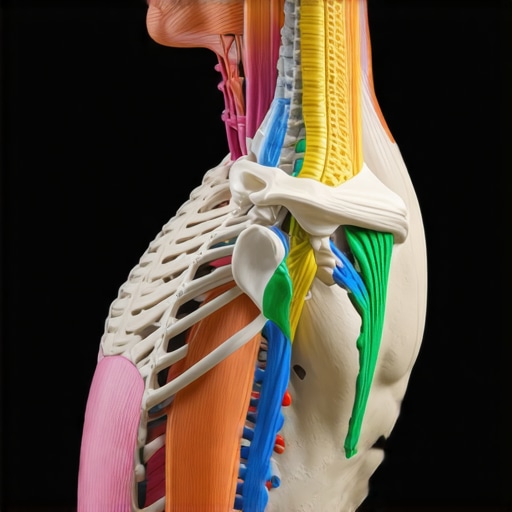
One of the most overlooked ‘traps’ in ergonomics is the relationship between your ribs and your neck. If you are constantly ‘pinning’ your shoulders back, you are likely flaring your rib cage forward. This changes the angle of your thoracic spine, which in turn forces your neck to compensate just so you can look straight ahead. This is why your rib cage position determines your shoulder health and, by extension, the tension in your traps. If you don’t address the base—the ribs—no amount of pillow adjusting will fix the ‘heavy’ feeling in your head. A study published in the Journal of Physical Therapy Science highlights that thoracic kyphosis significantly impacts cervical range of motion. Essentially, if your mid-back is locked up, your neck is fighting a losing battle.
Does a stiff big toe actually cause lower back spasms?
It sounds like a reach, but this is where the E-E-A-T (Experience, Expertise, Authoritativeness, and Trustworthiness) really matters. Your body is a kinetic chain. I once worked with a runner who had chronic lower back issues that no amount of lumbar support could fix. We finally realized how a stiff big toe forces your lower back to overwork during every step. When one joint isn’t doing its job, the nearest available candidate—often the spine—takes the load. This is the same reason how a stiff upper back is forcing your neck to move too much. You aren’t just a neck; you’re a series of pulleys and levers.
The ‘Oops’ factor often comes from over-stretching or using the wrong tools. For instance, many people jam a support roll too low in their chair. Learning the specific way to use a lumbar roll for maximum relief can prevent you from accidentally tilting your pelvis too far forward. Similarly, when your neck feels tight, the instinct is to pull on it. But why some sciatica stretches actually pinch the nerve further also applies to the neck. If you have a disc issue, aggressive stretching can increase inflammation. Instead of pulling, try to focus on gentle mobilization. You need to break the cycle of neck pain and stress by calming the nervous system, not by attacking the muscle with ‘death-grip’ stretches. Have you ever fallen into the trap of trying to be ‘perfectly straight’ only to feel more stiff by lunch? Let me know in the comments. Let’s start looking at the body as a whole, rather than just a collection of painful parts.I used to think that buying a fancy ergonomic chair would solve everything. It didn’t. You can have a three-thousand-dollar throne, but if your screen is too low, you’ll still end up with that ‘heavy head’ feeling by 3 PM. I finally embraced the 15-degree rule for your computer monitor to save your neck. According to the Cornell University Ergonomics Web (CUErgo), your eyes should hit the screen about 2-3 inches below the top of the monitor casing. This slight downward gaze keeps the suboccipital muscles at the base of your skull from shortening into a permanent knot. If you’re working on a laptop, why your laptop stand might be making your neck knots worse is often because you’ve raised the screen but haven’t used an external keyboard, forcing your shoulders to hike up into your ears just to type.
The low-tech tools I actually use every day
I don’t leave home without a simple tennis ball in my bag. It sounds low-tech, but how a simple tennis ball can release your deep glute tension is a game changer during long flights or heavy office days. When those muscles at the base of your spine lock up, everything north—including your neck—starts to suffer. For the mid-back, I’m a fan of the foam roller, but you have to be careful with your technique. I’ve seen people roll over their lower back and wonder why they’re in a flare-up later. You need to know how to use a foam roller on your mid-back without causing pain to avoid irritating the ribs or the lumbar spine. 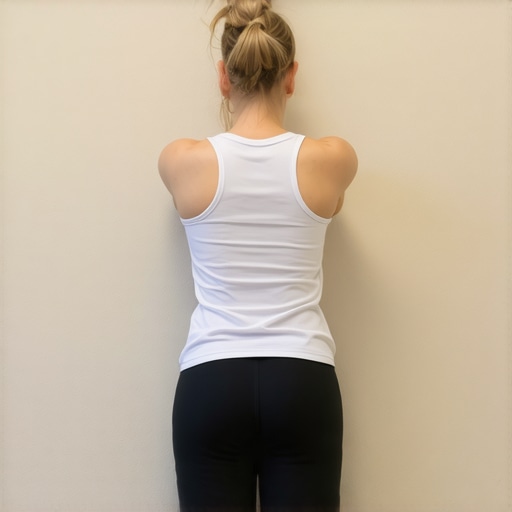
How do I maintain my spine health over the long haul?
Maintenance isn’t about one big ‘fix’ once a week; it’s about the tiny signals you send your nervous system daily. I started incorporating mobility mastery daily tips to keep your spine and joints healthy into my morning routine. Specifically, the simple morning move to prime your spine for the day helps lubricate the joints before I even sit down for my first coffee. If you feel tension building during a Zoom call, you don’t need a full gym. I swear by the 10-second wall slide for instant shoulder tension relief. It resets your scapular position and forces your brain to recognize where your shoulders actually belong.
Where the future of mobility is headed
Looking ahead, I suspect we’re moving away from ‘passive’ ergonomics, like better chairs, toward ‘active’ biofeedback. We’ll likely see more wearable sensors that don’t just tell you to sit up straight, but track your internal physiology. Remember, the breathing habit that is keeping your back muscles tight is often the hidden root cause of rib cage flare and subsequent neck strain. As tech gets smarter, it will help us catch these shallow breathing patterns before they manifest as a literal pain in the neck. For now, stop overcomplicating it. Try that 10-second wall slide right now—literally, stand up and do it—and feel the blood flow return to your upper back. Your spine will thank you by five o’clock.
The Hardest Lessons I Learned About Chronic Neck Tension
Looking back on my journey, I realize that my biggest mistake was treating my body like a collection of isolated parts rather than a connected system. I used to think a ‘quick fix’ like a new pillow or a vigorous stretch was the answer, but the reality was much more nuanced. First, I discovered that symmetry is rarely the goal; your body is naturally asymmetrical, and forcing it into a perfectly even position can often create more strain. Second, I learned that the truth about cracking your own neck is that it provides a momentary hit of dopamine but does nothing to stabilize the joint. Finally, I accepted that rest is an active process. If you don’t set the stage correctly, you are simply practicing poor posture for eight hours straight. Real change happened when I shifted my focus toward revitalizing my neck with effective techniques that prioritize alignment over sheer padding.
The Practical Tools That Saved My Spine
If you were to look in my travel bag or at my bedside table today, you wouldn’t find expensive high-tech gadgets. Instead, you’d find a few simple, intentional items that I trust because they work with my physiology, not against it. My daily toolkit includes:
- A Standard Hand Towel: Still my favorite tool for creating a custom cervical roll that fits the exact curve of my neck.
- A Quality Tennis Ball: It is the most effective way to address the shoulder blade pain that might actually be a neck issue by releasing the tight muscles around the scapula.
- Monitor Risers: Because the 15-degree rule for your computer monitor is the only way to prevent that 3 PM ‘heavy head’ feeling.
- Consistency: Incorporating mobility mastery daily tips ensures that I am maintaining my range of motion rather than trying to claw it back once it’s already gone.
[image placeholder]
Your Path to a Pain-Free Morning Starts Tonight
Reclaiming your sleep doesn’t require a total lifestyle overhaul. It starts with the small, quiet decision to stop ignoring the ‘electric zing’ or the dull ache you feel when you wake up. By implementing these neck pain solutions and proven techniques, you are giving your nervous system the safety it needs to truly relax. Remember, your body wants to heal; it just needs you to stop putting obstacles in its way. Don’t be afraid to experiment with your pillow loft or try the towel roll tonight. Have you ever found a specific pillow height or a weird ‘hack’ that actually made your morning neck pain disappear? Let me know in the comments below!