
The wall-sit modification for building core strength without back strain
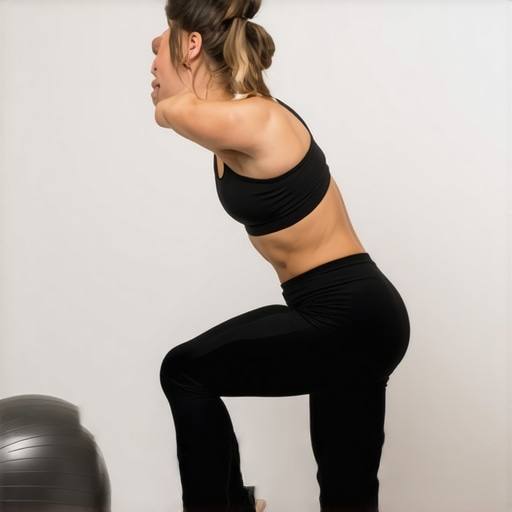
It happened on a rainy Tuesday morning while I was trying to reach for a dropped pen. A sharp, electric zip shot through my lower back, leaving me frozen in a half-bent position. For weeks afterward, I was terrified of any exercise that claimed to ‘strengthen the core.’ I tried traditional planks, but my lower back would sag, making the pain even worse. I even fell for the trap of high-rep crunches, which I eventually learned was just a recipe for more inflammation. If you have ever felt like your fitness routine is a minefield for your spine, you are not alone. Today, I want to show you how a simple modification to the humble wall-sit can become your most powerful tool for stability without the usual flare-ups. We are going to stop the cycle of ‘two steps forward, one step back’ with your mobility.
Have you ever found yourself avoiding the gym because you are scared one wrong move will trigger a week of stiffness?
Stop Hurting Your Spine for the Sake of Six-Pack Abs
When I first started my recovery journey, I made the classic mistake of thinking that ‘core strength’ meant doing as many sit-ups as possible. I thought if I just pushed through the discomfort, my muscles would eventually support my spine. I was dead wrong. In fact, many people find that you should stop doing planks if your back already hurts because they often lead to compensatory movements that strain the lumbar discs. My lightbulb moment came when a physical therapist neighbor saw me limping and told me to just ‘lean on the wall.’ By using the wall as a stabilizer, we can engage the transverse abdominis—the deep ‘corset’ muscle—without the shearing forces that happen during floor exercises. This is crucial because understanding the link between poor posture and chronic back pain reveals that most of our issues stem from an inability to keep the spine neutral under load.
Is a modified wall-sit actually worth the effort?
Many people dismiss the wall-sit as a simple leg-burner for high school athletes, but when modified for core recruitment, it is a clinical-grade tool. According to research cited by Harvard Health, isometric exercises like the wall-sit can be significantly safer for individuals with disc issues because they provide joint stability while building muscular endurance. The secret is not just sitting there; it is how you tilt your pelvis against the drywall. If you have been struggling with sciatica relief secrets and finding that most stretches only make the tingling worse, this stable, non-moving hold might be the ‘reset button’ your nervous system is screaming for. I spent months doing it the wrong way—arching my back and letting my ribs flare out—before I realized that the magic happens in the subtle flatten of the lower back.
The Specific Shift That Changes Everything
Before we get into the step-by-step, you need to understand why this works. Most back pain during exercise happens because the ‘hinge’ occurs at the lower back instead of the hips. By pinning your spine against a flat surface, you eliminate the guesswork. It allows you to boost your back mobility by teaching your brain that it is safe to engage your legs and abs simultaneously. In my early days of trying this, I used to slide down way too low, which actually put too much pressure on my knees and pulled my pelvis into a bad tilt. Now, I know better. We are looking for that ‘sweet spot’ where the core is braced, the back is flat, and the pain is zero. We are setting the stage to move from fragile to functional.
Find Your Footing Without Flaring the Nerves
To begin, stand with your back against a sturdy, flat wall. Your feet should be shoulder-width apart and roughly 12 to 18 inches away from the baseboard. This distance is vital; if your feet are too close, your knees will overshoot your toes, creating a different kind of pain you definitely don’t want. I remember the first time I tried this; I was wearing slick socks on a wooden floor and nearly ended up in a split. Now, I always ensure I have a grippy surface because why your current sneakers are causing your lower back to ache is often a matter of stability and friction. Slowly slide your back down the wall until your knees are at about a 135-degree angle—not a full 90-degree squat. We aren’t trying to win a bodybuilding trophy; we are trying to create a safe harbor for your lumbar spine. 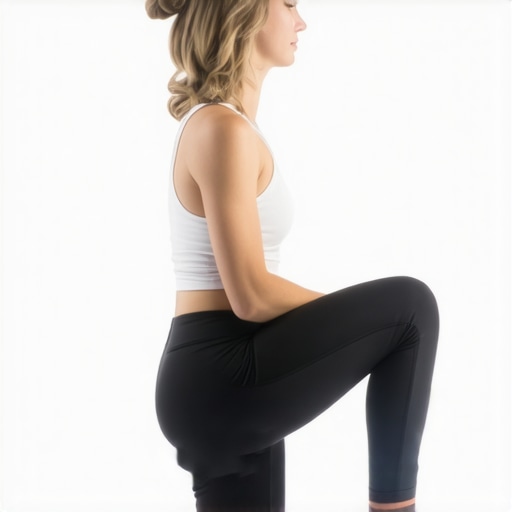
Flatten Your Lumbar Like a Pancake
This is the part everyone gets wrong. Most people leave a small tunnel of space between their lower back and the wall. If I can slide my hand behind your waist, your core isn’t working. You must perform a posterior pelvic tilt, which feels like tucking your ‘tail’ between your legs. Imagine you are trying to squash a grape between your spine and the drywall. This engagement activates the deep stabilizers and is similar to the dead bug exercise variation that actually protects your spine by preventing the ribs from flaring upward. When I first mastered this ‘squash the grape’ sensation, the chronic buzzing in my left leg finally started to dim. It was the first time in years I felt my abs working harder than my back muscles. If you aren’t sure if you’re doing it right, the simple way to check your own spine for pelvic tilt is to see if you can still breathe deeply while keeping that back pressure constant.
Breathe Through the Brace to Melt Tension
Once you are locked in, the temptation is to hold your breath and turn red in the face. Don’t. High-pressure breath-holding actually increases internal spinal pressure, which is exactly what we want to avoid. You need to learn how to breathe into your lower back to release deep muscle tension while maintaining the wall contact. Think of your core as a cylinder; it should stay firm while your diaphragm moves. I once tried to hold this position while scrolling through my phone, and within twenty seconds, my focus slipped. My back arched, my ribs popped out, and I felt a sharp pinch. It was a messy reminder that the breathing habit that is keeping your back muscles tight is often the missing link in ‘stable’ exercises.
Keep Your Head in the Game
While your lower half is doing the heavy lifting, your neck needs to stay neutral. Don’t look down at your feet or strain forward. Tuck your chin slightly so the back of your head also touches the wall. This prevents the ‘text neck’ strain that often accompanies core work. Much like the 15-degree rule for your computer monitor to save your neck, keeping your cervical spine aligned with your wall-supported lumbar ensures you aren’t fixing one problem while creating another. Hold this for 20 to 30 seconds, focusing entirely on that flat-back contact. If you feel your back start to peel away from the wall, the set is over. Quality always beats a timer.If you’ve been doing the wall-sit for a few days, you might notice your legs feeling stronger, but that ‘tight’ feeling in your lower back hasn’t quite vanished. This is where most people hit a plateau. We’ve been told since kindergarten to ‘stand up straight,’ pulling our shoulders back and thrusting our chests out like we’re on parade. In reality, why standing up straight is actually making your back pain worse is one of the most common secrets in the physical therapy world. This rigid, military posture creates a ‘hinge’ at your T12-L1 junction, putting massive pressure on your spinal joints rather than letting your core do the work. I fell into this trap myself, walking around with my back arched and thinking I was a posture pro, while my nerves were actually being pinched by my own vertebrae. This is especially dangerous if you are dealing with a disc issue.
The Hamstring Stretch That Only Feeds Your Sciatica
If you’ve ever wondered why your legs feel stiff but never get better regardless of how much you foam roll, it’s likely because why your hamstrings feel tight but never get better with stretching is often a case of your brain ‘guarding’ the nerve. Stretching a guarded muscle is like pulling on a knotted rope; it just makes the knot tighter.
Why does stretching sometimes make the tingling worse?
This is a question I get all the time from people who are diligent with their routines but still in pain. When you have sciatica, that ‘tight’ feeling in your leg isn’t necessarily a short muscle; it’s a sensitive nerve being tugged. According to research published in the Journal of Orthopaedic & Sports Physical Therapy, aggressive stretching can increase neural tension and delay recovery. Instead of reaching for your toes, which is why reaching for your toes is the worst way to stretch your back, you need to focus on ‘flossing’ the nerve. Learning the nerve flossing routine for stubborn leg numbness and tingling allows the nerve to glide through the tissues without being overstretched and irritated. The ‘Oops’ factor here is simple: if a stretch causes a sharp, electric, or buzzing sensation, stop immediately. You aren’t ‘releasing’ anything; you’re poking a hornet’s nest. Have you ever fallen into this trap of pushing through a ‘stretch’ that felt more like an electric shock? Let me know in the comments. 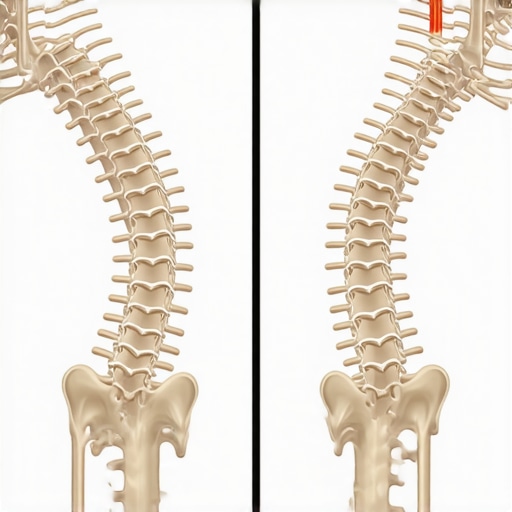
Your Tight Muscles Might Actually Be Weak
Another nuance involves the front of your body. We often obsess over the back, but why a tight psoas is often actually a weak psoas is a total game-changer. When a muscle is weak, it stays ‘on’ or hypertonic to provide a false sense of stability it can’t achieve through strength. If you keep stretching it without strengthening it, your back will never feel stable. Keep a close eye on the one sign that your sciatica is finally starting to heal: when the pain moves from your foot or calf up toward your glute. This is called ‘centralization,’ and it’s the ultimate green light that your wall-sits and breathing are working. Let’s make sure you aren’t undoing that progress the moment you walk away from the wall.The moment you walk away from that wall-sit, the real challenge begins. Gravity does not take a break, and neither should your awareness. I spent years thinking I could fix my back with a 20-minute routine, only to spend the next eight hours slumped over a laptop. It did not work. True recovery happens when you transition from doing exercises to living with intent.
Equip Your Environment Before Your Body Gives Out
I have spent thousands on fancy ergonomic gadgets, but the most effective tool in my kit cost less than twenty dollars. I stopped relying on expensive chairs and started focusing on the specific way to use a lumbar roll for maximum relief. The roll is not there to do the work for you; it is there to remind your lumbar spine to maintain its natural curve while you focus on your screen. If you are working from a kitchen chair or a soft couch, you are fighting a losing battle. I found that you can how to set up your home office for less than fifty dollars by using a few strategically placed towels and a sturdy box for your feet. Even learning how a simple tennis ball can release your deep glute tension during a lunch break can prevent the muscle amnesia that leads to a painful sciatica flare-up.
How can I maintain my spinal health for the long haul?
Maintenance is not about intensity; it is about consistency and what experts call spine hygiene. Dr. Stuart McGill, a world-renowned spine biomechanics expert and author of Back Mechanic, suggests that we only have a certain amount of flexion cycles in our discs before they start to wear thin. This means every time you round your back to pick up a sock, you are spending your spinal budget. To stay in the black, you need mobility mastery daily tips to keep your spine and joints healthy. I have made it a personal rule to never sit for more than 50 minutes without a quick spinal reset.
Let Your Rearview Mirror Act as a Coach
Driving used to be my biggest trigger. I would arrive at my destination with a buzzing leg and a stiff neck, wondering about the real reason your neck feels stiff every time you drive. Then I learned a trick that changed everything. Sit in your car, get your spine perfectly tall, engage that grape-squashing core we talked about, and then how to adjust your rearview mirror to force better posture. The moment you start to slouch into the seat during a long commute, the mirror will no longer show you the road behind you. It is a physical, immediate reminder to sit up and re-engage your stabilizers. 
Where the Science of Movement is Heading Next
As we move deeper into the decade, I predict a major shift away from passive stretching and toward neurological bracing. We are already seeing the rise of wearable tech that uses haptic feedback to vibrate when your pelvis tilts incorrectly or your shoulders round. Soon, your phone might even alert you that your gait is changing before you even feel the first twinge of nerve pain. But until that technology is perfected, you are your own best sensor. If you want to stop the cycle of pain today, try the rearview mirror trick on your next drive. It forces you to maintain the progress you made on the wall, turning a passive commute into an active recovery session.
Hard Truths I Discovered While Rebuilding My Spine
The biggest shift in my recovery happened when I stopped treating my back like an enemy to be conquered and started treating it like a partner to be understood. I learned that the difference between a bulging disc and a herniated disc isn’t a life sentence; it’s just a change in your ‘movement budget.’ I also realized that silence can be dangerous; if you don’t know how to tell if your leg pain is a muscle strain or a pinched nerve, you’ll spend your days in a state of ‘bracing’ that actually keeps the pain alive. Consistency isn’t about being perfect; it’s about doing the boring things, like the wall-sit, even when you feel okay.
The Low-Tech Tools That Kept Me Moving
You don’t need an expensive gym membership to maintain your spine. My daily success depends on a few specific items. I always keep a small cushion nearby because the specific way to use a lumbar roll for maximum relief is the only way I can survive a long car ride. For those deep, stubborn knots, I’ve found that how a simple tennis ball can release your deep glute tension is more effective than any fancy massage chair. And when I’m working at my desk, I never forget the simple footstool trick to stop lower back pain while sitting to keep my hips from locking up.
#IMAGE_PLACEHOLDER_E#
Take Back Your Freedom One Breath at a Time
True mobility is about confidence. It’s the ability to reach for a pen or tie your shoes without that flash of fear. By integrating these wall-sits and postural checks into your day, you’re not just managing symptoms; you’re changing your future. For more ways to refine your routine, dive into mobility mastery daily tips to keep your spine and joints healthy. Have you ever tried the wall-sit and felt it in your lower back instead of your core? Let me know in the comments below!